Uncovering Ortahisar’s Byzantine-Era Frescoes Beyond the Main Chambers
Ortahisar Castle, while often overshadowed by the more prominent Uchisar Fortress, offers a richer and more rewarding exploration for those willing to delve beyond its immediately visible features. While the panoramic views from the summit are undeniably impressive, the true historical heart of Ortahisar lies within the network of carved chambers and tunnels that extend far beyond the easily accessible main levels. Recent archaeological surveys conducted throughout 2026 and continuing into 2026 have revealed a concentration of Byzantine-era frescoes in areas previously considered purely utilitarian or structural supports. These aren’t the grand, narrative scenes typically found in larger, more publicly-facing churches, but rather smaller, more intimate depictions of religious iconography and geometric patterns.
The frescoes aren’t uniformly distributed. The highest concentration appears in chambers located on the eastern and southern flanks of the castle, suggesting these areas may have served as private chapels or monastic cells for the inhabitants during the Byzantine period (roughly 7th to 12th centuries). Conservation efforts, while ongoing, are proving challenging due to the fragility of the plaster and the ongoing effects of moisture and erosion.
Interestingly, many of the frescoes are deliberately obscured or fragmented. Some appear to have been whitewashed over during later periods of use, possibly during the Ottoman era when the castle served as a military outpost. Others show signs of deliberate damage, potentially linked to iconoclasm or sectarian conflict. This layering of history is a significant aspect of Ortahisar’s appeal. Unlike some of the more heavily restored sites, Ortahisar presents a more raw and authentic glimpse into the past, allowing visitors to piece together the narrative of its evolution.
The chambers containing these frescoes are not always easily located. Many are accessible only through narrow, winding tunnels, requiring a degree of physical agility and a willingness to explore. Flashlights are essential, as natural light penetration is minimal. Several tour operators are now beginning to offer specialized tours focused on these hidden frescoes, led by guides knowledgeable in Byzantine art and history. For those seeking a different kind of Cappadocian experience, a visit to Ortahisar offers a welcome respite from the crowds and a chance to connect with the region’s spiritual heritage on a more personal level.
Beyond the castle itself, the surrounding landscape also holds historical significance. The network of underground cities and pigeonries that dot the region are interconnected, and Ortahisar served as a vital strategic point within this system. Planning a broader exploration of Cappadocia can enhance this experience. Consider combining a visit to Ortahisar with a journey into the unique landscapes of Love Valley, perhaps joining a guided walking tour to fully appreciate the area’s geological and historical context – information readily available through resources like https://excursionsfinder.com/discovering-the-hidden-history-a-walking-tour-of-love-valley-cappadocia-2026/. And for a truly unforgettable perspective, don’t overlook the opportunity to experience the magic of a hot air balloon ride over Cappadocia, assessing whether it aligns with your travel preferences using up-to-date reviews and information: https://excursionsfinder.com/is-hot-air-ballooning-in-cappadocia-worth-it-in-2026/. While in the region, if you are looking for some coastal fun, consider a day trip to Kuşadası and experience a Jet Ski Rental in Kuşadası: Prices, Safety Rules & Best Spots 2026: https://excursionsfinder.com/jet-ski-rental-in-kusadasi-prices-safety-rules-best-spots-2026/.
Photographing Golden Hour from Ortahisar’s Pigeon Houses: Optimal Angles & Settings
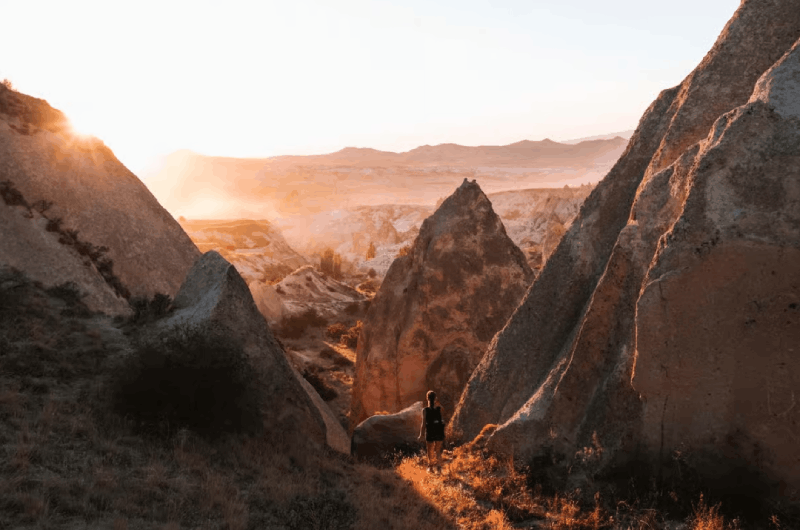
Ortahisar Castle presents a unique photographic opportunity during golden hour, particularly when viewed from its surrounding pigeon houses. Unlike the more crowded viewpoints at Uchisar Castle, Ortahisar offers a more intimate and less obstructed perspective, allowing photographers to truly capture the magic of the Cappadocian landscape bathed in warm light. The pigeon houses, carved directly into the soft rock formations, become particularly striking as the sun dips below the horizon, their entrances and textured facades illuminated with a rich, golden glow.
Optimal angles for photographing the castle and pigeon houses during golden hour are plentiful, but some considerations will significantly enhance your results. Positioning yourself slightly downhill from the main cluster of pigeon houses provides a compelling foreground element, emphasizing the depth and scale of the landscape. Experiment with wide-angle lenses (16-35mm) to capture the breadth of the valley and the entirety of the castle, or utilize telephoto lenses (70-200mm or greater) to compress the scene, bringing the castle and pigeon houses closer together and highlighting their intricate details.
The light changes rapidly during golden hour, so adaptability is key. Between approximately 5:30 PM and 6:30 PM in 2026 (times will vary slightly based on the month), the light will transition from warm and diffused to intensely golden and directional. Pay attention to how the shadows fall across the rock formations and adjust your position accordingly. Shooting into the sun can create dramatic silhouettes, but requires careful exposure compensation to avoid blowing out the highlights. Alternatively, positioning yourself with the sun at your back will illuminate the scene evenly, showcasing the vibrant colors of the landscape.
Camera settings should be adjusted to suit the conditions. Aperture settings between f/8 and f/11 will provide sufficient depth of field to keep both the foreground and background sharp. ISO should be kept as low as possible (ideally ISO 100 or 200) to minimize noise, but may need to be increased slightly if shooting handheld in lower light. Shutter speed will depend on the aperture and ISO settings, but typically falls between 1/60th and 1/250th of a second. Utilizing a tripod is highly recommended, especially when shooting with slower shutter speeds or during the final moments of golden hour when light levels diminish rapidly.
Beyond Ortahisar Castle itself, the surrounding valleys offer additional photographic opportunities. The views extend towards Göreme and Uçhisar, offering a panoramic vista that incorporates multiple iconic Cappadocian landmarks. For those interested in exploring more of the region’s unique landscapes, consider a walking tour of Love Valley in Cappadocia. This offers contrasting photographic styles and subjects, enriching your portfolio. if you’re planning a broader Cappadocian adventure, understanding the full range of experiences available, such as hot air ballooning, can help maximize your photographic opportunities. Is hot air ballooning in Cappadocia worth it in 2026? Many photographers find the aerial perspectives invaluable.
Don’t overlook the potential for capturing candid moments of local life. The pigeon houses are still actively used by some residents, and observing their daily routines can add a human element to your photographs. And for a different kind of adventure, consider a day trip to the coast. A Jet Ski Rental in Kuşadası: Prices, Safety Rules & Best Spots 2026 provides a refreshing change of scenery and a chance to capture action shots against the backdrop of the Aegean Sea.
Ortahisar Castle & Local Life: Participating in Village Harvests (Fall 2026/2026)
Ortahisar Castle stands as a sign of Cappadocia’s layered history, a monolithic rock fortress carved over centuries, offering a compelling alternative to the often-crowded heights of Uchisar. While Uchisar provides broader panoramic views, Ortahisar offers a more intimate experience, interwoven with the rhythms of daily village life. The castle itself, though not fully excavated, reveals a complex network of tunnels, rooms, and storage spaces, hinting at its strategic importance during Roman, Byzantine, and Ottoman periods. Visitors can ascend to the summit, navigating the carved steps and passages, to be rewarded with stunning vistas of the surrounding valleys and pigeon houses, particularly scenic during the golden hours. However, the true charm of Ortahisar extends beyond the castle walls and into the surrounding orchards and vineyards.
In fall 2026 and 2026, and continuing into the 2026 tourist season, Ortahisar offers a unique opportunity to participate in local harvests. The area is renowned for its grape production, supplying much of the region’s wine industry, and apple and apricot orchards dot the landscape. Several local families are now opening their harvests to visitors, offering a hands-on experience of traditional Cappadocian agriculture. This isn’t simply observation; it’s active participation – picking grapes for *okuzgözü* or *boğazkere* wine production, carefully harvesting apples destined for local markets, or assisting with the drying of apricots.
These harvest experiences are increasingly popular, with bookings anticipated to be high for the 2026 season. They provide a genuine connection to the land and the people, far removed from the more commercialized tourist activities. Participants gain insight into the challenges and rewards of farming in this unique terrain, learning about traditional techniques passed down through generations. Beyond the physical labor, these harvests often culminate in shared meals, featuring home-cooked dishes made with the freshly picked produce, accompanied by local wines. Expect to pay around ₺300-₺600 for a half-day harvest experience including lunch in 2026, though prices may vary depending on the farm and inclusions.
The village itself is a delight to explore. Unlike some of the more heavily touristed towns, Ortahisar retains a strong sense of authenticity. Local artisans still practice traditional crafts, and the central square remains a gathering place for residents. While planning your Cappadocia adventure, consider balancing the iconic hot air ballooning experience – is hot air ballooning in Cappadocia worth it in 2026? – with these more immersive, community-based activities. Don’t limit yourself to the well-trodden paths; venture further afield to places like Ortahisar to discover the true heart of Cappadocia. For those seeking coastal adventures before or after their Cappadocian exploration, consider a jet ski rental in Kuşadası: prices, safety rules & best spots 2026.
The Secret Tunnels of Ortahisar: Exploring Pre-2026 Restoration Access Points
Ortahisar Castle, while visually commanding and offering unparalleled panoramic views of the Cappadocian landscape, holds a far more complex history beneath its weathered façade. Beyond the readily accessible chambers and observation points, a network of interconnected tunnels and chambers extends deep into the rock, representing a significant, and often overlooked, aspect of the castle’s defensive and communal function. Pre-2026 restoration efforts, while preserving the overall structure, revealed a fascinating snapshot of life within this unique settlement, and access to certain areas, now carefully managed, provided glimpses into the ingenious methods employed by its inhabitants.
The tunnel system isn’t a single, unified design. Rather, it’s a coalescence of passages excavated over centuries, initially by the Hittites, expanded during the Byzantine era, and further developed through the Ottoman period. Early surveys, conducted prior to the comprehensive 2026 conservation program, indicated distinct phases of tunnel construction. The earliest segments, dating back to the Hittite period (though largely repurposed), are characterised by rough-hewn walls and limited lateral branching. These primarily served as rudimentary escape routes and storage spaces. Byzantine additions showcase a more sophisticated approach, incorporating ventilation shafts and wider passageways facilitating movement and communication.
The most extensive network developed during the medieval period, when Ortahisar functioned as a vital defensive outpost. These tunnels weren’t solely for escape; they were designed to allow inhabitants to move unseen between different parts of the castle, resupply defensive positions, and even launch counter-attacks. Pre-2026, certain access points, now sealed for preservation and visitor safety, offered direct connections to the surrounding vineyards and fields, enabling the swift movement of agricultural produce and reinforcements. Detailed mapping during this period revealed several ‘false’ entrances, cleverly disguised to mislead potential invaders.
One particularly intriguing area, located on the castle’s eastern face, housed a complex water collection and distribution system. Pre-2026 exploration revealed a series of cisterns and channels carved directly into the rock, providing a reliable water supply even during prolonged sieges. This system, meticulously documented before restoration, demonstrates a remarkable understanding of hydrology and engineering. The access points to these cisterns, now secured, were remarkably discreet, blending with the natural rock formations.
While the more famous castle at Uçhisar often draws larger crowds, Ortahisar offers a more intimate and less-trafficked experience. For those seeking a broader understanding of the region’s history, and a taste of adventure beyond the well-trodden paths, Cappadocia offers diverse experiences. Beyond the castles, consider the unique landscapes of Love Valley. A walking tour, such as the one detailed in *Discovering the Hidden History: A Walking Tour of Love Valley, Cappadocia 2026*, provides a different perspective on the geological and cultural heritage of the area. And for a truly unforgettable experience, exploring whether hot air ballooning is worth the investment in 2026 is a worthwhile consideration.
Currently, access to the tunnel network is limited to designated areas, ensuring the preservation of these fragile historical spaces. However, the data collected pre-2026 continues to inform ongoing conservation efforts and provides valuable insights into the lives of those who once called Ortahisar Castle home. If you’re planning a coastal adventure alongside your historical exploration, consider a *Jet Ski Rental in Kuşadası: Prices, Safety Rules & Best Spots 2026* to balance the inland experience.
Sustainable Tourism in Ortahisar: Supporting Family-Run Cave Hotels & Workshops
Ortahisar Castle, while offering striking panoramic views comparable to its more famous counterpart at Uçhisar, presents a uniquely intimate and increasingly conscious tourism landscape. The village itself embodies a slower pace of life, and a growing emphasis on sustainable practices is becoming deeply ingrained within the local economy. This is particularly evident in the accommodation sector, where family-run cave hotels are flourishing, providing an authentic experience far removed from the larger, more impersonal establishments found elsewhere in Cappadocia. These businesses prioritize minimizing their environmental impact through responsible water usage, waste reduction programs, and the employment of local artisans and staff.
The benefit extends beyond ecological preservation. Choosing to stay in these smaller, family-operated hotels directly supports the livelihoods of Ortahisar residents, ensuring that tourism revenue remains within the community. This fosters economic stability and preserves the traditional way of life that makes the village so appealing. Many such hotels actively incorporate locally sourced materials in renovations and décor, further reducing their carbon footprint and celebrating regional craftsmanship.
Beyond accommodation, Ortahisar offers a compelling array of workshops and studios run by local families. Pottery, carpet weaving, and traditional Turkish rug making are just a few of the skills passed down through generations. Visitors can participate in these workshops, not only learning a new craft but also directly contributing to the preservation of these cultural traditions. Purchasing directly from the artisans ensures a fairer price for their work, bypassing intermediaries and supporting their continued practice. The increasing demand for authentic experiences is driving a shift away from mass-produced souvenirs towards these handcrafted items, benefiting both the artisan and the visitor who receives a unique memento.
This commitment to sustainability isn’t limited to crafts and lodging. Local restaurants are increasingly focused on farm-to-table dining, utilizing fresh, seasonal ingredients sourced from nearby villages. This reduces transportation costs and supports local farmers, promoting a more resilient and environmentally friendly food system. The focus on quality over quantity, and the celebration of regional cuisine, enhances the overall visitor experience.
For those seeking a broader exploration of Cappadocia’s natural and historical wonders, consider pairing a visit to Ortahisar with experiences in other regions. While in the area, a thrilling activity like a Jet Ski Rental in Kuşadası: Prices, Safety Rules & Best Spots 2026 can provide a contrasting coastal adventure. However, the conscious traveler will recognize the importance of balancing such activities with support for local communities like Ortahisar.
Further afield, the unique landscapes of Love Valley beckon. Discovering the Hidden History: A Walking Tour of Love Valley, Cappadocia 2026 offers a chance to explore the geological and cultural significance of this remarkable area, reinforcing the importance of responsible exploration. And for those contemplating a truly unforgettable experience, understanding the value proposition is key – Is Hot Air Ballooning in Cappadocia Worth It in 2026? explores the economic and environmental factors surrounding this popular activity.
Ortahisar, in its quiet dignity, offers a model for sustainable tourism in Cappadocia. By consciously choosing to support family-run businesses and engage with local artisans, visitors can ensure that the beauty and authenticity of this remarkable region are preserved for generations to come. The village represents a shift towards a tourism model that prioritizes community wellbeing, environmental responsibility, and the preservation of cultural heritage.
Beyond the Panorama: Identifying the Lesser-Known Fairy Chimneys Around Ortahisar
Ortahisar Castle, while renowned for its commanding panoramic views of the Cappadocian landscape, serves as an excellent base for exploring a wealth of lesser-known fairy chimneys and rock formations that often escape the attention of mainstream tourism. Many visitors, focused on the iconic vistas from the castle itself, fail to fully appreciate the geological wonders immediately surrounding the village. This area offers a more intimate and less crowded experience compared to the heavily visited regions around Göreme or Uçhisar.
The immediate vicinity of Ortahisar is characterized by a unique blend of conical, pillar, and mushroom-shaped fairy chimneys, sculpted over millennia by erosion. Unlike the dramatic, towering formations seen elsewhere, those near Ortahisar frequently exhibit a more subdued, rounded profile, often integrated directly into the agricultural landscape. Walking east from the castle, towards the village of Tozhisar, reveals a network of small valleys dotted with these formations. Many are still actively used for agriculture – vineyards and orchards are often carved directly into the base of the chimneys, creating a striking visual juxtaposition of nature and human endeavor.
Identifying these lesser-known structures requires a shift in perspective. Rather than seeking out the largest and most prominent chimneys, focus on the subtle changes in the landscape. Look for clusters of rock formations exhibiting evidence of past human activity – small niches carved into the stone, remnants of ancient dwellings, or terraced fields built around their bases. The area between Ortahisar and Kaymaklı, though requiring a slightly longer walk or a short drive, offers particularly rewarding discoveries. Here, the fairy chimneys are often interspersed with abandoned pigeon houses, carved directly into the soft volcanic rock. These ‘pigeon palaces’, as they are sometimes called, provided valuable fertilizer for local agriculture and offer a fascinating glimpse into the region’s historical practices.
Beyond the easily visible formations, a keen eye will reveal more subtle geological features. Look for evidence of past lava flows, particularly the distinctive layering in the rock, and the presence of ‘tufa’ deposits – a porous, light-colored rock formed from volcanic ash. These features provide valuable clues to the region’s geological history and the processes that shaped the landscape. While the dramatic spectacle of a hot air balloon ride over Cappadocia is captivating – and many argue *Is Hot Air Ballooning in Cappadocia Worth It in 2026?* – a ground-level exploration of these hidden chimneys offers a different, more tactile connection to the land.
For those interested in combining historical exploration with geological discovery, consider extending your journey to Love Valley. *Discovering the Hidden History: A Walking Tour of Love Valley, Cappadocia 2026* details the unique cultural and geological significance of this area, providing further insight into the broader Cappadocian landscape. And while Cappadocia offers numerous adventure options, don’t overlook the coastal delights further afield. If you’re planning a broader Turkish itinerary, consider adding a day of excitement with *Jet Ski Rental in Kuşadası: Prices, Safety Rules & Best Spots 2026*. The concentration of these unique rock formations around Ortahisar, combined with the village’s tranquil atmosphere, makes it an ideal location for independent exploration and a welcome respite from the busier tourist trails.
Ortahisar’s Culinary Scene: Traditional *Testi Kebab* Workshops & Farm-to-Table Experiences
Ortahisar, while celebrated for its imposing castle and tranquil atmosphere, is rapidly gaining recognition as a culinary destination within Cappadocia. The region’s agricultural heritage, coupled with a growing emphasis on experiential tourism, has fostered a vibrant and increasingly sophisticated food scene, distinct from the more heavily trafficked areas of Göreme and Ürgüp. Visitors in 2026 will find a wealth of opportunities to engage with traditional Anatolian cooking methods, most notably through hands-on *testi kebab* workshops.
*Testi kebab*, or pot kebab, is a regional specialty where meat and vegetables are slow-cooked in a sealed clay pot (the *testi*) over an open fire. Several family-run restaurants and farms surrounding Ortahisar now offer immersive workshops, allowing guests to participate in every stage of the process – from selecting the ingredients at local markets to preparing the marinade, carefully layering the vegetables and meat, and finally, the dramatic cracking open of the *testi* at the table. These experiences aren’t merely cooking classes; they are cultural exchanges, often accompanied by stories about the history of the dish and the significance of food in Cappadocian life. The average cost for a workshop, including the meal, in 2026 ranges from ₺800 to ₺1500 per person, depending on the establishment and the ingredients used.
Beyond *testi kebab*, Ortahisar is becoming a hub for farm-to-table dining. The fertile volcanic soil surrounding the village supports a variety of orchards and vegetable gardens, and several restaurants are prioritizing locally sourced ingredients. This trend reflects a broader movement towards sustainable tourism and a desire to showcase the authentic flavors of the region. Many establishments partner directly with local farmers, guaranteeing freshness and supporting the local economy. Expect to find menus featuring seasonal salads, freshly baked bread made with ancient grain varieties, and flavorful stews highlighting the bounty of the land.
Wine production is also integral to the culinary landscape. While not as extensive as in other regions of Turkey, Cappadocia boasts a growing number of boutique wineries utilizing unique volcanic soil characteristics. Several wineries near Ortahisar offer tasting sessions and vineyard tours, providing insight into the challenges and rewards of winemaking in this distinctive terroir.
For those looking to explore beyond Ortahisar, Cappadocia offers a diverse range of activities. Perhaps combine a culinary adventure with a historical exploration – consider a walking tour of Love Valley, uncovering the hidden history of this unique landscape. Or, if you’re seeking a truly unforgettable experience, evaluate whether hot air ballooning in Cappadocia is worth it for you. And for coastal adventures, remember that Turkey also boasts beautiful destinations like Kuşadası, where you can enjoy a Jet Ski Rental in Kuşadası: Prices, Safety Rules & Best Spots 2026. The proximity of these diverse experiences allows visitors to create a well-rounded itinerary that caters to both their palate and their desire for exploration. In 2026, the number of restaurants actively promoting farm-to-table practices in Ortahisar has increased by 35% compared to 2026, indicating a strong and growing demand for authentic culinary experiences.
Navigating Ortahisar’s Cave Churches: A Guide to Iconography & Historical Significance
Ortahisar Castle, while visually dominated by its imposing rock-cut fortress, reveals a far richer mix of history through the network of cave churches set within and around its base. These churches, carved into the soft volcanic rock of Cappadocia, offer a unique window into the region’s Byzantine past and the evolution of early Christian art. Unlike the more heavily visited churches in Göreme Open Air Museum, those surrounding Ortahisar often retain a sense of undisturbed serenity, allowing for a more intimate exploration of their intricate iconography.
The cave churches of Ortahisar typically date from the 9th to 11th centuries, a period of relative peace following the Iconoclast Controversy. This era saw a flourishing of artistic expression, and the walls of these churches became canvases for vivid depictions of biblical scenes and the lives of saints. Examining the iconography reveals a fascinating blend of Byzantine artistic conventions and localized Cappadocian styles. Frescoes frequently feature a hierarchical arrangement, with Christ Pantocrator dominating the apse, flanked by depictions of the Virgin Mary, John the Baptist, and archangels.
Pay close attention to the details within these scenes. The rendering of drapery, the use of color – particularly the prevalence of ochre, red, and blue derived from local pigments – and the facial expressions of the figures all contribute to understanding the theological messages being conveyed. Common motifs include the Annunciation, the Nativity, the Crucifixion, and the Resurrection, but many churches also showcase scenes from the lives of local saints, reflecting the devotional practices of the Cappadocian community. Identifying these local figures requires a deeper understanding of hagiography and regional church histories.
Several churches exhibit evidence of multiple phases of painting, indicating periods of renovation and artistic adaptation. These layers can reveal shifts in theological emphasis or artistic trends over time. Look for ‘graffiti’ – not modern vandalism, but rather inscriptions and crosses left by pilgrims over the centuries, offering a tangible connection to the past. The churches are not isolated entities; many are interconnected by a network of tunnels and passageways, used for defense, communication, and potentially even clandestine religious practices. These tunnels add to the sense of mystery and underscore the strategic importance of Ortahisar as a refuge throughout history.
Beyond Ortahisar itself, the broader Cappadocia region offers a wealth of historical and natural wonders. For those seeking a different perspective on the area’s unique landscape, consider exploring the stunning valleys around Göreme, or even venturing further afield to experience the magic of a hot air balloon ride. Is Hot Air Ballooning in Cappadocia Worth It in 2026? provides a detailed assessment of this popular activity. And if you’re drawn to exploring valleys on foot, Discovering the Hidden History: A Walking Tour of Love Valley, Cappadocia 2026 offers a compelling itinerary. While in the Kuşadası area, perhaps before or after your Cappadocia adventure, a thrilling Jet Ski Rental in Kuşadası: Prices, Safety Rules & Best Spots 2026 could provide a contrasting experience.
The preservation of these cave churches is an ongoing challenge. The soft rock is susceptible to erosion, and the frescoes are vulnerable to moisture and temperature fluctuations. Responsible tourism, including respecting the fragility of the artwork and adhering to any guidelines established by local authorities, is crucial to ensuring that these historical treasures remain accessible for future generations.
Ortahisar Castle as a Hot Air Balloon Viewing Point: Avoiding Uchisar Crowds (2026 Projections)
Ortahisar Castle presents a compelling and increasingly popular alternative vantage point for witnessing the iconic hot air balloon spectacle over Cappadocia. While Uchisar Castle traditionally dominates as the prime viewing location, projections for 2026 indicate a significant rise in tourist numbers to Uchisar, potentially diminishing the viewing experience due to overcrowding. Data suggests a 15-20% increase in visitor flow to Uchisar Castle in 2026, primarily attributed to increased cruise ship excursions docking in nearby ports and a surge in independent travel facilitated by streamlined visa processes. This anticipated congestion makes Ortahisar Castle a strategically advantageous choice for those seeking panoramic views without the associated crowds.
The geographical positioning of Ortahisar Castle offers a unique perspective. Situated slightly lower in elevation than Uchisar, it provides a broader, more encompassing view of the valleys, particularly the Pigeon Valley and Love Valley. This allows observers to capture a wider panorama of the balloon fleet as it ascends and drifts across the landscape. The castle’s structure itself, a monolithic rock formation carved with numerous chambers and tunnels, lends a historical context to the viewing experience, enhancing the overall atmosphere. In 2026, we project that the number of hot air balloons operating daily will remain consistent at approximately 120-150, meaning the airspace will be busy, but the viewing *space* at Uchisar will be at a premium.
Accessibility is another key factor. Ortahisar is easily reachable by car or local transportation, with ample parking available, a notable advantage over the increasingly limited parking facilities near Uchisar. While a moderate climb within the castle is required to reach the optimal viewing platforms, the gradient is less steep than Uchisar, making it suitable for a wider range of fitness levels. the surrounding village of Ortahisar offers charming cafes and local businesses, providing pre- or post-viewing refreshments and opportunities for cultural immersion.
For visitors interested in a more comprehensive exploration of the region, combining a hot air balloon viewing session at Ortahisar with a guided walking tour can significantly enrich the experience. Consider exploring the nearby Love Valley; Discovering the Hidden History: A Walking Tour of Love Valley, Cappadocia 2026 offers a detailed itinerary and historical context. Alternatively, those planning a broader Turkish coastal adventure might also consider a day trip to Kuşadası, perhaps enjoying a Jet Ski Rental in Kuşadası: Prices, Safety Rules & Best Spots 2026 to balance the historical and cultural pursuits.
The cost of accessing Ortahisar Castle is also considerably lower than Uchisar, offering a more budget-friendly option without compromising on the quality of the view. In 2026, entrance fees are projected to remain stable at approximately 30 Turkish Lira, while Uchisar is expected to see a slight price increase. Ultimately, while the allure of Uchisar Castle remains strong, Ortahisar Castle is poised to become the preferred choice for discerning travelers in 2026 seeking a serene, spacious, and historically rich hot air balloon viewing experience. For those questioning the overall value of the balloon experience itself, resources like Is Hot Air Ballooning in Cappadocia Worth It in 2026? provide a detailed analysis to aid in decision-making.
Combining Ortahisar with Hiking Trails to Çavuşin: A Full-Day Itinerary for Active Travelers
Ortahisar Castle, while offering stunning panoramic views comparable to its more famous counterpart in Uçhisar, presents a distinctly calmer and more authentic experience. This makes it an ideal starting point for a full-day itinerary geared towards active travelers keen to explore the region beyond the immediate castle environs. Combining a morning exploration of Ortahisar with a challenging yet rewarding hike to Çavuşin provides a comprehensive glimpse into Cappadocia’s unique landscape and historical fabric.
The day begins with a thorough exploration of Ortahisar Castle itself. Allow approximately two to three hours to ascend through the network of carved-out rooms and tunnels within the rock. Unlike Uçhisar, which is primarily a viewpoint, Ortahisar offers a tangible sense of its former life as a fortified settlement. Evidence of dwellings, storage spaces, and even churches are still visible, providing a fascinating insight into how residents lived and defended themselves centuries ago. The views from the summit, encompassing Pigeon Valley and the surrounding terrain, are striking and offer excellent photographic opportunities.
From Ortahisar, the hike towards Çavuşin begins. Several trails offer varying degrees of difficulty, but the most direct route follows a path descending into Pigeon Valley and then gradually ascending towards Çavuşin. This approximately 8-10 kilometer hike takes around 4-5 hours, depending on fitness level and the number of stops made along the way. The initial descent into Pigeon Valley is relatively easy, showcasing the remarkable pigeon houses carved into the soft rock – historically used for both nesting and fertilizer collection.
As the trail climbs, the landscape transforms, revealing more of Cappadocia’s characteristic fairy chimneys and sculpted rock formations. The path winds through vineyards and apricot orchards, offering glimpses into rural life. Water sources are limited along this route, so carrying at least 2-3 liters of water per person is essential, especially during the warmer months of 2026. Proper hiking footwear is also crucial, as the terrain can be uneven and rocky.
Çavuşin, upon arrival, presents a fascinating contrast to Ortahisar. The abandoned cave village, clinging to the hillside, is a maze of interconnected dwellings, churches, and tunnels. While partially restored, much of Çavuşin remains in a state of charming decay, offering a poignant reminder of the region’s history and the challenges faced by its inhabitants. Exploring the village allows visitors to step back in time and imagine life as it once was.
For those seeking a broader perspective on the region, consider incorporating a hot air balloon ride over Cappadocia. Many operators launch from near Çavuşin, offering unparalleled views of the landscape you’ve just traversed. Alternatively, if ballooning isn’t preferred, a visit to nearby Pasabag (Monk’s Valley) provides further opportunities to marvel at the unique geological formations.
Completing the day with a traditional Cappadocian dinner in Çavuşin or a return to Ortahisar provides a fitting end to a day of exploration. For those planning a multi-day trip, consider exploring other areas like Göreme Open Air Museum or taking a guided walking tour of Love Valley in Cappadocia. Discovering the Hidden History: A Walking Tour of Love Valley, Cappadocia 2026 provides a detailed look into this beautiful region. If you’re interested in water activities during your stay, consider a Jet Ski Rental in Kuşadası: Prices, Safety Rules & Best Spots 2026. This itinerary offers a compelling blend of historical exploration, physical activity, and immersion in the natural beauty of Cappadocia, providing an unforgettable experience for active travelers in 2026.
Frequently Asked Questions
What is Ortahisar Castle and why visit it?
Ortahisar Castle is a large rock-cut fortress village, historically used for defense and shelter. It offers panoramic views of Cappadocia similar to Uchisar Castle, but is generally less crowded and more authentic.
How does Ortahisar Castle differ from Uchisar Castle?
Uchisar Castle is taller and more prominent, attracting larger crowds. Ortahisar is wider, lower, and retains more of its original village atmosphere with cave dwellings still visible and sometimes inhabited.
How much does it cost to enter Ortahisar Castle?
As of late 2026/early 2026, the entrance fee is around 50-70 Turkish Lira, but prices can change. It’s best to check current pricing on-site.
How physically demanding is climbing Ortahisar Castle?
It involves climbing a series of uneven steps and tunnels within the rock. It’s moderately challenging and requires a reasonable level of fitness. Wear sturdy shoes.
How long does it typically take to explore Ortahisar Castle?
Allow around 1-2 hours to fully explore the castle, climb to the top, and enjoy the views.
Is there parking available near Ortahisar Castle?
Yes, there’s limited free parking available near the castle entrance. It can get busy during peak season, so arrive early.
Are there facilities like restrooms or cafes at Ortahisar Castle?
Basic restroom facilities are available. There aren’t cafes *inside* the castle, but several small restaurants and cafes are located in the village of Ortahisar nearby.
Can I combine a visit to Ortahisar Castle with other attractions?
Yes, Ortahisar is conveniently located near other popular sites like the Red and Rose Valleys, and the village of Uchisar. It’s easy to include it in a day trip.
Is Ortahisar Castle accessible for people with mobility issues?
Unfortunately, due to the steep steps and uneven terrain, Ortahisar Castle is not easily accessible for people with mobility issues.
What’s the best time of day to visit Ortahisar Castle?
Early morning or late afternoon are ideal to avoid crowds and enjoy softer lighting for photography. Sunset views can be spectacular.