
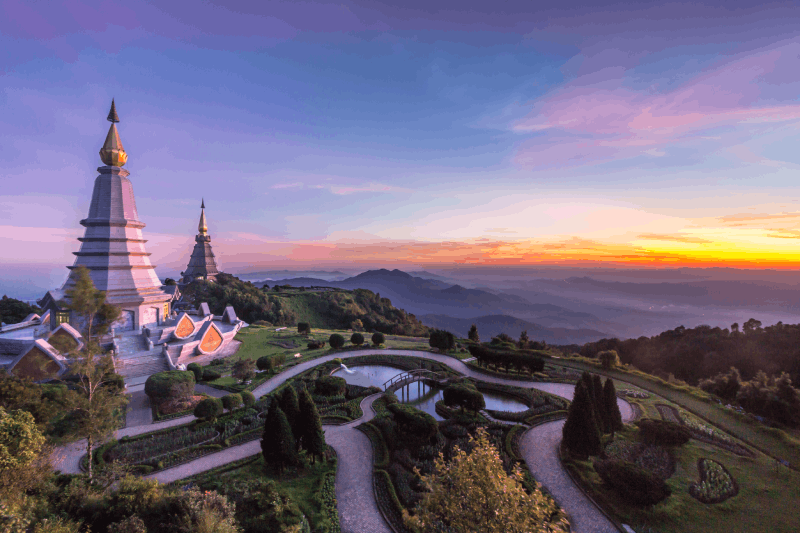
Beyond the Pagodas: Uncovering Doi Inthanon’s Royal Project History & Sustainable Coffee Farms
Doi Inthanon, Thailand’s highest peak, is renowned for its stunning vistas and the iconic twin pagodas of Naphamethanidon and Naphaphonphumisiri. However, a deeper exploration reveals a rich history interwoven with royal initiatives and a commitment to sustainable agricultural practices, particularly in coffee cultivation. Understanding this context significantly enhances the experience for visitors in 2026.
The story begins with His Majesty King Bhumibol Adulyadej’s (Rama IX) vision for Doi Inthanon National Park. Recognizing the potential for both environmental preservation and improved livelihoods for local communities, the King initiated the Doi Inthanon Royal Project in the 1970s. Initially focused on reforestation and combating deforestation caused by slash-and-burn agriculture, the project evolved to incorporate alternative crops that could provide a sustainable income for hill tribe villagers.
Coffee, specifically Arabica, proved to be an ideal candidate. The high altitude and cool climate of Doi Inthanon create optimal growing conditions, resulting in beans with exceptional flavour profiles. The Royal Project established coffee plantations and processing facilities, providing training and resources to local farmers. This wasn’t merely about introducing a new crop; it was about empowering communities to transition from unsustainable practices to a viable, environmentally responsible economy. By 2026, these efforts have demonstrably transformed the region, fostering economic stability and preserving the natural landscape.
Visitors today can directly witness the success of this initiative. Several Royal Project coffee farms are open to the public, offering guided tours that detail the entire process – from bean to cup. These tours provide an opportunity to learn about organic farming techniques, coffee grading, and the intricacies of roasting and brewing. Sampling the locally grown coffee is, of course, a highlight, and purchasing directly from the farm supports the ongoing sustainability of the project. Beyond coffee, the Royal Project also focuses on cultivating other high-value crops, including strawberries, vegetables, and flowers, further diversifying the economic base of the area.
The commitment to sustainability extends beyond agriculture. The Royal Project actively promotes responsible tourism, ensuring that visitor activities minimize environmental impact and benefit local communities. This holistic approach has helped preserve the unique biodiversity of Doi Inthanon, safeguarding its forests, watersheds, and wildlife. For those interested in exploring historical sites and understanding ancient civilizations, consider broadening your travel horizons. Perhaps a journey to Kuşadası to discover the fascinating Roman Baths, detailed in this 2026 guide: https://excursionsfinder.com/exploring-the-roman-baths-near-kusadasi-a-2026-step-by-step-guide/. Or, if underground history intrigues you, Bordeaux’s Gallo-Roman ruins offer a captivating glimpse into the past, as outlined in this beginner’s guide: https://excursionsfinder.com/a-beginners-guide-to-bordeauxs-underground-city-exploring-the-gallo-roman-ruins-in-2026/.
However, returning to Thailand, understanding the Royal Project’s legacy is essential for a truly enriching experience on Doi Inthanon. It provides a context that extends far beyond the scenic beauty, revealing a story of royal vision, community empowerment, and sustainable development. For couples planning a romantic escape, understanding the cultural significance of a destination like Thailand is paramount, and resources like this Thailand Pattaya Travel Guide for Couples – Things You Should Know Before Going to Pattaya: https://excursionsfinder.com/thailand-pattaya-travel-guide-for-couples-things-you-should-know-before-going-to-pattaya/ can be invaluable in preparing for a fulfilling trip.
Doi Inthanon’s Cloud Forests: Identifying & Photographing Endemic Orchid Species (2026 Bio-Tourism Focus)
Doi Inthanon National Park, reaching its peak at 2,565 meters, isn’t merely Thailand’s highest point; it’s a biodiversity hotspot, particularly renowned for its cloud forests and the astonishing variety of orchid species they harbor. In 2026, a significant focus of tourism within the park is bio-tourism, specifically geared towards responsible observation and photographic documentation of these delicate ecosystems. The cloud forests, sustained by consistent moisture from the monsoon and high altitude, create a unique environment where orchids thrive, often epiphytically clinging to trees and rocks.
Identifying orchid species within Doi Inthanon’s cloud forests requires careful observation and, increasingly, the utilization of digital resources. By 2026, comprehensive field guides are available as mobile applications, incorporating image recognition software to aid in preliminary identification. However, reliance on technology should be coupled with an understanding of key morphological features. Common genera to look for include *Dendrobium*, *Bulbophyllum*, and *Coelogyne*, each exhibiting a vast range of sizes, colours, and bloom times. The *Dendrobium nobile*, easily recognizable by its reed-like stems and fragrant flowers, is often one of the first to bloom as the cool season begins. More elusive species, like certain *Bulbophyllum* varieties, require a trained eye to discern amongst the dense foliage.
Photographic opportunities are abundant, but require thoughtful consideration. The low light conditions within the cloud forest necessitate the use of tripods and wide-aperture lenses. Macro photography is essential for capturing the intricate details of orchid blossoms. Utilizing diffused flash or reflectors can help illuminate subjects without damaging the delicate petals. It’s crucial to maintain a respectful distance, avoiding any physical contact with the plants or their habitat. The park authorities are implementing stricter guidelines in 2026 regarding flash photography near sensitive species, aiming to minimize stress on the plants.
Beyond orchids, the cloud forests support a complex web of life. Keep an eye out for associated flora and fauna – mosses, ferns, lichens, and the birds and insects that pollinate the orchids. Understanding these interdependencies enhances the appreciation of the ecosystem as a whole. The park’s visitor centres offer increasingly detailed information on responsible wildlife viewing practices.
For travellers seeking a broader understanding of historical and natural wonders in the region, considering a trip to Kuşadası and exploring the ancient Roman Baths could complement a Thai eco-adventure. Similarly, those interested in subterranean history might find a visit to Bordeaux’s underground Gallo-Roman ruins fascinating, linking ancient civilizations with natural landscapes. While geographically distinct, these experiences highlight the importance of preserving cultural and natural heritage.
Planning a romantic getaway? Before venturing to Thailand, particularly to vibrant locations like Pattaya, it’s worth reviewing a comprehensive travel guide to ensure a smooth and enjoyable experience. The *Thailand Pattaya Travel Guide for Couples – Things You Should Know Before Going to Pattaya* provides valuable insights into local customs, transportation, and potential considerations for couples. Doi Inthanon, however, offers a contrasting experience – a tranquil immersion in nature, a haven for biodiversity, and a sign of the beauty of Thailand’s highland ecosystems.
Early Morning Mist Hunting: Optimal Vantage Points & Photography Settings for Doi Inthanon’s Alpenglow
The allure of Doi Inthanon, Thailand’s highest peak, extends far beyond its impressive elevation. For photographers and nature enthusiasts, the early morning hours present a unique opportunity: mist hunting and capturing the ethereal alpenglow that bathes the landscape in soft, golden light. Success hinges on understanding optimal vantage points and employing precise photography settings.
The period between 05:30 and 07:00 during the cooler months (November to February) offers the highest probability of thick mist formations, particularly within the valleys and around the twin pagodas of Phra Mahathat Naphamethanidon and Phra Mahathat Naphaphonphumisiri. These locations, while popular, provide elevated perspectives *above* the mist, creating dramatic seas of clouds. However, for truly immersive experiences, venture slightly off the main tourist trails. The Royal Agricultural Research Station (Mae Klang) and the Sirithan Waterfall area, accessible via smaller roads branching off the main highway, consistently offer lower-level mist envelopment and unique photographic compositions. The station’s coffee plantations, often shrouded in mist, create a particularly scenic foreground element.
For alpenglow capture, timing is critical. The golden hour, typically occurring shortly after sunrise (around 06:30-07:00 in 2026, adjusting for seasonal variations), illuminates the eastern slopes of Doi Inthanon with a warm, radiant glow. The best locations for this phenomenon are viewpoints facing east, such as those along the winding road between the summit and the Hmong Market. Patience is paramount; mist density fluctuates rapidly, and the alpenglow effect is often fleeting.
Photography settings should prioritize low ISO (100-400) to minimize noise, a narrow aperture (f/8 to f/16) for increased depth of field – crucial when shooting landscapes with mist – and a moderate shutter speed (1/60 to 1/250) depending on light conditions. A polarizing filter is highly recommended to reduce glare and enhance color saturation, particularly in the mist. Consider utilizing a graduated neutral density filter to balance the bright sky with the darker foreground. Tripods are essential for sharp images, especially in low light. For capturing the subtle nuances of the mist, bracketing exposures is advisable, allowing for post-processing adjustments to highlight details.
Beyond Doi Inthanon, Thailand offers a wealth of cultural and natural experiences. For couples seeking a diverse itinerary, exploring destinations like Pattaya can add a vibrant contrast to the serene mountain landscapes. You can find valuable insights and practical advice in the Thailand Pattaya Travel Guide for Couples – Things You Should Know Before Going to Pattaya: https://excursionsfinder.com/thailand-pattaya-travel-guide-for-couples-things-you-should-know-before-going-to-pattaya/.
the fascination with ancient sites isn’t limited to Thailand. Historical explorations await in places like Kuşadası, Turkey, where you can discover remnants of Roman civilization. The Exploring the Roman Baths Near Kuşadası: A 2026 Step-by-Step Guide: https://excursionsfinder.com/exploring-the-roman-baths-near-kusadasi-a-2026-step-by-step-guide/ provides detailed guidance for your visit. Similarly, beneath the modern city of Bordeaux lies a captivating network of Gallo-Roman ruins. A Beginner’S Guide To Bordeaux’S Underground City Exploring The Gallo Roman Ruins In 2026: https://excursionsfinder.com/a-beginners-guide-to-bordeauxs-underground-city-exploring-the-gallo-roman-ruins-in-2026/ offers a comprehensive introduction to this hidden historical treasure.
Navigating the Kew Mae Pan Nature Trail: A Detailed Guide to Flora, Fauna & Avoiding Peak Hour Crowds
The Kew Mae Pan Nature Trail, set within Doi Inthanon National Park, represents a highlight for many visitors seeking to experience the diverse ecosystems of northern Thailand. This meticulously maintained loop, approximately 3 kilometers in length, offers an immersive journey through cloud forest, showcasing a remarkable array of flora and fauna unique to this altitude. In 2026, continued investment in trail upkeep ensures accessibility while prioritizing conservation efforts.
The trail’s unique appeal stems from its elevated location and the resulting microclimate. Expect consistently cooler temperatures, often below 15°C, and potential for mist or light rain regardless of the season. This supports a rich biodiversity, including vibrant rhododendrons, orchids, ferns, and numerous species of mosses and lichens. Keen observers will note the distinct changes in vegetation as they ascend and descend, indicative of the varying moisture levels and sunlight exposure. Birdlife is abundant; spotting the vibrant Green-tailed Sunbird or the elusive White-throated Fantail is common. While larger mammals are less frequently seen, the trail provides evidence of their presence through tracks and scat, primarily from species like the Asiatic black bear and various deer.
The trail is designed with raised walkways and clearly marked paths, minimizing environmental impact and providing a comfortable experience for walkers of most fitness levels. However, uneven surfaces and occasional steep inclines require appropriate footwear – sturdy hiking boots are highly recommended. The path is punctuated by strategically placed information boards (available in Thai and English) detailing the plant and animal life, as well as the ecological significance of the area. These boards, updated in late 2026, include QR codes linking to augmented reality experiences offering deeper insights into the local biodiversity.
Avoiding peak hour crowds is crucial for maximizing enjoyment. The trail’s popularity has increased significantly in recent years, leading to congestion, particularly between 10:00 and 14:00. Arriving before 09:00 or after 15:00 is strongly advised. Weekdays generally experience lower visitor numbers compared to weekends and public holidays. Consider combining your visit with other attractions within Doi Inthanon National Park, such as the twin pagodas of Wat Phra That Doi Suthep or a coffee plantation tour, to spread out your day and avoid concentrated periods of crowding.
For those interested in exploring historical sites alongside natural beauty, consider broadening your travel horizons. While Doi Inthanon offers a unique Thai experience, destinations like Kuşadası in Turkey boast remarkable Roman ruins, as detailed in our guide to Exploring the Roman Baths Near Kuşadası: A 2026 Step-by-Step Guide. Alternatively, the underground history of Bordeaux in France, with its Gallo-Roman roots, provides another fascinating perspective on ancient civilizations – A Beginner’S Guide To Bordeaux’S Underground City Exploring The Gallo-Roman Ruins In 2026 offers comprehensive information.
Planning a romantic getaway? Before venturing to another popular Thai destination, Pattaya, familiarize yourself with local nuances and ensure a smooth trip with our Thailand Pattaya Travel Guide for Couples – Things You Should Know Before Going to Pattaya. Remember to pack layers, bring water, and respect the fragile environment of this exceptional nature trail. The park authorities actively monitor visitor impact and enforce regulations to preserve the beauty of Kew Mae Pan for future generations.
The Hidden Waterfalls of Doi Inthanon: A Trekker’s Guide to Siriphum, Mae Ya & Wachirathan
Doi Inthanon, Thailand’s highest peak, is renowned for its striking vistas and cool climate. However, beyond the summit’s panoramic views lies a network of cascading waterfalls, each offering a unique trekking experience and a glimpse into the park’s lush biodiversity. Siriphum, Mae Ya, and Wachirathan waterfalls represent the most accessible and rewarding of these lesser-known spots, attracting hikers of all levels in 2026.
Siriphum Waterfall, located approximately 39 kilometers from the summit, is the most impressive in terms of sheer power and volume. Plunging over 40 meters, its multi-tiered cascade creates a dramatic spectacle, particularly during the rainy season (May-October). The well-maintained trail to Siriphum, roughly 2.5 kilometers round trip, is relatively easy, making it suitable for families and less experienced trekkers. The surrounding forest is characterized by dense foliage and a vibrant array of birdlife, offering excellent opportunities for nature photography. The consistent spray from the falls contributes to a cool, humid microclimate, providing welcome relief from the higher altitude temperatures.
Mae Ya Waterfall, situated closer to the park headquarters, presents a different character. While not as voluminous as Siriphum, Mae Ya boasts a wider, more graceful descent. A shorter, paved pathway leads to a viewing platform, allowing visitors to appreciate the falls without a strenuous hike. However, a more adventurous route involves following a marked trail that climbs alongside the cascading water, offering stunning perspectives and access to smaller pools ideal for a refreshing dip (though caution is advised due to strong currents). In 2026, park authorities have implemented improved signage along this secondary trail, enhancing safety and accessibility.
Wachirathan Waterfall, named after a former Thai princess, is perhaps the most easily accessible of the three, located near the Hmong market and the Royal Agricultural Research Station. While the waterfall itself is not as dramatically high as Siriphum or as wide as Mae Ya, its accessibility and proximity to other attractions make it a popular stop for day-trippers. A short, paved walk leads to a viewing area, and a series of steps descend towards the base of the falls. The surrounding area is well-developed with picnic spots and restrooms, making it a convenient option for those with limited time.
Planning a multi-waterfall trek requires consideration of transportation. While private taxis and songthaews (red trucks) are readily available, booking in advance is advisable, particularly during peak season. It’s also crucial to wear appropriate footwear – sturdy hiking boots are recommended – and carry sufficient water and insect repellent. For those interested in extending their exploration beyond Doi Inthanon, consider exploring the historical sites of nearby Kuşadası, and learn about the ancient Roman Baths with this detailed guide: https://excursionsfinder.com/exploring-the-roman-baths-near-kusadasi-a-2026-step-by-step-guide/. Remember to check the Doi Inthanon National Park website for updated trail conditions and any temporary closures.
Beyond Thailand, if you’re seeking romantic destinations, planning a trip with your partner to Pattaya can be an unforgettable experience. The Thailand Pattaya Travel Guide for Couples – Things You Should Know Before Going to Pattaya: https://excursionsfinder.com/thailand-pattaya-travel-guide-for-couples-things-you-should-know-before-going-to-pattaya/ offers valuable tips and insights. For history buffs, exploring the Gallo-Roman ruins beneath Bordeaux provides a fascinating contrast to the natural beauty of Doi Inthanon. A Beginner’S Guide To Bordeaux’S Underground City Exploring The Gallo Roman Ruins In 2026: https://excursionsfinder.com/a-beginners-guide-to-bordeauxs-underground-city-exploring-the-gallo-roman-ruins-in-2026/ details this unique subterranean world.
Doi Inthanon’s Indigenous Communities: Ethical Engagement & Homestay Opportunities with the Karen & Hmong
Doi Inthanon National Park isn’t solely defined by its stunning landscapes and highest peak; it’s also a vital cultural landscape for several indigenous communities, most notably the Karen and Hmong people. Understanding and respecting their traditions is paramount for any visitor in 2026. These communities have inhabited the slopes of Doi Inthanon for generations, maintaining unique lifestyles closely tied to the land and its resources. While tourism offers economic benefits, it’s crucial to engage ethically and sustainably to ensure these cultures not only survive but thrive.
The Karen, also known as the Pwo Karen, are primarily agriculturalists, traditionally practicing swidden (shifting cultivation) farming. In 2026, many Karen villages are transitioning towards more sustainable agricultural practices, including coffee and organic vegetable farming, often with support from government initiatives and responsible tourism operators. Visitors can purchase directly from these farms, supporting local livelihoods and receiving incredibly fresh produce. Their distinctive woven textiles, characterized by intricate patterns and natural dyes, represent a significant aspect of their cultural heritage. Purchasing these directly from artisans, rather than mass-produced imitations, directly benefits the community.
The Hmong, who migrated to the area more recently, are known for their vibrant traditional clothing, silver jewelry, and skilled craftsmanship. They are also predominantly agriculturalists, with a growing focus on horticulture and fruit cultivation. The Hmong villages around Doi Inthanon offer a glimpse into their unique social structures and spiritual beliefs, which often revolve around ancestor veneration and shamanistic practices. In 2026, a collaborative effort between the Tourism Authority of Thailand and local Hmong leaders has formalized guidelines for cultural performances, ensuring authenticity and respectful representation.
Homestay programs offer a particularly rewarding way to connect with these communities. Several villages now offer carefully managed homestays, providing visitors with an immersive experience of daily life, including shared meals, participation in traditional activities, and opportunities to learn about their customs and beliefs. These programs prioritize responsible tourism, ensuring that a significant portion of the income directly benefits the host families and community projects. It’s vital to choose homestays that are community-led and adhere to fair trade principles.
Before participating in any cultural exchange, it’s essential to research appropriate etiquette. Avoid taking photographs without permission, dress respectfully (covering shoulders and knees is generally appreciated), and be mindful of local customs. Offering small, practical gifts – such as school supplies or seeds – is often more appreciated than money.
Beyond Doi Inthanon, understanding ethical travel extends to all destinations. For those planning a broader Thai experience, resources like the Thailand Pattaya Travel Guide for Couples – Things You Should Know Before Going to Pattaya can provide broader context on responsible tourism practices within the country. Similarly, appreciating ancient cultures isn’t limited to Thailand; exploring historical sites like the Roman Baths near Kuşadası, as detailed in this 2026 guide, requires a similar commitment to preservation and respectful engagement. And for those interested in subterranean history, A Beginner’S Guide To Bordeaux’S Underground City Exploring The Gallo Roman Ruins In 2026 offers another example of cultural immersion that demands mindful exploration. By prioritizing ethical engagement, visitors can contribute to the preservation of these invaluable cultures and ensure a more meaningful and enriching travel experience.
Beyond Sunrise/Sunset: Stargazing & Astrophotography Potential at Doi Inthanon’s Summit (2026 Dark Sky Tourism)
Doi Inthanon, Thailand’s highest peak, presents a compelling destination for astronomical observation, poised to become a significant hub for dark sky tourism by 2026. While famed for its striking sunrises and sunsets viewed from the summit, the post-dusk and pre-dawn hours reveal a dramatically different, and equally captivating, landscape – a canvas for celestial wonders. The combination of high altitude (2,565 meters), relatively low light pollution compared to urban centers, and consistently clear, dry conditions during the cool season (November to February) creates exceptional atmospheric stability and transparency, crucial for both visual stargazing and astrophotography.
By 2026, improved infrastructure and growing awareness are expected to solidify Doi Inthanon’s position as a premier dark sky location. Currently, limited artificial light exists near the summit, primarily from the Royal Thai Air Force radar station and the visitor center. Ongoing efforts focus on minimizing this impact through shielded lighting and strategic placement, aligning with International Dark-Sky Association (IDA) standards. This commitment, alongside projected increases in visitor education regarding light pollution’s effects, will further enhance the viewing experience.
The summit’s unique microclimate contributes to exceptional “seeing,” the term astronomers use to describe atmospheric turbulence. Reduced turbulence translates to sharper, more detailed astronomical images, making Doi Inthanon ideal for planetary and deep-sky astrophotography. Advanced telescopes, both robotic and manually operated, are becoming increasingly common amongst dedicated astrophotographers visiting the park. The availability of guided tours specifically tailored to astrophotography, offering equipment rental and expert instruction, is also anticipated to expand significantly by 2026.
Beyond simple observation, the potential for scientific research is substantial. Citizen science initiatives, encouraging amateur astronomers to contribute data on variable stars, exoplanet transits, and near-Earth objects, are gaining traction. This collaborative approach not only expands the scope of research but also fosters a deeper connection between the public and the cosmos.
For those interested in combining cultural experiences with astronomical pursuits, exploring the surrounding Chiang Mai region offers a rich mix of temples and traditions. A journey to understand the historical connections between Thai cosmology and astrology adds another layer of appreciation to the night sky. Consider planning a broader Thai adventure, perhaps incorporating a romantic getaway with a detailed guide like the Thailand Pattaya Travel Guide for Couples – Things You Should Know Before Going to Pattaya, to fully appreciate the country’s diverse offerings.
the interest in preserving historical sites is also growing, with increasingly detailed guides available for locations such as the Roman Baths near Kuşadası, offering insights into ancient civilizations and their relationship with the landscape. This parallels the emerging focus on preserving the natural darkness of Doi Inthanon. Similarly, explorations into historical underground cities, like A Beginner’S Guide To Bordeaux’S Underground City Exploring The Gallo Roman Ruins In 2026, showcase a fascination with uncovering hidden wonders, a sentiment that extends to the hidden wonders of the night sky above Doi Inthanon. By 2026, the convergence of these interests – history, culture, and astronomy – will make Doi Inthanon a unique destination.
Doi Inthanon’s Temperature Fluctuations: Packing Strategies & Managing Altitude Sickness for 2026 Travelers
Doi Inthanon, Thailand’s highest peak, presents a unique set of challenges for travelers due to its dramatic temperature fluctuations and considerable altitude. Planning for these conditions is crucial for a comfortable and safe experience in 2026. The summit experiences significantly cooler temperatures than Chiang Mai city, with averages ranging from 10-15°C (50-59°F) during the day and dropping to near freezing at night, particularly during the cool season (November – February). Even during the warmer months, temperatures can plummet unexpectedly due to cloud cover and rainfall. Layering is paramount. A waterproof and windproof outer shell is essential, alongside thermal base layers, fleece or a warm sweater, and comfortable, closed-toe walking shoes. Consider bringing a lightweight down jacket, even for daytime exploration, as conditions can change rapidly. Gloves and a warm hat are strongly recommended, especially for early morning visits to witness the sunrise or for exploring the summit’s nature trails.
The difference in temperature between the base and the summit can be as much as 15-20°C, necessitating adaptable clothing choices. Pack clothing that can be easily added or removed to regulate body temperature. Moisture-wicking fabrics are preferable to cotton, as they help to keep you dry and prevent chills. Sun protection remains vital, even at higher altitudes, with a high SPF sunscreen, sunglasses, and a hat to shield against strong UV rays.
Altitude sickness is a potential concern for visitors to Doi Inthanon, as the summit reaches 2,565 meters (8,415 feet). While most individuals acclimatize without issue, those sensitive to altitude may experience symptoms such as headache, nausea, dizziness, and fatigue. Gradual ascent is the most effective preventative measure. Spend a day or two acclimatizing to the altitude in Chiang Mai before venturing to the summit. Staying hydrated by drinking plenty of water is also critical, as is avoiding strenuous activity immediately upon arrival at higher elevations.
Alcohol and caffeine should be consumed in moderation, as they can exacerbate dehydration. If symptoms of altitude sickness develop, descend to a lower altitude immediately. For travelers planning extensive exploration of historical sites after visiting Doi Inthanon, understanding how altitude can affect energy levels is important. For example, exploring the Gallo Roman ruins in Bordeaux’s underground city in 2026 requires stamina, something that can be impacted by insufficient acclimatization. Similarly, a relaxing getaway might be preferred after a challenging climb – perhaps a romantic escape detailed in the Thailand Pattaya Travel Guide for Couples – Things You Should Know Before Going to Pattaya.
Monitoring your physical condition and being aware of the early signs of altitude sickness are key. If pre-existing medical conditions exist, consulting with a physician before traveling is advisable. Remember that the park’s infrastructure is well-maintained, but unpredictable weather can sometimes lead to trail closures. Checking the forecast before embarking on any hike and informing someone of your planned route is always a prudent precaution. For those interested in exploring ancient history alongside natural wonders, the Roman Baths near Kuşadası offer a fascinating contrast to the mountainous landscape of Doi Inthanon, providing diverse excursion options for 2026.
The Chiang Mai-Doi Inthanon EV Route: Planning a Sustainable Road Trip with Electric Vehicle Charging Options
The ascent to Doi Inthanon National Park, culminating at Thailand’s highest peak, is increasingly accessible for electric vehicle (EV) owners. While traditionally a journey best undertaken with a fuel-efficient vehicle due to the winding mountain roads, the expanding EV infrastructure around Chiang Mai and along the route to Doi Inthanon is making sustainable travel a viable and attractive option in 2026. Careful planning is, however, crucial to ensure a seamless experience.
Currently, the primary charging hubs are concentrated in Chiang Mai city itself. Several hotels and shopping malls offer Level 2 chargers, suitable for overnight or extended stops. The number of DC fast chargers is growing, with key locations including Promenada Resort Mall and Central Chiang Mai, providing significantly quicker charging times. Pre-trip app checks utilizing platforms like PlugShare and EVRoute are essential to verify charger availability and operational status, as real-time data can vary.
The direct route from Chiang Mai city to the Doi Inthanon National Park entrance (approximately 120km) presents a moderate challenge for EV range. While the initial portion is relatively flat, the significant elevation gain as you approach the park necessitates careful energy management. A fully charged vehicle with a realistic range of at least 350km is recommended, factoring in the steep inclines and potential for regenerative braking to recoup some energy on the descent.
Currently, charging options *within* the Doi Inthanon National Park are extremely limited. As of early 2026, there are no publicly accessible EV chargers inside the park boundaries. This means drivers must arrive at the summit with a sufficient charge to complete their visit and return to the nearest charging point. Planning a slow, mindful ascent, utilizing regenerative braking effectively, and minimizing accessory usage (air conditioning, entertainment systems) are vital strategies.
Several guesthouses and resorts located in the villages surrounding the park, such as Mae Ya and Doi Inthanon Royal Project, are beginning to install Level 2 chargers to cater to the growing demand. These are typically available for guests only, making advance booking crucial for EV owners. Exploring accommodation options with charging facilities is highly recommended to alleviate range anxiety.
For couples planning an extended stay in the region, combining a Doi Inthanon excursion with other attractions requires strategic charging stops. Consider incorporating a visit to nearby destinations with more developed charging infrastructure. Those interested in historical exploration might find a trip connecting Chiang Mai with sites further afield appealing, perhaps even venturing towards the Aegean coast to explore ancient wonders; detailed guides like the one for exploring the Roman Baths near Kuşadası: A 2026 Step-by-Step Guide, can aid in planning such multi-destination journeys. Alternatively, a focus on cultural experiences within Thailand, potentially including a romantic getaway detailed in the Thailand Pattaya Travel Guide for Couples – Things You Should Know Before Going to Pattaya, could be integrated into the itinerary.
Looking further ahead, the development of charging infrastructure is expected to accelerate. Plans are underway to install additional fast chargers at key locations along the route, including the Doi Inthanon Royal Project and near the summit itself, anticipated to be operational by late 2026. However, relying on these future installations is risky, and meticulous pre-trip planning remains paramount. For those interested in underground history, planning a trip to Bordeaux and exploring the Gallo Roman Ruins in 2026 offers another compelling option that might require similar careful charging considerations.
Local Culinary Delights Near Doi Inthanon: Exploring Hill Tribe Cuisine & Organic Farm-to-Table Restaurants
The culinary landscape surrounding Doi Inthanon National Park offers a unique opportunity to experience the authentic flavours of Northern Thailand, extending far beyond typical tourist fare. A significant draw for visitors in 2026 is the increasing accessibility and appreciation of Hill Tribe cuisine, reflecting a growing commitment to sustainable tourism and cultural preservation. Several villages within the park’s vicinity, such as the Hmong, Karen, and Lisu communities, are now welcoming visitors to sample traditional dishes prepared with locally sourced ingredients. Expect robust flavours, often featuring fresh herbs, chilies, and locally grown vegetables. Signature dishes include *gaeng hang lay* (Burmese-influenced pork curry), traditionally slow-cooked for hours, and various bamboo shoot preparations, showcasing the resourcefulness of these communities. Many villages offer cooking classes, allowing visitors to learn the art of preparing these dishes firsthand.
Beyond the Hill Tribe villages, a burgeoning farm-to-table movement is taking hold in the region. The fertile volcanic soil and cool climate around Doi Inthanon are ideal for organic farming. Restaurants are increasingly partnering directly with local farmers, guaranteeing fresh, seasonal produce and supporting the local economy. These establishments prioritize using ingredients grown without pesticides or artificial fertilizers, resulting in healthier and more flavorful meals. In 2026, expect to find a greater emphasis on vegetarian and vegan options, catering to the evolving dietary preferences of travellers. Popular choices include organic salads featuring rare local greens, fresh fruit smoothies, and innovative dishes incorporating locally grown mushrooms.
Several restaurants specializing in Northern Thai cuisine are also strategically located along the route to and from Doi Inthanon. These establishments often feature panoramic views of the surrounding mountains and valleys, enhancing the dining experience. Look for restaurants offering *khao soi*, a creamy coconut curry noodle soup, and *sai oua* (Northern Thai sausage), both regional specialties. The quality of coffee grown in the Doi Inthanon region is also exceptional, with numerous cafes offering freshly brewed coffee made from locally grown beans. Many of these cafes also serve homemade pastries and light meals.
For those seeking a broader range of experiences, considering a wider travel itinerary can enrich your cultural and culinary journey. While in Thailand, a trip to Pattaya offers a completely different, yet equally captivating, experience. You can find detailed information and advice to prepare for your trip in the Thailand Pattaya Travel Guide for Couples – Things You Should Know Before Going to Pattaya.
The pursuit of historical and cultural immersion doesn’t need to be limited to Thailand. Further afield, exploring ancient sites like the Roman Baths near Kuşadası, Turkey, provides a fascinating glimpse into the past. A comprehensive guide, Exploring the Roman Baths Near Kuşadası: A 2026 Step-by-Step Guide, will help you plan your visit. Similarly, uncovering the Gallo-Roman ruins beneath Bordeaux, France, offers a unique perspective on European history. A Beginner’S Guide To Bordeaux’S Underground City Exploring The Gallo-Roman Ruins In 2026 details this intriguing underground world.
The commitment to sustainability and authentic experiences is evident throughout the region, making the culinary offerings around Doi Inthanon a truly memorable part of any visit to Northern Thailand in 2026. The availability of diverse options, from traditional Hill Tribe dishes to organic farm-to-table cuisine, ensures there’s something to satisfy every palate.
Frequently Asked Questions
What is the best time of year to visit Doi Inthanon?
November to February offers the coolest temperatures and clearest skies, ideal for hiking and enjoying the scenery. March-May can be smoky due to agricultural burning. June-October is the rainy season.
What should I wear for a trip to Doi Inthanon summit?
Layers are essential! Even in the dry season, the summit can be very cold (often near freezing). Bring a warm jacket, long pants, closed-toe shoes, and a hat. Rain gear is recommended year-round.
Is it possible to visit Doi Inthanon independently, or should I join a tour?
Both are possible. Independent travel requires renting a car or motorbike and being comfortable navigating mountain roads. Tours offer convenience, transportation, and a guide.
How long does it typically take to reach the summit from Chiang Mai city?
The drive to the summit takes approximately 1.5 to 2 hours, depending on traffic and your chosen route.
Are there any entrance fees for Doi Inthanon National Park?
Yes, there is an entrance fee. As of late 2026, it’s around 300 THB for foreigners and 50 THB for Thais. Vehicle entry also has a separate fee.
What facilities are available at the summit?
There are restrooms, a small visitor center, and a few shops selling souvenirs and snacks. Food options are limited, so bringing your own is advisable.
Are there hiking trails on Doi Inthanon?
Yes, several trails exist, ranging in difficulty. Popular options include the Kew Mae Pan Nature Trail, Ang Ka Nature Trail, and trails around the summit itself. Check trail conditions before you go.
Can I see waterfalls on Doi Inthanon?
Yes, Doi Inthanon is home to several beautiful waterfalls, including Wachirathan Falls, Sirithan Falls, and Mae Ya Waterfall.
Is altitude sickness a concern on Doi Inthanon?
Yes, the summit is over 2,500 meters (8,000 feet) high. Some people may experience mild altitude sickness. Stay hydrated, avoid strenuous activity initially, and descend if symptoms worsen.
Are there accommodations available on Doi Inthanon?
Limited accommodation is available within the National Park, primarily in the form of park bungalows and campsites. Most visitors stay in Chiang Mai and make a day trip.


