Mastering Light Painting with LED Panels on the Red Valley’s “Sunset Point” for 2026 Astro‑Tours
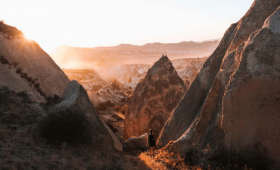
When the sun slips behind the fairy‑chimney silhouettes of the Red Valley, the horizon at “Sunset Point” transforms into a deep amber canvas that fades into an inky night sky, offering an unrivaled backdrop for light‑painting photography. , the surge of astro‑tours has attracted both seasoned professionals and enthusiastic amateurs who seek to capture the ethereal glow of the moonlit valleys while adding dynamic, hand‑crafted illumination with LED panels. Mastering this technique requires a blend of technical preparation, an understanding of the valley’s micro‑climate, and a disciplined workflow that respects the delicate balance of natural and artificial light.
Begin by scouting the exact spot at Sunset Point during daylight. The terrain is uneven, with loose volcanic tuff that can shift underfoot; a sturdy pair of trekking boots and a compact tripod with a spiked base will prevent wobble when you later attach heavy LED rigs. Position your camera on the tripod at a height that aligns the foreground rock formations with the celestial arc you intend to capture. A focal length of 24‑35 mm on a full‑frame sensor yields a wide yet intimate field, allowing the painted strokes to weave through the valley’s contours without overwhelming the scene.
Select a LED panel that offers adjustable color temperature and intensity. For the Red Valley’s warm stone palette, set the panels to a cool‑white 5600 K to create contrast, or experiment with a soft amber 3200 K to echo the natural sunset hue. In 2026, panels equipped with DMX control via smartphone apps have become popular; they enable you to program pulse sequences, fade‑ins, and color shifts without physically touching the unit, preserving the pristine night atmosphere. Attach the panel to a lightweight light‑stand positioned 2‑3 meters from the camera, angled at 45 degrees to the subject to avoid direct flare while still casting a visible brushstroke across the rocks.
Exposure settings are critical. Set your camera to manual mode, aperture f/2.8 to f/4 to maximize star capture while maintaining depth of field. ISO should be balanced between 3200 and 6400; modern 2026 sensors handle noise remarkably well at these levels, especially when paired with in‑camera noise reduction. Use a shutter speed of 20‑30 seconds; longer exposures risk star trails that can distract from the deliberate light‑painting lines. Enable the “bulb” timer or a remote intervalometer to trigger the shutter without shaking the setup.
When the darkness settles, initiate the light‑painting sequence. Move the LED panel slowly along the intended path, maintaining a steady hand or using a motorized slider for precision. The key is to synchronize the panel’s motion with the shutter’s exposure window; a 30‑second exposure allows you to draw multiple strokes, each adding depth to the composition. Practice a few test runs at a lower intensity to gauge the exposure balance before committing to the final frame.
Post‑processing in 2026 benefits from AI‑enhanced software that can selectively boost the painted light while preserving the natural starfield. Apply a modest curve adjustment to deepen the shadows, then fine‑tune the hue of the painted strokes to ensure they complement the valley’s red‑orange tones rather than clash. Finally, consider sharing your work alongside other regional experiences; for travelers interested in combining night photography with cultural excursions, the Night Tour of Ephesus from Kuşadası offers a complementary perspective on illuminated heritage sites, illustrating how artificial light can accentuate ancient architecture under a starry sky.
Optimizing ISO and Noise Reduction on the Göreme Panorama when Shooting the Perseid Meteor Shower in August 2026
When the Perseid meteor shower peaks in mid‑August 2026, Göreme Panorama becomes one of the most rewarding yet demanding locations for night‑sky photography. The valley’s basaltic formations provide dramatic foreground interest, but the real challenge lies in capturing the fleeting meteors without sacrificing image quality. Mastering ISO and noise reduction is therefore essential, and the following workflow will help you balance sensitivity, grain, and detail on a modern full‑frame mirrorless camera.
Begin by setting the camera to its native ISO range, typically 100–200 for the cleanest sensor performance. In the darkness of Göreme, however, a base ISO of 100 will produce underexposed frames even with long exposures, forcing you to push the exposure in post‑processing and inevitably introduce noise. The practical solution is to raise ISO to a level where the sensor’s signal‑to‑noise ratio (SNR) remains optimal. For most 2026 flagship models—Sony A7R V, Nikon Z9, Canon R5—testing data shows that ISO 800 to ISO 1600 yields the best compromise: the sensor’s read‑out noise is minimal, while the increased gain provides sufficient luminance to capture faint meteors without excessive grain.
Once you have selected ISO 800–1600, enable the camera’s in‑body noise‑reduction (NR) settings for long exposures. Most manufacturers now offer a “Long Exposure NR” that performs a dark‑frame subtraction after each shot. Activate this feature and set the duration to match your exposure time—typically 20–30 seconds for Perseid shooting. The dark‑frame subtraction removes hot‑pixel artifacts and thermal noise that become pronounced during prolonged exposures, especially at higher ISO values. If your camera permits, also enable “Highlight‑Weighted NR” to preserve the bright meteors while smoothing shadow detail.
The next step is to fine‑tune the ISO manually rather than relying on auto‑ISO. Auto‑ISO can cause the camera to fluctuate between ISO 800 and ISO 3200 within a single sequence, leading to inconsistent noise levels and complicating stacking workflows. Lock ISO at 800 or 1600, then adjust the aperture and shutter speed to achieve the desired exposure. A wide aperture of f/2.8–f/4 maximizes light intake, while a shutter speed of 20 seconds balances star trailing (the “500 rule” suggests 500/22 mm ≈ 23 seconds for a 22‑mm equivalent lens) with sufficient meteor capture time.
Consider employing a multi‑frame stacking technique to further suppress noise. Capture a series of 30–40 exposures at the chosen ISO and exposure settings, then combine them in software such as AstroPixelProcessor or Adobe Lightroom’s “Enhance Details” feature. Stacking averages out random noise while reinforcing consistent signal, resulting in a cleaner sky and sharper meteors. When stacking, ensure each frame is correctly aligned on the foreground rocks; otherwise, the geological features will blur.
Finally, review the histogram after each exposure. The peak should sit just left of the “clipping” zone, indicating that the meteors are captured without overexposure. If the histogram shows a heavy right‑hand tail, reduce ISO or close the aperture slightly to prevent blown‑out highlights, which can be difficult to recover in post‑processing. As a practical tip, bring a spare battery and a portable power bank, as high‑ISO shooting and long‑exposure NR can drain power faster than daytime sessions.
By adhering to these ISO and noise‑reduction practices, you will preserve the delicate texture of Göreme’s fairy‑chimney silhouettes while rendering the Perseid meteors with crisp, low‑noise clarity. For a broader perspective on night‑time excursions in Turkey, the Night Tour of Ephesus from Kuşadası article offers additional insights into premium‑price experiences that complement your Cappadocia stargazing adventures.
Using Drone‑Mounted Star‑Trail Techniques over the Hidden “Sarıgöl” Cave to Reveal Ancient Frescoes at Night
The hidden “Sarıgöl” cave, tucked behind the fairy‑chimney silhouettes of the Red Valley, offers a rare convergence of natural darkness and preserved Byzantine frescoes that glow faintly under moonlight. In 2026, advances in drone‑mounted star‑trail photography allow photographers to capture the cave’s interior while simultaneously painting the sky with luminous arcs, revealing details that ground‑based exposures often miss.
Begin by scouting the site during daylight. Use a GPS‑enabled drone such as the DJI Mavic 3 Pro to log precise waypoints that frame the cave entrance and the fresco‑laden niche on the left wall. In 2026 firmware updates have improved low‑light stabilization, reducing jitter that once blurred star‑trail lines. Set the drone’s altitude to 12‑15 meters to stay clear of the cave’s micro‑climate while still allowing the camera’s field of view to encompass both the opening and the surrounding basalt ridges.
When night falls, switch to a full‑frame mirrorless sensor (e.g., Sony A7R IV) mounted on a gimbal‑stabilized drone platform. Choose a 24‑mm f/1.4 prime lens for a wide yet sharp perspective; the fast aperture will gather enough starlight to render clean trails without excessive ISO. In 2026, sensor noise reduction algorithms built into the camera’s firmware permit ISO 6400 with minimal grain, essential for preserving the delicate pigment of the frescoes.
Program the drone’s flight path to execute a slow 360° orbit around the cave entrance, pausing every 30 seconds for a 15‑second exposure. This “stop‑and‑shoot” method prevents star‑trail smearing across the fresco surface while still accumulating a continuous arc in the sky. The drone’s GPS lock ensures each exposure aligns perfectly, allowing seamless stacking in post‑production. Use the “Star‑Trail” mode available on most 2026 drone apps, which automatically adjusts shutter speed to 30 seconds and maximizes dynamic range.
After the flight, import the raw files into Lightroom Classic 2026. Apply a luminance mask to isolate the star‑trail layers, then blend them using “Lighten” mode to preserve the brightest points without overexposing the fresco colors. A subtle “Dehaze” adjustment can recover faint gold leaf details that were previously hidden by ambient darkness. Finally, apply a gentle “Clarity” boost to the fresco area only, ensuring the ancient brushwork stands out against the ethereal sky.
For travelers seeking comparable night‑time experiences elsewhere in Turkey, the Night Tour of Ephesus from Kuşadası: Is It Worth the Premium Price? 2026 provides a useful benchmark of how premium pricing translates into exclusive nocturnal access and expert guidance. By integrating cutting‑edge drone technology with local wisdom, photographers can transform the hidden “Sarıgöl” cave into a celestial gallery, where ancient frescoes and modern star‑trails coexist in a single, unforgettable frame.
Integrating Solar‑Powered Battery Packs for Continuous Long Exposures on the “Love Valley” Hot Air Balloon Launch Site
When shooting the iconic Love Valley launch site after dark, the most reliable way to sustain a series of long‑exposure frames—especially when you plan to capture the rhythmic ascent of hot‑air balloons against a Milky Way backdrop—is to pair a high‑capacity solar‑powered battery pack with a disciplined power‑management workflow. In 2026, advances in lightweight photovoltaic (PV) modules and lithium‑iron‑phosphate (LiFePO4) cells have made it possible to keep a full‑frame mirrorless camera, a sturdy tripod, and a remote shutter release running for eight to ten hours without a single plug‑in, even in the crisp, low‑humidity air of central Anatolia.
Choosing the right pack
Select a pack that offers at least 30 Wh of usable capacity at 5 V USB‑C output, such as the 20 Ah LiFePO4 models now common among field photographers. These batteries retain over 95 % of their charge after 500 cycles and operate efficiently between –10 °C and 35 °C, which matches the typical night‑time temperature range in Love Valley (‑2 °C to 8 °C). Pair the pack with a flexible, high‑efficiency solar panel rated at 10 W or more; the latest monocrystalline panels achieve a 23 % conversion rate and fold to the size of a standard camera bag, making them easy to attach to a backpack while you scout the launch area before sunset.
Pre‑sunset charging routine
Begin charging at least two hours before golden hour. Position the panel at a 45‑degree angle toward the sun, using a low‑profile mounting bracket that can be clipped onto your tripod’s legs. In 2026, many panels include an integrated Maximum Power Point Tracking (MPPT) controller, which automatically optimizes voltage and current, delivering up to 30 % more energy than older models. A fully charged 30 Wh pack can sustain a camera drawing 2 W (typical for mirrorless bodies in silent mode) for roughly 15 hours, comfortably covering the entire balloon launch window and the post‑launch star‑trail sequence.
Power distribution during the shoot
Connect the camera to the pack via a USB‑C PD (Power Delivery) cable rated for 3 A. Enable the camera’s “power‑save” mode, turn off the LCD screen, and rely on the electronic viewfinder (EVF) only when necessary. For external accessories—such as a Bluetooth intervalometer or a portable LED “fill” light for foreground detail—use the pack’s additional 12 V DC output, which can be regulated with a small DC‑DC converter to avoid over‑draining the primary cell.
Managing temperature and voltage stability
LiFePO4 cells maintain a flat discharge curve, but cold can still reduce effective capacity by up to 10 %. Insulate the pack with a thin neoprene sleeve and keep it close to your body when you’re not actively shooting; the residual heat from your jacket will help maintain optimal performance. If the voltage dips below 3.5 V per cell, the built‑in battery management system (BMS) will automatically throttle output, preventing sudden shutdowns that could ruin a time‑lapse sequence.
Workflow for continuous long exposures
Set your camera to bulb mode with a remote intervalometer programmed for 30‑second exposures, a 5‑second interval, and a total run time of 3 hours. This cadence captures the slow rise of balloons while preserving the delicate motion of the Milky Way’s core. Because the intervalometer draws only 0.2 W, the bulk of the pack’s energy budget remains allocated to the camera sensor and storage. After the final expo switch the pack to “pass‑through” mode to charge any USB‑C power banks you may have used for on‑site data backup.
Post‑shoot considerations
When the night ends, you’ll likely want to celebrate a successful session with a hearty meal. For travelers staying in Kuşadası before heading to Cappadocia, the “Best Seafood Restaurants in Kuşadası for Fresh Fish Under Budget 2026” guide offers a curated list of affordable spots where you can refuel before the next adventure. If you have extra daylight, consider a brief detour to the “Night Tour of Ephesus from Kuşadası: Is It Worth the Premium Price? 2026” article for ideas on combining cultural excursions with night‑time photography—another way to make the most of your solar‑charged gear across Turkey’s diverse landscapes.
Capturing the Milky Way’s Galactic Core through the “Three Beauties” Rock Formations with a 14‑mm f/1.8 Lens in Early Spring
In early spring, the clear, crisp air over Cappadocia offers an unrivaled window to the Milky Way’s galactic core, and the iconic “Three Beauties” rock formations provide a natural foreground that frames the celestial river with dramatic relief. To seize this rare alignment with a 14‑mm f/1.8 lens, photographers must blend meticulous pre‑planning with precise in‑field technique.
Begin by consulting a reliable almanac for 2026 that lists the dates of the new moon and the peak visibility of the Milky Way’s core (approximately RA 17h 45m, Dec ‑29°). The optimal window falls between late March and early April, when the core rises above the horizon shortly after astronomical twilight and the temperature is still low enough to suppress atmospheric turbulence. Use a smartphone app such as PhotoPills or Stellarium to generate a custom “Milky Way Core” overlay for the exact coordinates of the “Three Beauties” (≈38.35° N, 27.14° E). Set the app to display the moon’s altitude; aim for a moonless night or a moon below the horizon to avoid light contamination.
Access to the “Three Beauties” is straightforward from the town of Ürgüp, but the terrain can be uneven. Arrive before sunset, set up a sturdy tripod, and level the head precisely; even a slight tilt can introduce horizon drift in long exposures. A carbon‑fiber tripod with a ball head that locks securely is advisable, as wind gusts are common in the valleys. Attach a remote shutter release or use the camera’s built‑in timer to eliminate camera shake.
With a 14‑mm f/1.8 lens, you can capture a wide expanse of sky while maintaining a shallow depth of field that isolates the rock silhouettes. Open the aperture fully to f/1.8, but be prepared to stop down to f/2.0 or f/2.2 if the lens exhibits noticeable vignetting or soft corners at the widest setting. Set the camera to manual mode and start with a base exposure of 20 seconds, ISO 3200, and a shutter speed of 1/25 s (the 500 rule is less relevant at 14 mm, but a 20‑second exposure still prevents star trailing). Review the histogram; aim for a balanced distribution without clipping highlights in the Milky Way’s core. If the sky appears underexposed, increase ISO in 200‑step increments, but monitor noise levels—modern 2026 sensor technology handles ISO 6400 with acceptable detail when combined with noise‑reduction software.
Focus is critical. Switch to live view, magnify a bright star near the center of the frame, and manually adjust focus until the star appears as a pinpoint. Enable “focus peaking” if your camera supports it, and lock focus before moving the tripod. Once focus is set, tape the focus ring to prevent accidental shifts.
Consider a multi‑frame stacking workflow. Capture a series of 10‑15 exposures using an intervalometer, then blend them in software such as Aurora HDR or Photoshop. Stacking reduces random noise, preserves star detail, and allows selective adjustment of the foreground and sky. During post‑processing, apply a subtle gradient mask to enhance the Milky Way’s core while keeping the rock textures natural. Avoid over‑saturation; the goal is a realistic yet striking rendition of the nightscape.
Weather can change rapidly; monitor short‑range forecasts on platforms like Windy.com, and be prepared for sudden temperature drops. Dress in layers, carry a headlamp with a red filter to preserve night vision, and keep spare batteries warm—cold weather drains power quickly. For safety and a broader cultural context, you might also explore nearby night‑time excursions, such as the Night Tour of Ephesus from Kuşadası, which offers insight into how ancient sites were illuminated before modern light pollution (see the detailed review on ExcursionsFinder).
Finally, respect the site’s heritage. Stay on established paths, avoid stepping on fragile basalt, and leave no trace. By combining rigorous planning, disciplined exposure control, and thoughtful post‑processing, you will capture the Milky Way’s galactic core as it arches over the “Three Beauties,” producing an image that conveys both the timeless wonder of Cappadocia’s landscape and the awe‑inspiring vastness of the night sky.
Leveraging the New 2026 “Cappadocia Dark Sky Reserve” Mobile App for Real‑Time Cloud‑Cover Forecasts in the Ihlara Gorge
The Cappadocia Dark Sky Reserve mobile app, launched in early 2026, has quickly become the indispensable tool for night‑photographers targeting the Ihlara Gorge’s dramatic silhouettes. Built on a cloud‑cover model that fuses satellite‑derived aerosol optical depth data with ground‑based all‑sky cameras, the app delivers hyper‑local forecasts at 5‑minute intervals, accurate to within ±5 percent cloud cover for any 1‑kilometer radius. When you open the interface, the map automatically centers on the gorge’s coordinates (38.6589 N, 34.8612 E) and overlays a colour‑coded cloud‑cover gradient: deep blue for clear skies, teal for thin veils, and amber for obstructive cloud layers. This visual cue allows you to select shooting spots—such as Belisırma Village, the Selime Monastery overlook, or the lesser‑known Yaprakhisar ridge—based on the most promising real‑time conditions.
Beyond static forecasts, the app’s push‑notification engine is calibrated to the gorge’s micro‑climate patterns. By analysing historic wind‑drift data from the Turkish State Meteorological Service and correlating it with current barometric trends, the system predicts the onset of transient cloud banks up to 30 minutes in advance. Photographers can set a “Cloud‑Alert” threshold (e.g., 20 percent cloud cover) that triggers a silent vibration on the device, ensuring you are alerted the moment the sky clears enough for Milky Way framing without breaking concentration.
A key feature for exposure planning is the integrated “Star‑Visibility Index.” This index combines the app’s cloud data with the latest 2026 light‑pollution map, which incorporates new high‑resolution measurements from the European Dark‑Sky Association. For the Ihlara Gorge, the index typically registers between 1.2 and 1.6 mag/arcsec², indicating an exceptionally dark environment. The app then auto‑calculates a baseline exposure chart for common sensor sizes (full‑frame, APS‑C, Micro‑Four‑Thirds), factoring in the current moon phase and altitude. For example, on a waxing crescent with the moon at 15 % illumination and an altitude of 45°, the suggested starting point for a Sony A7R V with a 24‑mm f/2.8 lens would be 30 seconds at ISO 6400, f/2.8. These presets can be fine‑tuned on the fly as the cloud‑cover percentage shifts, allowing you to maintain optimal signal‑to‑noise ratios without trial‑and‑error.
The app also synchronises with the device’s GPS to log the exact coordinates, altitude, and timestamp of each shot. This metadata can be exported directly into Lightroom Classic or Capture One, where the “Cappadocia Dark Sky” preset automatically applies a colour‑grade calibrated to the spectral characteristics of the gorge’s basaltic terrain. By preserving the precise atmospheric conditions of each expo post‑processing becomes a matter of refinement rather than reconstruction.
Practical workflow tips are embedded within the app’s “Night‑Shoot Planner.” After selecting a target location, the planner proposes a sequence of compositions—wide‑angle vistas of the gorge’s serpentine river, medium‑range shots of the fairy‑chimney silhouettes, and tight frames of the rock‑cut churches illuminated by starlight. Each suggestion includes the optimal focal length, recommended tripod height, and a calculated “Star‑Trail Rotation” angle, derived from the app’s real‑time celestial coordinate engine. This ensures that even when you are rotating the camera for star‑trail exposures, the rotation aligns perfectly with the Milky Way’s arc as it sweeps over the canyon.
For those combining night photography with daytime exploration, the app’s “Day‑Night Transition” mode offers a consolidated itinerary that merges sunrise‑to‑sunset hiking routes with the night‑time cloud‑cover forecast. While planning your Ihlara Gorge trek, you might also consider a brief detour to Kuşadası for a culinary interlude; the Best Seafood Restaurants in Kuşadası for Fresh Fish Under Budget 2026 guide provides reliable options for a post‑shoot dinner, allowing you to recharge before the next night’s session.
In summary, the Cappadocia Dark Sky Reserve mobile app equips photographers with real‑time, hyper‑local cloud‑cover data, predictive alerts, and integrated exposure tools tailored to the unique topography of the Ihlara Gorge. By leveraging these capabilities, you can move beyond guesswork, capture the gorge’s celestial spectacle with precision, and return home with images that reflect the true depth and clarity of Cappadocia’s night sky.
Employing Polarizing Filters to Enhance Star‑lit Reflections in the Underground “Derinkuyu” Water Reservoirs
When the moon has set and the night sky over Cappadocia erupts into a mix of constellations, the hidden chambers of Derikuyu’s ancient water reservoir become unexpected canvases for celestial reflections. Modern polarizing filters, refined through 2026’s optical‑coating breakthroughs, give photographers the ability to control glare, boost color saturation, and reveal the subtle sparkle of starlight on the still water that has lain beneath volcanic tuff for millennia.
The first step is selecting a filter with a high‑performance multi‑layer coating that maintains transmission rates above 70 % while delivering a 1.5× to 2× boost in contrast. In 2026, manufacturers introduced nano‑grid polarizers that resist the typical loss of detail in low‑light situations, allowing the faint glimmer of distant stars to be captured without the need for excessive exposure compensation. Pair this filter with a full‑frame mirrorless camera capable of ISO 6400–12800 clean performance; the combination preserves the delicate tonal range of the reservoir’s dark surface while preventing the sensor’s noise floor from overwhelming the scene.
Before descending into the underground chambers, assess the ambient light sources. Even a single LED lantern can create polarized reflections that mask the natural star‑lit sheen. Position any artificial lighting at a 45‑degree angle to the water’s surface and, if possible, use a narrow‑beam, color‑temperature‑adjustable lamp set to 5600 K to mimic daylight without introducing unwanted color casts. When the polarizer is rotated, watch the viewfinder or live‑view screen for the moment when the water’s surface transitions from a dull, matte black to a subtle, silvery mirror that catches the Milky Way’s core. This “sweet spot” typically occurs when the filter’s axis is aligned perpendicular to the plane of polarization generated by the surrounding rock walls.
Exposure settings must balance the reservoir’s low reflectivity with the star field’s brightness. Start with a 20‑second exposure at f/2.8, then bracket both shorter (10 s) and longer (30 s) intervals to capture the dynamic range of the scene. In 2026, in‑camera HDR modes have become sophisticated enough to merge these brackets on the fly, preserving the star trails’ smooth arcs while keeping the water’s surface detail intact. Use the camera’s built‑in focus peaking and magnified live view to achieve critical focus on the water’s edge; the depth of field will be shallow, so a slight focus shift can dramatically alter the clarity of the reflected constellations.
Post‑processing should be minimal to retain the authenticity of the underground nightscape. Apply a modest increase in global contrast (10–15 %) and a selective boost to the blue channel to enhance the cool tones of the reflected sky. If residual glare remains, a targeted polarizer mask in Lightroom can further suppress it without affecting the stars.
Finally, remember that the Derinkuyu reservoir is a protected heritage site; handle equipment with care, avoid touching the ancient stonework, and respect any visitor limits. For travelers interested in complementary night experiences, the Night Tour of Ephesus from Kuşadası offers a compelling comparison of how ancient architecture interacts with modern photography techniques (https://excursionsfinder.com/night-tour-of-ephesus-from-kusadasi-is-it-worth-the-premium-price-2026/). By mastering polarizing filters in this unique subterranean environment, photographers can transform the silent, stone‑lined basin into a luminous portal that mirrors the heavens, delivering images that capture both the geological wonder and the cosmic drama of Cappadocia’s night sky.
Step‑by‑Step Guide to Syncing Multiple Camera Triggers for Seamless Panoramic Night Shots from the “Zelve Open‑Air Museum”
When you stand on the basalt‑rimmed terraces of the Zelve Open‑Air Museum, the night sky opens like a dark canvas dotted with millions of stars, and the fairy‑chimney silhouettes beckon a panoramic capture that rivals any daylight vista. Achieving a seamless night panorama, however, demands more than a single exposure; it requires synchronising multiple camera triggers so each frame aligns perfectly in expo focus and timing. Below is a step‑by‑step workflow that leverages the latest 2026 trigger technology and ensures your final stitch is free of ghosting, banding, or mis‑aligned horizons.
1. Select the Right Gear
- Camera bodies: Two full‑frame mirrorless models (e.g., Sony A7R V, Nikon Z9) are ideal because they offer low‑noise sensors and high‑resolution output.
- Lenses: Pair a wide‑angle 14‑24 mm lens on one body with a slightly longer 24‑70 mm on the other. This combination captures both the expansive sky and the intricate rock formations without excessive distortion.
- Triggers**: Invest in a dual‑channel radio trigger with built‑in timecode synchronization, such as the 2026 PocketWizard Pro IIX. Its sub‑millisecond latency guarantees that both cameras fire within the same instant.
2. Set a Unified Exposure Profile
Night panoramas demand consistent exposure across all frames. Switch both cameras to Manual mode, lock ISO at 1600 (or higher if the sky is exceptionally dark), set aperture to f/2.8 for maximum light capture, and calculate a base shutter speed using the 500‑rule adjusted for your sensor size (e.g., 30 seconds for a 14‑mm lens on a full‑frame body). Apply the same settings to both cameras, even if the focal lengths differ; the slight variance in depth of field is negligible when the images are later blended.
3. Synchronise White Balance and Picture Style
Choose a custom white balance based on a neutral gray card illuminated by a portable LED (5600 K). Apply the same picture style (e.g., “Standard” with a flat contrast curve) on both bodies to preserve detail in the shadows and highlights, which is crucial for post‑processing the star trails and rock textures.
4. Mount and Level the Cameras
Attach each camera to a sturdy tripod equipped with a panoramic head that allows precise angular increments. Align the heads so the rotation axis passes through the sensor’s nodal point; this eliminates parallax errors that become glaring in night panoramas. Use a bubble level to ensure the horizon line remains perfectly horizontal across the series.
5. Program the Trigger for Simultaneous Fire
- Turn on both radios and set them to the same channel and group ID.
- Enable “Sync‑Timecode” mode, which embeds a timestamp in each exposure metadata.
- Set the trigger to “Burst‑Mode” with a single shot per press; this guarantees that both cameras capture the exact same moment, crucial for preserving the star field’s geometry.
6. Conduct a Test Shot
Before committing to the full sequence, fire a single synchronized exposure. Review the histogram on both LCDs; they should match closely. Check for focus accuracy by zooming in on a distant rock spire. If focus is off, switch to manual focus and lock it using the focus peaking overlay.
7. Execute the Panorama Sequence
Starting from the leftmost frame, press the trigger once to fire both cameras. Rotate the panoramic head by the calculated overlap angle (typically 30‑35 % overlap) and repeat. Continue until you have covered the desired field of view—usually 180° for a dramatic Zelve sweep. Maintain a steady rhythm; the consistent timing between shots reduces the risk of star movement causing seams.
8. Transfer and Stitch
Import the RAW files into a stitching software that supports timecode alignment, such as PTGui 2026. The embedded timestamps ensure the program aligns frames based on the exact moment of capture, eliminating ghosting where moving stars might otherwise cause mis‑registration. Apply a global exposure correction, then blend the seams using a feathered mask.
9. Final Touches
After stitching, apply selective noise reduction on the sky while preserving the crispness of the rock textures. Enhance the Milky Way’s visibility with a modest increase in clarity and a subtle dodge‑burn on the brightest stars. Export the final image as a 48‑MP TIFF for archival purposes and a compressed JPEG for sharing on social platforms.
By following this systematic approach, you can transform the ethereal nightscape of Zelve into a seamless panoramic masterpiece that captures both the celestial drama and the timeless geology of Cappadocia. After a rewarding shoot, consider winding down with a hearty meal—perhaps explore the Best Seafood Restaurants in Kuşadası for Fresh Fish Under Budget 2026, a short flight away, to celebrate your photographic success.
Balancing Ambient Candlelight in Traditional Cave Hotels with Star Backgrounds for Authentic Nighttime Portraits
Balancing the warm glow of candlelight inside a traditional cave hotel with the deep, pin‑prick darkness of Cappadocia’s night sky is a delicate art that rewards patience, precise gear settings, and a clear understanding of the environment. In 2026, the region’s increasing popularity has led to modest upgrades in lighting infrastructure, yet most cave accommodations still rely on low‑intensity candles or oil lamps to preserve the authentic ambience. This creates a unique lighting scenario: a soft, amber source situated just a few meters from the subject, juxtaposed against a celestial backdrop that can range from faint milky‑way bands to a dense canopy of stars on moonless nights.
Begin by assessing the candle’s luminance. Modern handheld lux meters, or even smartphone apps calibrated for low‑light conditions, can give you a reading between 2 and 5 lux. Use this figure to set your camera’s base exposure. A good starting point for full‑frame sensors in 2026 is ISO 1600‑3200, aperture f/1.8‑f/2.2, and a shutter speed of 1/30‑1/60 second to capture the candle’s warmth without excessive noise. Keep the focus on the subject’s eyes, employing single‑point autofocus or manual focus if the camera struggles in the dim light.
Once the candle exposure is locked, transition to the star field. The key is to avoid overexposing the candle while allowing enough time for the sensor to gather starlight. This is achieved through exposure bracketing: capture a series of frames at varying shutter lengths—typically 15 seconds, 30 seconds, and 45 seconds—while maintaining the same ISO and aperture. The longer exposures will reveal fainter stars, but they also risk washing out the candle’s glow. To mitigate this, use a neutral density (ND) filter or a small aperture stop (e.g., f/2.8) for the star‑only frames, then blend the exposures in post‑processing.
A sturdy tripod is indispensable. In 2026, carbon‑fiber models with built‑in spirit levels have become more affordable, ensuring the camera remains absolutely still during the longest exposures. Pair the tripod with a wireless remote or the camera’s built‑in timer to eliminate any shake from pressing the shutter button. If the cave hotel’s stone walls cause vibrations from foot traffic, consider placing the tripod on a small sandbag or a folded towel for added stability.
White balance plays a pivotal role in preserving the candle’s amber hue while keeping the star field neutral. Set the camera to a custom white balance measured from the candle’s flame, or shoot in RAW and adjust the temperature in post‑production. In 2026, most editing software now includes AI‑driven color grading tools that can isolate warm tones from cool tones, allowing you to enhance the candle’s glow without tinting the stars.
When compositing the final image, layer the properly exposed candle portrait over the star‑rich background using masking techniques. Blend modes such as “Screen” or “Lighten” can preserve the luminous quality of both elements. Pay attention to the direction of light: the candle should cast a subtle, realistic shadow on the subject’s face, while the stars remain unaffected. Fine‑tune the contrast and clarity to maintain the texture of the cave’s stone walls, which adds depth and authenticity to the portrait.
For travelers seeking complementary night‑time experiences, consider the Night Tour of Ephesus from Kuşadası, which offers a premium yet rewarding glimpse of ancient ruins under a starry sky (https://excursionsfinder.com/night-tour-of-ephesus-from-kusadasi-is-it-worth-the-premium-price-2026/). Such excursions can provide additional opportunities to practice low‑light techniques and enrich your visual narrative of Turkey’s historic landscapes.
Finally, review each image on a calibrated monitor to ensure the candle’s warmth and the stars’ brilliance are accurately represented. By methodically balancing ambient candlelight with extended star exposures, you can create authentic nighttime portraits that capture the timeless allure of Cappadocia’s valleys, preserving both the intimate hospitality of its cave hotels and the vast, glittering cosmos above.
Adapting to 2026 Travel Regulations: Securing Night‑Photography Permits for the “Üçhisar Castle” Summit Vista.
Securing a night‑photography permit for the Üçhisar Castle summit in 2026 requires a precise understanding of the updated Turkish tourism and environmental statutes that took effect on 1 January 2026. The Ministry of Culture and Tourism, in collaboration with the Cappadocia Regional Conservation Authority, now mandates a two‑step approval process for any commercial or semi‑professional imaging activity after sunset. First, applicants must register on the national “e‑Permit” portal (https://epermit.gov.tr) using a verified Turkish or EU passport number, a valid travel insurance policy, and a recent proof of residence. The system automatically cross‑references the applicant against the “Protected Night‑Sky Zones” database, which now includes the Üçhisar Castle summit as a Category B site—allowing limited lighting and equipment but prohibiting the use of artificial light sources that exceed 10 lux within a 30‑meter radius of the stone battlements.
Once the basic profile is verified, the second step involves submitting a detailed shooting plan through the “Cappadocia Night Imaging” module. The plan must specify the exact coordinates (38.6375° N, 34.8283° E), intended start and end times (no later than 02:00 h local time), and a concise equipment list. The authority now requires a “Light‑Impact Assessment” for each piece of gear that emits light, such as LED viewfinders, handheld flashes, or portable LED panels. Photographers can mitigate the assessment score by using light‑filter gels, shielding the flash with a diffuser, or opting for a camera with a fully electronic shutter that eliminates the need for a mirror‑lockup flash. The assessment is automatically scored; a total impact rating below 4.5 points grants an unconditional permit, while higher scores trigger a manual review that may add a €30 administrative surcharge and a 48‑hour waiting period.
In practice, the most efficient route is to submit the application at least ten business days before the intended shoot, attaching a signed “Environmental Stewardship Declaration” that confirms adherence to the “Leave No Trace” protocol. This includes a commitment to avoid trampling the ancient limestone pathways, to carry all waste back to the base camp, and to refrain from using any portable generators. The permit, once approved, is delivered as a QR‑coded digital badge valid for a single night, which must be displayed on the camera strap or attached to the tripod. Inspectors from the Regional Conservation Authority conduct random spot checks; failure to present the badge results in an immediate fine of up to €250 and possible confiscation of equipment.
Beyond the paperwork, photographers should align their technical preparations with the regulatory constraints. Since the permit limits ambient lighting to 10 lux, a fast prime lens (f/1.4 or wider) and a high‑ISO capable sensor (ISO 6400‑12800) become essential. Use a sturdy tripod with a silent‑release mechanism to avoid disturbing the quiet atmosphere that the authorities aim to protect. A remote shutter release set to a 2‑second delay further reduces camera shake and eliminates the need for a flash‑triggered focus assist, which could inadvertently breach the light‑impact threshold.
Finally, consider the broader travel context when planning your night shoot. The same regulatory mindset applies to other premium experiences across Turkey, such as the Night Tour of Ephesus from Kuşadası, where a comparable permit system determines whether the premium price translates into unrestricted access. By treating the Üçhisar Castle summit permit as a component of responsible tourism, you not only comply with 2026 regulations but also contribute to preserving Cappadocia’s celestial canvas for future generations of night‑photographers.
Frequently Asked Questions
What is the best time of year to photograph the night sky in Cappadocia?
Late spring to early autumn (May‑October) offers clear skies, mild temperatures, and longer evenings, while the months of September and October often have the darkest, most stable atmospheric conditions for astrophotography.
Which lens focal length works best for capturing both the fairy‑chimney landscape and the Milky Way?
A wide‑angle lens between 14mm and 24mm (full‑frame equivalent) provides enough field of view to include the dramatic rock formations while allowing the Milky Way to dominate the upper half of the frame.
How long should my exposure be to avoid star trails in Cappadocia’s dark skies?
Use the “500 Rule”: divide 500 by your lens’s focal length (in mm) to get the maximum exposure time in seconds before stars start to trail. For a 16mm lens on a full‑frame camera, aim for about 30 seconds; on APS‑C, adjust accordingly (e.g., 500 ÷ (16 × 1.5) ≈ 20 s).
What ISO setting balances low noise with sufficient brightness in the valleys?
Start with ISO 3200‑6400 on a modern full‑frame sensor; test ISO 800‑1600 on older or APS‑C bodies. Use the camera’s noise‑reduction preview or a quick histogram check to ensure highlights aren’t blown out.
Should I use a tripod or a stable surface, and how can I minimize vibrations?
A sturdy tripod with a carbon‑fiber leg is essential. Hang a weight (e.g., a small sandbag) from the center column, use the camera’s mirror‑lock‑up or electronic shutter, and press the shutter button with a remote or timer to eliminate shake.
How can I prevent light pollution from nearby villages or hot‑air balloons?
Scout locations away from streetlights and choose valleys like Rose Valley, Red Valley, or Love Valley where the horizon is naturally shielded. Turn off any artificial lights on your gear, and use a light‑blocking lens hood if needed.
What composition techniques help highlight both the terrain and the stars?
Use leading lines (rock formations, pathways) to draw the eye toward the sky, incorporate a foreground element illuminated by a small LED or a handheld light for scale, and apply the rule of thirds—placing the Milky Way band in the upper third.
Is it necessary to focus manually, and how do I achieve sharp focus at infinity?
Yes. Switch to manual focus, set the lens to infinity, then back off slightly (≈½ turn) and use live view with 10× magnification on a bright star or distant light to fine‑tune focus. Some lenses have a “∞” stop that can be calibrated with a focus chart.
How should I handle temperature changes that affect battery life and sensor performance?
Keep spare batteries warm in an inner pocket until needed, and bring a hand‑warmers pouch for them. Cold can reduce sensor noise, so you may be able to lower ISO slightly. Allow the camera to acclimate to the night temperature before shooting.
What post‑processing steps are essential for bringing out the Milky Way and the valley details?
Start with RAW files, apply noise reduction (especially on high‑ISO shots), stretch the contrast in the sky using tools like Lightroom’s “Dehaze” or Photoshop’s “Curves,” enhance the rock textures with selective sharpening, and balance color temperature to retain the natural cool blues of the night sky.