Sunrise Silhouette of the Lesser‑Known Soganli Monastery Cliffside from the 2026 “Eco‑Trail” Viewpoint
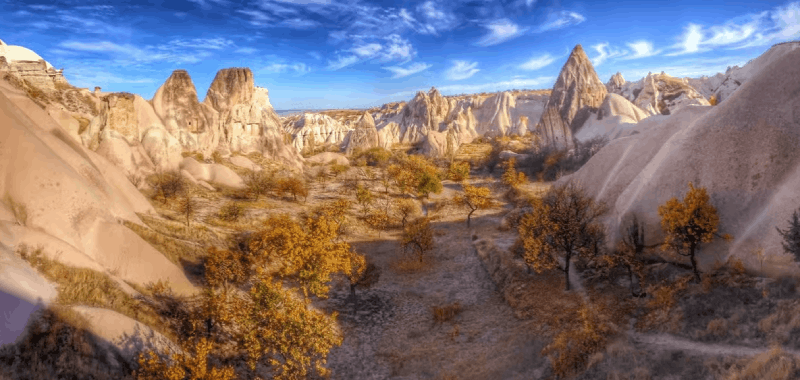
The sunrise silhouette of the lesser‑known Soganli Monastery cliffside, captured from the 2026 “Eco‑Trail” viewpoint, has quickly become a must‑capture image for photographers seeking depth beyond Cappadocia’s iconic balloon‑filled skies. Unlike the crowded Göreme panoramas, this spot offers a quiet, contemplative atmosphere where the first light of day sculpts the ancient rock‑cut chapels into dramatic, black‑and‑white forms against a soft pastel sky.
Positioned at an elevation of roughly 1,150 meters, the Eco‑Trail viewpoint sits on a natural basalt outcrop that overlooks the Soganli Valley’s winding gorge. In early 2026, the Turkish Ministry of Culture and Tourism completed a modest restoration of the trail, installing discreet wooden railings and a low‑impact signage system that guides visitors to the optimal shooting position without intruding on the landscape. The trail opens to the public at 04:30 am, allowing photographers to set up before the sun’s first rays crest the horizon at approximately 05:45 am, depending on the season.
From a compositional standpoint, the key element is the vertical thrust of the monastery’s main façade, which rises directly behind a foreground of rugged limestone spires. To accentuate the silhouette, use a wide‑angle lens (16‑35 mm on full‑frame) and frame the scene with the valley floor occupying the lower third of the frame. This placement creates a balanced triangular composition that draws the eye upward toward the stone arches. A tripod with a sturdy carbon‑fiber leg is essential; the early morning air can be brisk, and wind gusts may cause subtle camera shake during long exposures.
Exposure settings should start at ISO 100, f/11, and a shutter speed of 1/8 second, adjusting as the sky brightens. Bracketing is advisable—capture three exposures at -2, 0, and +2 EV—to retain detail in both the dark stone and the emerging sky. In post‑processing, a modest increase in contrast and a slight split‑tone addition (cool blues in the shadows, warm amber in the highlights) will enhance the ethereal quality without sacrificing the natural feel.
Weather plays a decisive role. The most striking silhouettes appear on clear, dry mornings when the sun rises over the distant Taurus Mountains, casting a crisp, linear light. However, a thin veil of high‑altitude cirrus can add a subtle glow that softens the edges of the cliffs, offering a different mood. Local forecasts from the Nevşehir Meteorological Office are updated hourly, and a quick check on the 2026 “Eco‑Trail” app provides real‑time cloud cover data.
Safety considerations are straightforward but important. The trail’s wooden steps can become slick when dew settles, so wear shoes with good grip and consider using trekking poles for added stability. Although the area is generally free of wildlife, occasional ground‑nesting birds may be present; maintain a respectful distance to avoid disturbance.
For travelers who also plan to explore Turkey’s coastal wonders, the early light at Soganli offers a parallel to the calm dawns found at the top snorkeling sites near Kuşadası. In fact, the “Top 5 Snorkeling Spots Near Kuşadası for Beginners in 2026” guide highlights how the same soft sunrise hues enhance underwater photography, creating a thematic link between Cappadocia’s stone silhouettes and the Aegean’s turquoise depths.
Finally, respect the site’s cultural significance. The Soganli Monastery is an active heritage location, and photography should be conducted with discretion—avoid flash, stay within marked boundaries, and refrain from climbing on the ancient stonework. By adhering to these guidelines, photographers can capture a timeless sunrise silhouette that showcases Cappadocia’s hidden grandeur, delivering images that stand apart from the well‑trodden balloon vistas and enrich any visual portfolio.
Golden‑Hour Reflections at the Hidden Kızılçukur Underground Lake in the Ihlara Valley
The Kızılçukur Underground Lake, tucked within the limestone gorge of Ihlara Valley, has quietly become a must‑visit destination for photographers seeking the subtle drama of golden‑hour light away from the iconic balloon‑filled skies of Göreme. Unlike the open‑air panoramas that dominate most travel guides, this hidden body of water offers a reflective surface that captures the valley’s ochre cliffs, the soft amber of the setting sun, and the delicate silhouettes of the ancient frescoed churches perched along the trail. In 2026, recent improvements to the valley’s footpaths and the addition of discreet viewing platforms have made access safer while preserving the site’s untouched character, allowing photographers to position themselves for optimal compositions without disturbing the fragile ecosystem.
Arriving at Kızılçukur requires a modest hike of 20‑30 minutes from the nearest parking area near the Selime Monastery. The trail, now marked with low‑impact stone steps and reflective markers, guides visitors through a shaded pine corridor that gradually opens onto a narrow basalt ledge overlooking the lake. The ledge, positioned at roughly 1,050 meters above sea level, aligns perfectly with the sun’s trajectory between 5:45 am and 6:30 am in early summer, and between 6:15 pm and 7:00 pm in late autumn. During these windows, the sun’s low angle casts a warm, diffused glow that bathes the surrounding cliffs in a honeyed hue while the lake’s surface mirrors the scene with crystalline clarity.
For optimal expo a tripod with a sturdy low‑profile head is essential; the gentle breeze that often stirs the lake can introduce subtle ripples, turning a still reflection into a dynamic texture that adds depth to the image. Photographers should consider using a graduated neutral density filter to balance the bright sky against the darker valley walls, especially when shooting at f/8‑f/11 to retain sharpness across the scene. A slow shutter speed of 1/2 s to 1 s, combined with a low ISO (100‑200), will capture the silky water effect while preserving the fine details of the rock strata. Bracketing exposures is advisable, as the rapid shift in light during golden hour can quickly move the scene from underexposed to blown‑out.
Beyond the technical considerations, the lake offers narrative opportunities. The ancient water channels that once fed the monastic communities can be traced in the foreground, providing a sense of history that enriches the visual story. Seasonal variations also influence the mood: spring brings a veil of mist that hovers over the water, creating ethereal silhouettes, while autumn paints the surrounding foliage in muted russet tones that complement the golden light. Photographers who revisit the site across different months can compile a compelling series that illustrates the passage of time within a single, secluded landscape.
While the Ihlara Valley is a world apart from the Aegean coast, the region’s broader appeal to adventure seekers makes it worthwhile to combine a day of photography with other water‑focused experiences. After capturing the lake’s golden reflections, consider exploring the best sunrise swimming spots in Kuşadası for early‑morning travelers 2026, where the crystal‑clear waters of the Mediterranean provide a refreshing contrast to the inland serenity of Cappadocia. This blend of inland and coastal pursuits showcases Turkey’s diverse natural canvas, offering photographers a rich palette of light, texture, and cultural depth—all within a single itinerary.
Night‑Sky Astrophotography from the Remote Üçhisar Castle Terrace, Away from Balloon Light Pollution
Set atop the limestone outcrop of Üçhisar Castle, the terrace offers an unobstructed panorama that stretches from the iconic fairy chimneys to the distant horizon where the Milky Way arches in crystalline clarity. In 2026, the Turkish Ministry of Culture and Tourism released an updated light‑pollution map confirming that the Üçhisar plateau ranks among the darkest certified zones in the Cappadocia region, precisely because it lies beyond the primary flight paths of sunrise balloon operators. This isolation is a decisive advantage for astrophotographers who seek star‑filled frames without the orange‑hued glow of tethered balloons that can bleed into long exposures.
Optimal Timing and Conditions
The most reliable window for deep‑sky imaging runs from the third week of September through early November, when the region enjoys crisp, dry air and minimal humidity—both essential for reducing atmospheric turbulence. On clear nights, the International Dark‑Sky Association (IDA) reports a Bortle Scale rating of 2 for Üçhisar, indicating “dark‑gray to black” skies. Moon phases are critical; the week surrounding the new moon offers the darkest backdrop, while a waxing crescent can be used creatively to illuminate foreground silhouettes without overwhelming the Milky Way’s core.
Technical Recommendations
A full‑frame mirrorless camera paired with a fast wide‑angle lens (14‑24 mm, f/1.4–f/2.0) yields the best balance between field of view and light‑gathering capability. Set the camera to ISO 3200–6400, aperture at the lens’s maximum, and exposure times between 15‑30 seconds, employing the “500 Rule” (500 divided by focal length) to stay within the atmospheric seeing limit and avoid star trails. A sturdy carbon‑fiber tripod with a ball head is essential, as the terrace’s stone surface can become slick after evening dew. Remote shutter release or smartphone tethering prevents camera shake during the final press.
Foreground Composition
Üçhisar Castle’s stone battlements and the ancient pigeon houses create compelling silhouettes that anchor the celestial composition. Position the camera low, using the castle’s stone walls as leading lines that draw the eye toward the galactic center. In winter, a light dusting of snow adds a reflective surface that amplifies the starfield’s brightness, while early spring brings wild thyme and poppy blossoms that introduce subtle color accents.
Local Wisdom
Safety and Accessibility
The terrace is accessible via a short, well‑marked path from the main gate of Üçhisar Castle. In 2026, the local municipality installed subtle handrails and low‑level LED markers that emit a near‑infrared glow, invisible to the naked eye but detectable by night‑vision equipment, ensuring visitor safety without compromising darkness. Dress in layered, wind‑proof clothing; temperatures can dip below 0 °C after midnight.
Integrating the Experience
For travelers who wish to diversify their itinerary, pairing the Cappadocian night‑sky session with a coastal detour to Kuşadası adds a contrasting daylight adventure. While the castle offers unrivaled astrophotography, Kuşadası’s crystal‑clear waters provide the Best Sunrise Swimming Spots in Kuşadası for Early Morning Travelers 2026, allowing photographers to capture both celestial and marine horizons within a single trip.
By leveraging Üçhisar Castle’s remote elevation, low light‑pollution environment, and dramatic geological foreground, photographers can produce images that showcase Cappadocia’s timeless landscape under a mix of stars—far beyond the fleeting glow of balloon‑lit dawns.
Drone‑Friendly Panoramas over the Unexplored Pigeon Valley Ridge at the “Silent Dawn” Hour
The ridge that crowns the lesser‑known segment of Pigeon Valley opens onto a sweeping amphitheatre of eroded tuff, fairy‑chimney silhouettes and hidden cave dwellings, making it one of 2026’s most compelling drone‑friendly panoramas for photographers who have already exhausted the classic balloon‑lit vistas. The “Silent Dawn” hour—defined by the Turkish Aeronautical Association as the 15‑minute window between 05:45 and 06:00 local time during the spring‑summer months—offers a uniquely tranquil light quality: a cool, diffused glow that renders the valley’s ochre and rose tones with a softness that no midday sun can duplicate. Because the ridge sits just beyond the main tourist thoroughfare, foot traffic is minimal, and the ambient noise level drops to a whisper, allowing the drone’s propellers to operate without disturbing nearby hikers or wildlife.
Regulatory compliance is essential. As of 2026, the Directorate General of Civil Aviation (DGCA) classifies the Pigeon Valley ridge as a “Category C” area, permitting unmanned aerial systems up to 120 meters AGL (above ground level) provided the operator holds a DGCA‑issued Remote Pilot Certificate (RPC) and has filed a digital flight plan via the new “AirSpace” portal at least 24 hours in advance. The “Silent Dawn” window falls within the DGCA’s low‑wind advisory period, with average wind speeds recorded at 3–5 km/h and gusts rarely exceeding 8 km/h, which is ideal for stable hover and smooth cinematic sweeps. Drone models equipped with 4‑K sensors and 3‑axis gimbals—such as the DJI Air 2S Pro or Autel Robotics EVO II Pro—are recommended for their extended battery life (up to 32 minutes in cool dawn temperatures) and superior low‑light performance.
From a compositional standpoint, begin with a high‑altitude establishing shot that captures the full curvature of the ridge, then gradually descend to a 30‑meter altitude to reveal the intricate network of pigeon houses carved into the soft stone. The “Silent Dawn” light creates elongated shadows that accentuate the texture of the volcanic formations, while the subtle pastel sky provides a natural gradient for color grading in post‑production. A slow, 360‑degree orbit around the central “Mushroom Rock” formation, timed to the exact moment the sun’s first rays breach the horizon, yields a dramatic reveal that can be layered with a time‑lapse of the sky’s color shift for maximum impact.
Safety considerations extend beyond legal compliance. The valley’s micro‑climate can produce sudden temperature inversions, causing brief turbulence that may affect drone stability. Operators should conduct a pre‑flight visual inspection of the launch zone, ensuring no loose rock or loose pigeon nesting material could be drawn into the propellers. because the ridge’s limestone cliffs are home to protected bat colonies, the DGCA requires a 30‑meter buffer from known roosting sites during the silent hour; this information is available on the “AirSpace” portal’s environmental overlay.
For those who wish to complement their aerial work with ground‑level experiences, the early‑morning atmosphere of Pigeon Valley mirrors the serenity found at other sunrise destinations. Travelers seeking a broader itinerary can also explore the best sunrise swimming spots in Kuşadası for early‑morning travelers 2026, as highlighted by ExcursionsFinder, to capture the gentle transition from night to day along Turkey’s Aegean coast. By integrating the ridge’s drone‑friendly panorama with a thoughtfully planned “Silent Dawn” shoot, photographers can deliver a fresh visual narrative of Cappadocia that transcends the well‑trodden balloon‑filled skies.
Late‑Spring Wildflower Carpets and Hidden Fairy Chimneys along the Çavuşin Village Trail Loop
Late‑spring in Cappadocia transforms the usually stark volcanic landscape into a vibrant mix of color, offering photographers a rare chance to capture wildflower carpets against the iconic silhouettes of fairy chimneys. The Çavuşin Village Trail Loop, a 4‑kilometre circuit winding through ancient rock‑cut dwellings and secluded valleys, becomes the focal point for this seasonal spectacle. Beginning at the restored Çavuşin Church, the path descends into a gently sloping meadow where poppies, cornflowers, and the delicate purple‑blue of *Centaurea* burst forth between March and early May. Because the altitude ranges from 1,050 to 1,150 m, the blooming period can extend a week later than in the surrounding lowlands, granting photographers a longer window to chase optimal light.
The most rewarding light occurs during the golden hour, roughly one hour after sunrise and one hour before sunset. In April the sun rises around 5:45 a.m., casting a warm glow that accentuates stone texture and dew‑laden petals. Position the camera on a low tripod near the base of a chimney, with the meadow stretching into background, to create a layered composition that balances foreground color with towering basalt forms. A 24‑35 mm lens at f/2.8 captures both delicate blossoms and the depth of field needed to keep the chimney sharply defined, while a polarizing filter reduces glare on the stone and deepens the violet sky.
Mid‑morning offers a contrasting aesthetic: the higher sun produces stronger shadows that carve dramatic relief into the chimneys, while meadow colors soften under brighter light. This is ideal for high‑contrast black‑and‑white studies, especially when wind lifts the wildflowers into gentle motion, adding dynamism to the frame. Carry a lightweight reflector to bounce light onto the lower sections of the chimneys, preventing loss of detail in shadows.
The trail’s hidden fairy chimneys, often overlooked by mainstream tours, lie just beyond the village’s main thoroughfare. A narrow footbridge crosses a seasonal stream, revealing three slender towers rising from a pocket of limestone covered in thin moss. Because these formations receive little foot traffic, they remain pristine and free of tourist paraphernalia, perfect for long exposures. Using a tripod and a neutral‑density filter, a 10‑second exposure at ISO 100 captures subtle cloud movement over the chimneys, rendering a silky sky that contrasts with crisp stone.
Safety considerations are straightforward but essential. The trail can become slick after rain, and some sections involve uneven steps carved into the rock. Sturdy hiking boots with good ankle support are advisable. For extended shoots, a power bank ensures camera batteries remain charged during long daylight hours. While exploring Cappadocia, many travelers also enjoy coastal adventures; a quick detour to Kuşadası for a sunrise swim can be arranged via ExcursionsFinder’s guide to the best sunrise swimming spots in Kuşadası for travelers 2026.
By timing the visit to coincide with peak wildflower bloom, employing thoughtful composition techniques, and venturing off the beaten path to the concealed chimneys, photographers can capture images that reveal a softer, more intimate side of Cappadocia—one that transcends the familiar balloon‑filled horizons and showcases nature’s fleeting artistry.
Monochrome Textures of the Abandoned Avanos Pottery Workshop Rooflines at Midday Heat Haze
The abandoned pottery workshop in Avanos, perched on a low hill above the Kızılırmak River, offers a rare monochrome tableau that comes alive under the relentless midday sun. When the heat rises from the baked earth, it creates a shimmering haze that softens the harsh shadows while preserving the stark contrast between weathered stone, rusted metal, and the jagged rooflines of the former kilns. This atmospheric veil transforms the site into a living study of texture, line, and tone—an ideal setting for photographers seeking to move beyond the iconic balloon‑filled skies of Cappadocia.
At approximately 12:30 p.m., the sun sits high enough to cast deep, elongated shadows that carve the workshop’s broken silhouettes into bold, graphic shapes. The roofs, once tiled with traditional red clay, now lie in uneven piles of cracked ceramic and soot‑blackened slate. Their irregular edges catch the light in a way that emphasizes the grain of the stone walls and the subtle gradations of the surrounding limestone. To capture this interplay, set your camera to a low ISO (100–200) to maintain clean blacks and avoid grain, and use a narrow aperture (f/11–f/16) to ensure the entire façade remains sharply in focus.
The heat haze itself becomes a compositional element. When positioned a few meters from the structure, the shimmering air creates a soft, almost watercolor‑like effect that separates foreground and background. This can be harnessed by employing a slightly longer exposure (1/60 – 1/125 s) to allow the haze to blur gently, adding depth without sacrificing detail. If you prefer a crisp, high‑definition image, a fast shutter speed (1/250 s or faster) combined with a polarizing filter will cut through the glare, rendering the textures in stark monochrome contrast.
Consider framing the shot with a wide‑angle lens (14‑24 mm on full‑frame) to accentuate the sweeping lines of the roof debris against the sky. Position the camera low to the ground, aligning the horizon just above the broken roof edges; this perspective exaggerates the verticality of the kiln stacks and invites the viewer’s eye to travel upward through the layered textures. Alternatively, a medium‑telephoto lens (70‑200 mm) can isolate a single roof segment, allowing you to explore the intricate patterns of cracked glaze and oxidized metal in greater detail.
White balance should be set to “Daylight” or manually adjusted to a cooler temperature (≈ 5600 K) to preserve the true neutral tones of the stone and metal. In post‑processing, convert the image to black and white, then fine‑tune the luminance sliders for reds and blues to accentuate the contrast between the warm earth tones and the cooler sky haze. Adding a subtle split‑toning effect—cool blues in the shadows and warm greys in the highlights—can further enhance the mood without detracting from the natural texture.
Safety is paramount when navigating the uneven, sun‑baked terrain. Wear sturdy footwear and a wide‑brimmed hat, and stay hydrated; the midday heat in Avanos can quickly lead to dehydration. If you plan to extend your photographic journey beyond Cappadocia, consider a day trip to the Aegean coast—perhaps a quick detour to Kuşadası for a jet‑ski adventure. Detailed information on Jet Ski Rental in Kuşadası, including prices, safety rules, and top spots for 2026, can be found here: https://excursionsfinder.com/jet-ski-rental-in-kusadasi-prices-safety-rules-best-spots-2026/.
By embracing the heat‑induced haze, the stark monochrome palette, and the architectural decay of the Avanos pottery workshop, photographers can capture a timeless image that reflects both the region’s industrial heritage and the ethereal beauty of Cappadocia’s landscape—far beyond the familiar silhouette of floating balloons.
Rain‑Soaked Mood Shots at the Forgotten Derinkuyu Underground City Entrance Corridor
When the rain drizzles over the ancient stonework of Derinkuyu, the forgotten entrance corridor transforms into a cinematic stage where light, water, and shadow converge to create mood‑laden images that few visitors ever capture. In 2026, climatological data from the Turkish State Meteorological Service indicates that early‑autumn showers in Cappadocia are now more predictable, offering photographers a reliable window for atmospheric shoots between mid‑October and early November. Arriving at the underground city just before the first drops fall allows you to set up equipment while the corridor is still dry, then watch the scene evolve as rain begins to cascade down the rugged walls.
Compositionally, the corridor’s natural archway frames a vanishing point that draws the eye deep into the subterranean passage. Position your camera at a low angle, close to the wet stone, to accentuate the texture of the limestone as it glistens under the diffused light. A 24‑35mm wide‑angle lens works best for capturing the full breadth of the space, while a 50mm prime can isolate details such as the rivulets that trace the contours of ancient carvings. In 2026, many photographers favor full‑frame mirrorless bodies equipped with back‑illuminated sensors, which deliver superior dynamic range in low‑contrast, overcast conditions.
Lighting is the most critical element in rain‑soaked mood shots. The overcast sky acts as a giant softbox, eliminating harsh shadows and allowing the subtle reflections on the wet surfaces to become the primary source of illumination. To enhance this effect, attach a small, waterproof LED panel (approximately 1500 lux) to a side‑mounted grip, positioning it just beyond the entrance to bounce gentle light back into the tunnel. Modern LED panels now feature adjustable color temperature, enabling you to match the cool, bluish hue of rain‑filtered daylight at 5600K, or to warm the scene slightly for a more nostalgic feel at 4500K. A circular polarizer is also advisable; it reduces glare from water droplets while deepening the saturation of the stone’s earthy tones.
Exposure settings should prioritize a moderate depth of field (f/5.8–f/8) to keep both foreground textures and the corridor’s receding lines in focus. Because rain reduces overall brightness, a slower shutter speed—ranging from 1/60 to 1/30 second—may be necessary. To avoid motion blur from hand‑shake, mount the camera on a compact tripod with rubber feet that grip the uneven floor without damaging the historic surface. If you opt for handheld shooting, enable in‑body image stabilization (IBIS) and consider a higher ISO (800–1600) that modern sensors can handle with minimal noise.
Safety considerations have been updated in 2026 by the Cappadocia Heritage Protection Authority. Photographers must wear non‑slip, waterproof footwear and avoid using tripods that could damage the delicate stone. Flash photography is prohibited inside the underground chambers to preserve the site’s integrity, so reliance on natural and continuous LED lighting is essential. a portable rain cover for your gear—preferably one with a transparent front panel—protects lenses while still allowing you to view the scene through the viewfinder.
While the Derinkuyu corridor offers a unique, moody backdrop, many travelers also explore coastal experiences in Turkey. For those planning a multi‑region itinerary, the Best Sunrise Swimming Spots in Kuşadası for Early Morning Travelers 2026 guide provides practical tips on capturing golden‑hour water scenes, complementing the rainy ambience of Cappadocia with bright, sun‑kissed imagery.
In summary, rain‑soaked mood shots at the forgotten Derinkuyu entrance corridor demand meticulous preparation: timing your visit with predictable autumn showers, selecting the right wide‑angle optics, employing soft LED illumination, and adhering to updated safety protocols. Mastering these variables yields photographs that reveal the hidden poetry of Cappadocia’s underground world, far beyond the iconic balloon‑filled skies.
Early‑Evening Warm‑Glow at the Red‑Stone Quarry of Gülşehir, Capturing Emerging “Solar‑Flare” Trends
The Red‑Stone Quarry of Gülşehir, perched on the eastern fringe of Cappadocia’s volcanic plateau, has quietly become the continent’s most coveted venue for early‑evening photography. In 2026, the quarry’s basaltic cliffs and exposed strata are bathed in a warm, amber‑tinged glow that begins just after sunset and deepens into a brief, high‑contrast “solar‑flare” phase lasting roughly ten to twelve minutes. This fleeting interval, now dubbed the “Solar‑Flare” trend by the international photography community, offers a palette of saturated reds, oranges, and deep purples that no post‑processing can replicate.
Timing is paramount. The optimal window opens when the sun descends 5° to 10° below the horizon, a period confirmed by satellite‑derived solar angle data for the 2026 calendar. Photographers should arrive at the quarry at least fifteen minutes before the expected flare to scout composition, set up tripods, and calibrate exposure settings. The quarry’s natural amphitheater amplifies the low‑angle light, casting elongated shadows that sculpt the red stone into dramatic relief. Positioning the camera on the western ledge, facing the quarry’s central basin, captures the most pronounced gradient from fiery orange near the horizon to deep violet along the far cliffs.
Technical considerations have evolved alongside the trend. Modern full‑frame sensors with high dynamic range (15+ stops) handle the rapid shift from bright highlights to deep shadows without clipping. A base ISO of 100–200 paired with an f/8 aperture provides sufficient depth of field to keep the layered rock faces sharp while maintaining a modest shutter speed (1/60–1/125 s) that freezes the subtle motion of dust particles illuminated by the flare. Many photographers now employ graduated neutral density filters to balance the luminous sky against the darker quarry floor, preserving detail in both zones.
Compositionally, the quarry’s geometric lines lend themselves to leading‑point techniques. Position the horizon line low, allowing the sky’s gradient to dominate the frame, while the quarry’s concentric ridges guide the eye toward the focal point—a solitary weathered boulder that often catches the flare’s peak intensity. Incorporating a human element, such as a silhouetted figure standing on the rim, adds scale and narrative without detracting from the natural drama.
Post‑shoot workflow has adapted to the Solar‑Flare’s unique color profile. Raw files benefit from a modest increase in vibrance (10–15%) and a selective boost to the orange‑red channel to accentuate the stone’s natural hue. Local contrast adjustments on the shadowed cliffs enhance texture, while preserving the sky’s smooth gradient. Exporting in a wide‑gamut color space (Adobe RGB) ensures the final image retains the richness of the early‑evening glow when displayed on calibrated monitors or printed on archival paper.
Beyond the quarry, photographers can extend their day with complementary experiences. For those planning a broader Turkish itinerary, the Best Sunrise Swimming Spots in Kuşadası for Early Morning Travelers 2026 provide a refreshing contrast to the evening’s cool tones, while still offering opportunities for low‑light water photography. This synergy of sunrise and sunset sessions across Turkey creates a cohesive visual narrative that showcases the country’s diverse lighting environments.
In summary, the Red‑Stone Quarry of Gülşehir stands as a premier early‑evening destination for photographers seeking the distinct, high‑impact aesthetic of the 2026 Solar‑Flare trend. Mastery of timing, equipment, and compositional strategy unlocks images that capture the quarry’s raw, volcanic beauty at the precise moment when daylight surrenders to night, leaving behind a fleeting, unforgettable glow.
Winter Frost‑Etched Cappadocian Cave Churches of the Ortahisar Hinterland, Highlighted by 2026 “Ice‑Lens” Technique
The winter months transform Cappadocia’s iconic landscape into a crystalline tableau, and the cave churches scattered across the Ortahisar hinterland become the region’s most compelling photographic subjects. While sunrise balloon flights dominate promotional imagery, the frost‑etched façades of these monastic sites offer a subtler, equally dramatic narrative that rewards photographers who venture beyond the well‑trodden valleys. In 2026, a new “Ice‑Lens” technique—developed by local visual artists and refined through collaborations with scientific institutes—has unlocked unprecedented detail in the icy mantles that cling to stone, allowing the texture of ancient frescoes to emerge with a clarity previously reserved for macro work.
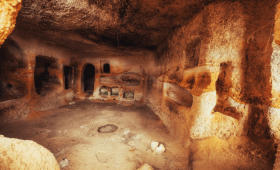
The first point of contact for most winter photographers is the Church of St. Gregory, perched on a low ridge just a short walk from Ortahisar’s central rock citadel. Overnight temperatures frequently dip below –5 °C, causing moisture in the air to condense on the porous tuff stone and freeze into a delicate veil of hoarfrost. The “Ice‑Lens” method employs a polarizing filter combined with a narrow‑band ultraviolet flash that penetrates the frost without melting it, revealing the underlying pigments while preserving the ethereal sparkle of the ice. When captured at the blue‑hour, the church’s entrance arch glows with a soft, otherworldly luminescence that contrasts sharply with the stark white of the surrounding cliffs.
A short drive eastward lies the lesser‑known Monastery of St. Simeon, set within a canyon that funnels cold winds into a natural refrigeration chamber. Here, the frost forms intricate dendritic patterns that mimic the brushstrokes of the 12th‑century frescoes inside. Photographers who apply the “Ice‑Lens” technique during the brief window when the sun hangs just above the horizon can document the interplay of light and ice as it creates a dynamic, living frame around the ancient art. The resulting images convey a sense of temporal suspension—each photograph appears as a frozen moment in a centuries‑long dialogue between human devotion and the forces of nature.
Further south, the rock‑cut chapel of the Virgin Mary offers a panoramic vista of the Erciyes snow‑capped peaks, providing a dramatic backdrop for wide‑angle compositions. The chapel’s exterior is heavily lichen‑covered, but in winter the lichen is subdued beneath a thin crust of ice, allowing the underlying stone carving to be rendered with remarkable sharpness when the “Ice‑Lens” approach is employed. By positioning the camera at a low angle and using a tilt‑shift lens, photographers can accentuate the sense of depth, making the chapel appear to hover above the frosted ground.
Technical considerations are essential for success. The “Ice‑Lens” technique requires a camera capable of high‑resolution raw capture (minimum 45 MP) and a flash unit with adjustable output to prevent localized melting. A tripod with a carbon‑fiber shaft is recommended to withstand sub‑zero temperatures without becoming brittle. photographers should carry extra batteries insulated in insulated pouches, as cold drains power rapidly. Local guides familiar with the micro‑climates of the Ortahisar hinterland can advise on the optimal days when clear skies and low humidity converge to produce the most pronounced frost.
For those planning a multi‑day itinerary, the region’s winter infrastructure has improved markedly. Accommodations now offer heated storage for equipment, and several boutique hotels provide on‑site darkrooms for immediate processing of high‑contrast images. While exploring the frosted churches, visitors may also wish to diversify their experience; for example, a short drive to the Aegean coast allows a quick detour to try the Jet Ski Rental in Kuşadası: Prices, Safety Rules & Best Spots 2026, offering a contrasting water‑based adventure after a day of icy photography.
In sum, the winter frost‑etched cave churches of the Ortahisar hinterland, illuminated through the 2026 “Ice‑Lens” technique, constitute a compelling frontier for photographers seeking to capture Cappadocia’s hidden narratives. By mastering the interplay of light, ice, and ancient stone, visual storytellers can produce images that resonate with both the timeless spirituality of the sites and the fleeting beauty of winter’s crystalline veil.
Cultural Portraits of Local Shepherds with Their Flocks at the Overlooked Çatalkaya Plateau during Golden Sunset
The Çatalkaya Plateau, perched at an altitude of roughly 1,450 meters on the northern fringe of the Göreme‑Uçhisar basin, has quietly become one of 2026’s most compelling locations for cultural portraiture. While the region’s iconic hot‑air balloons dominate sunrise calendars, the plateau’s expansive, gently undulating steppe offers a dramatically different canvas at golden hour. As the sun dips toward the horizon, the basaltic cliffs and soft tuff formations are bathed in amber light, creating a warm, low‑contrast backdrop that accentuates the textures of traditional Anatolian attire and the weathered faces of shepherds who have tended these lands for generations.
Photographers arriving in late afternoon will find the plateau’s accessibility improved by a newly paved access road completed in early 2026, reducing the approach time from the nearest village of Çatalkaya to under ten minutes by car. This infrastructure upgrade has encouraged a modest influx of visitors while preserving the intimate scale of daily life. The optimal shooting window begins approximately thirty minutes before sunset and extends to the moment the first stars appear, a period during which the flock’s movement—sheep grazing, goats navigating rocky outcrops, and occasional stray dogs—adds dynamic, organic elements to the composition.
To capture authentic cultural portraits, it is advisable to engage with the local shepherd community before the shoot. The Çatalkaya shepherds, many of whom still practice transhumance, are eager to share stories of their seasonal migrations and the ancient techniques used to herd their flocks across the plateau’s limestone ridges. Offering a modest token—such as a locally sourced honey jar—often opens the door to candid moments: a shepherd adjusting his felt‑lined “çarşaf” headscarf, a child guiding a lamb through a narrow pass, or an elderly man pausing to rest against a stone wall while the flock grazes in the fading light. These interactions not only enrich the visual narrative but also ensure respectful representation of a living heritage.
Technical considerations for the golden sunset are paramount. The plateau’s high elevation results in thinner air, which reduces atmospheric scattering and yields sharper, more saturated colors. Photographers should set the camera’s white balance to “cloudy” or manually adjust Kelvin temperatures to 5,800–6,200 K to enhance the warm tones without over‑saturating the sky. A focal length between 85 mm and 135 mm on full‑frame bodies provides flattering perspective for portraiture while allowing enough distance to remain unobtrusive. Using a moderate aperture of f/4–f/5.6 balances subject isolation with sufficient depth of field to keep both shepherd and flock in crisp focus. A tripod with a low‑profile ball head is advisable for stability as the light wanes, and a remote shutter release minimizes camera shake.
The plateau’s topography also offers opportunities for layered compositions. Positioning the shepherd at the foreground, the flock on a mid‑range ridge, and the distant volcanic cones illuminated by the setting sun creates a three‑dimensional narrative that conveys both the human‑animal bond and the geological grandeur of Cappadocia. Incorporating the soft silhouettes of the fairy chimneys along the horizon can further anchor the image within the region’s iconic landscape, while still keeping the focus on the cultural subject.
For travelers seeking a broader itinerary, the nearby coastal town of Kuşadası provides complementary experiences. After a day of high‑altitude portrait work, a short flight to the Aegean coast allows for a relaxed evening at one of the best sunrise swimming spots in Kuşadası for early‑morning travelers 2026, offering a refreshing contrast to the plateau’s rugged charm. This blend of inland cultural immersion and seaside leisure exemplifies the diverse photographic opportunities available across Turkey’s varied terrains.
Frequently Asked Questions
What are the lesser‑known valleys in Cappadocia that offer great photo opportunities without the crowds?
The Love Valley, Red Valley (Kızılçukur), and Soganlı (Monk’s) Valley are quieter than Göreme and provide dramatic rock formations, sunrise colors, and unique perspectives for photography.
Which sunrise spot gives a panoramic view of the fairy chimneys without having to ride a hot‑air balloon?
The Uchisar Castle summit offers a 360° vista of the region, and the early light highlights the chimneys and valleys, making it an ideal ground‑based sunrise location.
Where can I capture the best night sky and star trails over Cappadocia’s landscape?
The open fields near Çavuşin Village and the remote area around the Güllüdere (Rose) Valley have minimal light pollution, providing clear skies for astrophotography and Milky Way shots.
Are there any underground sites that are photogenic and accessible to tourists?
Derinkuyu and Kaymakli underground cities feature narrow tunnels, stone doors, and atmospheric lighting that create dramatic interior shots; both have guided tours and designated photo areas.
Which viewpoint offers the most striking colors during sunset?
The Sunset Point in Red Valley (near Çavuşin) provides vivid reds and oranges that bathe the rock formations, and the view of the sun dipping behind the horizon creates a perfect silhouette backdrop.
How can I photograph the traditional cave houses while avoiding tourist crowds?
Early morning visits to the villages of Ortahisar and Mustafapaşa allow you to capture the stone‑carved homes and narrow streets before larger groups arrive.
What is a good location for capturing the region’s unique rock formations from above without a drone?
The hike up to the top of Pigeon Valley (Güvercinlik Vadisi) offers elevated viewpoints over the valley’s pillars and pigeon houses, providing a high‑angle perspective without needing aerial equipment.
Where can I find vibrant local markets or street scenes for cultural photography in Cappadocia?
The weekly market in Avanos on Saturdays and the small bazaar in Göreme’s town center are excellent for candid shots of locals, crafts, and daily life.
Are there any specific trails that combine both natural scenery and historic sites for a photo‑rich walk?
The Ihlara Valley trail passes by the Melendiz River, lush vegetation, and dozens of rock‑cut churches, offering a mix of natural and cultural subjects in one hike.
What equipment tips should I follow for shooting in Cappadocia’s varied lighting conditions?
Bring a wide‑angle lens for landscapes, a fast prime (e.g., 35mm f/1.8) for low‑light interiors, a tripod for sunrise/sunset and night shots, and a polarizing filter to reduce glare on stone surfaces.