
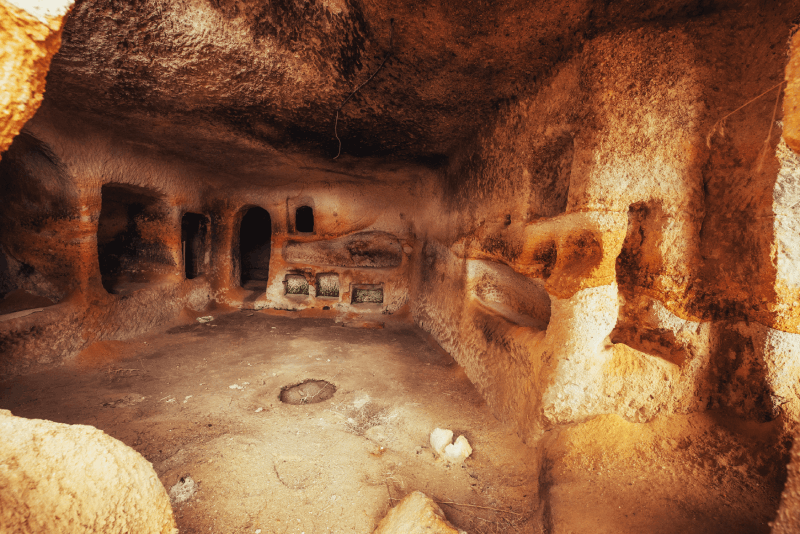
Cappadocia’s Hidden Depths: Unveiling Derinkuyu & Kaymakli
Cappadocia’s landscape, a surreal panorama of fairy chimneys and sculpted rock, holds secrets far beneath the surface. Beyond the striking views and hot air balloon rides lies a network of ancient underground cities, testaments to human ingenuity and resilience. Our Cappadocia Underground City Tour: Derinkuyu vs Kaymakli isn’t just a sightseeing trip; it’s a descent into history, a journey into the lives of those who sought refuge within these subterranean labyrinths. In 2026, exploring these cities feels remarkably close to stepping back in time.
For centuries, these cities remained largely forgotten, their entrances concealed, their stories whispered only in local legend. Today, Derinkuyu and Kaymakli stand as the most extensively excavated and accessible of Cappadocia’s underground settlements, each offering a unique glimpse into a fascinating past. But which one should *you* explore? And what truly distinguishes these incredible feats of engineering?
A Journey Beneath the Surface: Understanding Cappadocia’s Underground Cities is the first step to appreciating the complexity of these spaces. These weren’t merely temporary shelters. They were fully functioning cities, capable of housing thousands of people, along with livestock, and provisions for extended periods. Constructed from the soft volcanic rock characteristic of the region, the cities provided protection from invaders, religious persecution, and the harsh realities of life in ancient Anatolia.
What Makes Derinkuyu & Kaymakli Unique? A First Look
Both Derinkuyu and Kaymakli were carved into the soft volcanic tuff, a process that took centuries. However, their scale, layout, and emphasis differ significantly. Derinkuyu is the larger and deeper of the two, boasting an astonishing eight levels, reaching a depth of approximately 85 meters (279 feet). This immense scale meant a greater capacity for inhabitants – estimates suggest up to 20,000 people could have sheltered here.
Kaymakli, while still substantial, is considerably shallower, with only four levels and a maximum depth of around 8 meters (26 feet). This difference isn’t a measure of importance, but rather reflects differing priorities. Kaymakli, believed to have been used as a temporary refuge during raids, prioritizes quick access and a higher population density. Derinkuyu, on the other hand, appears to have been intended for long-term habitation, offering a more comprehensive and self-sufficient environment.
Delving Deeper: A Detailed Overview of Derinkuyu Underground City
Our Cappadocia Underground City Tour: Derinkuyu vs Kaymakli begins, often, with Derinkuyu. Descending into its cool, dark depths is an experience in itself. You’ll navigate narrow passages, marvel at the ingenious ventilation shafts, and explore the remarkably preserved spaces.
Expect to see:
- Communal Spaces: Large halls used for gatherings, feasts, and religious ceremonies.
- Living Quarters: Small, individual rooms carved into the rock, offering privacy for families.
- Storage Areas: Designated spaces for storing food, water, and other essential supplies.
- Wineries & Press Rooms: Evidence of wine production, suggesting a thriving local economy.
- Churches & Chapels: Several beautifully carved churches, showcasing the religious life of the inhabitants.
- Schools: Dedicated areas believed to have been used for education.
A typical visit to Derinkuyu, as part of our tour, lasts approximately 2-3 hours. Entry fee in 2026 is around 60 Turkish Lira (approximately $2 USD, exchange rates fluctuate). Comfortable walking shoes are *essential*, as the terrain is uneven and can be slippery.
Exploring Derinkuyu’s Levels: From Churches to Living Quarters
Each level of Derinkuyu served a specific purpose. The upper levels were primarily used for livestock and storage, while the lower levels housed the living quarters, churches, and communal spaces. The seventh and eighth levels, the deepest and most recently discovered, are particularly intriguing. These levels are believed to have been used for defense, with strategically placed rolling stone doors to block access and trap invaders. Imagine the chilling effectiveness of such a defense mechanism!
Kaymakli Underground City: A Closer Examination of its Structure
Kaymakli, the second star of our Cappadocia Underground City Tour: Derinkuyu vs Kaymakli, offers a different, yet equally compelling experience. Its shallower depth means less strenuous climbing, making it more accessible for visitors with mobility concerns. However, don’t mistake its size for simplicity.
Kaymakli’s layout is more complex and interconnected than it first appears. The passages are narrower and more winding, creating a labyrinthine feel. You’ll discover:
- Stable Areas: Clearly defined spaces for housing animals, with feeding troughs carved into the rock.
- Kitchens & Food Preparation Areas: Evidence of cooking and food storage, providing insights into daily life.
- Unique Ventilation System: Kaymakli’s ventilation shafts are particularly ingenious, utilizing the natural air currents to circulate fresh air throughout the city.
- Chapels with Unique Frescoes: Some chapels retain fragments of ancient frescoes, offering a glimpse into the artistic and religious beliefs of the inhabitants.
A visit to Kaymakli, as part of our tour, typically takes 1.5 – 2 hours. Entry fee in 2026 is approximately 50 Turkish Lira (around $1.60 USD). Be prepared for some tight squeezes – the passages can be quite narrow!
Comparing the Layouts: Derinkuyu vs. Kaymakli – A Visual Guide
(Internal Link to a Visual Comparison Page – handled by code)
Our tour includes detailed visual aids and expert commentary to help you understand the nuances of each city’s layout. We’ll point out the key differences in their construction, highlighting the unique features that make each one special.
Ventilation & Water Systems: Engineering Marvels of the Past
Both Derinkuyu and Kaymakli showcase remarkable engineering skills. The ventilation shafts, cleverly designed to draw air from the surface, are a sign of the inhabitants’ understanding of air flow and pressure. Water was collected through rainwater harvesting and stored in cisterns, providing a vital resource for the city’s inhabitants. These systems weren’t simply functional; they were essential for survival.
Life Underground: How People Lived in These Cities
Imagine living your entire life underground, relying on limited resources and the constant threat of danger. Our Cappadocia Underground City Tour: Derinkuyu vs Kaymakli aims to bring this reality to life. Through detailed explanations and evocative storytelling, we’ll paint a picture of what daily life must have been like for the people who called these cities home. It’s a humbling and unforgettable experience.
Don’t just visit Cappadocia. *Experience* it. Book your Cappadocia Underground City Tour: Derinkuyu vs Kaymakli today and unlock the secrets hidden beneath your feet. Tours depart daily from Göreme at 9:00 AM and 1:00 PM. Spaces are limited, so reserve your spot now.
A Journey Beneath the Surface: Understanding Cappadocia’s Underground Cities
Cappadocia, in 2026, continues to enchant visitors with its otherworldly landscapes. However, beyond the iconic hot air balloons and fairy chimneys lies a hidden world – a network of ancient underground cities painstakingly carved into the soft volcanic rock. These aren’t mere caves; they are sophisticated settlements, offering a unique glimpse into the ingenuity and resilience of past civilizations. Our Cappadocia Underground City Tour: Derinkuyu vs Kaymakli invites you to descend into this fascinating realm and unravel the mysteries held within.
For centuries, these subterranean havens provided refuge from invaders, religious persecution, and natural disasters. But understanding *which* underground city to explore – Derinkuyu or Kaymakli – requires a deeper understanding of their individual characteristics. Both are incredible, but offer distinct experiences. This section will illuminate the differences, preparing you for an unforgettable journey with our guided tour.
The Genesis of Subterranean Life
The history of Cappadocia’s underground cities is complex. Archaeological evidence suggests initial construction began as early as the 7th or 8th century BCE by the Phrygians. However, it was the Hittites, and later the early Christians, who truly expanded and refined these spaces, creating the multi-level labyrinths we see today. They weren’t built as permanent residences initially, but as emergency shelters. Imagine a sudden raid; entire communities could vanish beneath the earth, sealing themselves off from danger.
The need for these cities peaked during the Arab-Byzantine wars between the 7th and 11th centuries. This period saw intense conflict in the region, forcing Cappadocian communities to rely heavily on these underground refuges for survival. The scale of the undertaking is striking. Consider the sheer manpower and dedication required to excavate tons of rock *without* modern tools.
Derinkuyu: The Deepest Dive
Derinkuyu is the largest excavated underground city in Cappadocia, reaching an astonishing depth of approximately 85 meters (279 feet) with up to eight levels, though not all are currently open to the public. Its sheer scale is impressive. The Cappadocia Underground City Tour: Derinkuyu vs Kaymakli begins with a descent into this colossal structure, where you’ll immediately grasp the magnitude of the endeavor.
What makes Derinkuyu particularly remarkable?
- Vast Capacity: Estimates suggest Derinkuyu could shelter up to 20,000 people, along with their livestock and provisions.
- Complex Infrastructure: The city features dedicated spaces for living, cooking, storage, religious worship (including several churches), and even schools.
- Unique Features: Derinkuyu boasts a unique barrel-vaulted cistern with a remarkable water collection and distribution system. It also contains a large communal study area believed to be used for education.
- Strategic Location: Its location near the Derinkuyu district offers stunning views of the surrounding landscape, contrasting sharply with the enclosed world below.
A typical visit to Derinkuyu, as part of our tour, takes around 2-3 hours. Entry fee in 2026 is approximately 75 Turkish Lira (subject to change). Be prepared for narrow passages and low ceilings – a headlamp is recommended, though provided on our tour.
Kaymakli: A Closer-Knit Community
Kaymakli, while smaller than Derinkuyu (reaching only four levels and approximately 40 meters deep), offers a more intimate and more *lived-in* feel. It’s the second-largest underground city in Cappadocia, and its layout suggests a more tightly knit community. The Cappadocia Underground City Tour: Derinkuyu vs Kaymakli provides a comparative experience, highlighting the subtle yet significant differences.
Key aspects of Kaymakli include:
- Communal Spaces: Kaymakli features larger communal areas, suggesting a stronger emphasis on collective living.
- Wine & Oil Presses: Evidence of extensive wine and oil production facilities indicates a degree of self-sufficiency.
- Stable Areas: Large stables suggest a significant reliance on livestock for sustenance and transportation.
- Rolling Stone Doors: Kaymakli is famous for its circular, rolling stone doors, used to seal off different levels and protect the inhabitants. Seeing these in operation during our demonstration is a tour highlight.
Exploring Kaymakli typically takes 1.5-2.5 hours. The entry fee in 2026 is around 60 Turkish Lira. It’s important to note that some passages in Kaymakli are even narrower and lower than those in Derinkuyu, requiring a good level of mobility.
Derinkuyu vs. Kaymakli: Which Should You Choose?
The “better” city depends on your preferences.
- For the Adventurous Explorer: Derinkuyu, with its immense scale and depth, is ideal for those seeking a more challenging and striking experience.
- For the History Buff: Kaymakli, with its focus on communal living and evidence of daily life, provides a more intimate connection to the past.
- For Those with Limited Mobility: Kaymakli may be a slightly better option due to its shallower depth and less strenuous passages.
However, the best approach is to experience both! Our Cappadocia Underground City Tour: Derinkuyu vs Kaymakli is designed to do just that, providing a comprehensive understanding of both cities and their unique contributions to Cappadocia’s rich history. We offer a combined tour departing daily at 9:00 AM and 1:30 PM from Goreme. The full-day tour, including transportation and expert guidance, costs approximately €75 per person (as of 2026).
Beyond the Cities: Preserving the Past
The preservation of these incredible underground cities is crucial. Ongoing archaeological work continues to reveal new insights into the lives of those who once sought refuge within their walls. By choosing our tour, you’re not only experiencing a remarkable historical site but also contributing to its preservation through responsible tourism. We prioritize sustainable practices and work closely with local communities to ensure the long-term health of this unique cultural heritage.
Why Explore Cappadocia’s Underground Cities? A Historical & Cultural Significance
Cappadocia. The very name conjures images of fairytale landscapes, hot air balloons painting the dawn sky, and ancient rock-cut churches. But beneath this striking surface lies a hidden world, a sign of human ingenuity and resilience: the region’s remarkable underground cities. Joining our Cappadocia Underground City Tour: Derinkuyu vs Kaymakli isn’t just a sightseeing trip; it’s a journey back in time, a descent into the lives of those who sought refuge and built a civilization *within* the earth.
For centuries, Cappadocia has been a crossroads of civilizations – Hittites, Phrygians, Romans, Byzantines, Seljuks, and Ottomans all left their mark on this Anatolian plateau. But it was the persistent threat of invasion and religious persecution that ultimately drove the creation of these subterranean marvels. While the earliest excavations date back to the Hittite period (around 1200 BC), the majority of the extensive networks we see today were developed during the Byzantine era, particularly between the 7th and 11th centuries AD.
These weren’t simply caves used for temporary shelter. These were fully functioning cities, capable of housing *thousands* of people – and all their livestock – for extended periods. Imagine a community, complete with homes, churches, schools, wineries, and storage facilities, carved entirely out of volcanic tuff rock. That’s the reality revealed on our Derinkuyu and Kaymakli Underground City Tour.
The historical significance is profound. These cities represent a remarkable feat of engineering and a powerful symbol of survival. They offer a unique window into the lives of early Christians who, facing persecution, built these hidden sanctuaries to practice their faith in safety. In 2026, understanding this history feels more relevant than ever, a reminder of the lengths people will go to for freedom and belief.
But the cultural impact extends beyond religious refuge. The underground cities played a crucial role in maintaining Cappadocian society during times of conflict. They allowed communities to continue functioning, preserving their traditions and way of life. They weren’t just places to *hide*; they were places to *live*.
What can you expect to discover on this tour?
- A Deep Explore Byzantine History: Learn about the socio-political climate that necessitated the construction of these cities. Our expert guides will illuminate the lives of those who lived, worshipped, and survived within these walls.
- Architectural Wonders: Witness the incredible skill and ingenuity of the Cappadocian people. From the intricate ventilation shafts to the cleverly designed water cisterns, the engineering is truly astounding.
- Religious Artifacts & Churches: Explore the rock-cut churches within both Derinkuyu and Kaymakli, adorned with remnants of Byzantine frescoes. These spaces offer a tangible connection to the spiritual life of the past.
- A Comparative Analysis: Our Cappadocia Underground City Tour: Derinkuyu vs Kaymakli specifically focuses on highlighting the differences between these two iconic cities. We’ll explore why Derinkuyu is the deepest, and Kaymakli is closer to the surface.
Derinkuyu and Kaymakli: Two Sides of the Same Coin
While both cities share a common purpose, they possess distinct characteristics. Derinkuyu, reaching a staggering depth of approximately 85 meters (279 feet) with 8 levels, is the largest excavated underground city in Cappadocia. It could house an estimated 20,000 people! Visiting Derinkuyu feels like descending into the very heart of the earth.
Kaymakli, on the other hand, is shallower – with only 8 levels reaching a maximum depth of around 60 meters (197 feet) – and boasts a more complex layout. It’s estimated to have accommodated around 3,000-4,000 people. Kaymakli is known for its wide streets and communal spaces, suggesting a more organized and possibly wealthier community.
Practical Information for Your 2026 Visit
- Tour Duration: The Cappadocia Underground City Tour: Derinkuyu vs Kaymakli typically lasts between 6-8 hours, including transportation from Goreme.
- Cost (2026 Estimate): Expect to pay around 75-120 Euros per person, depending on the tour operator and inclusions (lunch, entrance fees).
- What to Wear: Comfortable walking shoes are *essential*. The tunnels can be narrow and uneven. A light jacket is also recommended, as the underground cities maintain a cool temperature year-round.
- Accessibility: Unfortunately, due to the nature of the sites (narrow tunnels, steep stairs), these cities are not easily accessible for people with mobility issues.
- Opening Hours: Both Derinkuyu and Kaymakli are generally open daily from 8:00 AM to 6:00 PM. Check local schedules for potential variations.
Don’t just *see* Cappadocia; *experience* its hidden depths. The Cappadocia Underground City Tour: Derinkuyu vs Kaymakli is an unforgettable adventure that will leave you with a profound appreciation for the resilience, ingenuity, and cultural richness of this extraordinary region. Book your journey beneath the surface today and unlock the secrets of Cappadocia’s past.
What Makes Derinkuyu & Kaymakli Unique? A First Look
Cappadocia’s landscape is famed for its ‘fairy chimneys’ and hot air balloon vistas. But beneath the surface lies a world equally captivating – a network of ancient underground cities carved into the soft volcanic rock. Among these, Derinkuyu and Kaymakli stand out as the most expansive and well-preserved, offering an unparalleled glimpse into the ingenuity and resilience of past civilizations. Our Cappadocia Underground City Tour: Derinkuyu vs Kaymakli is designed to unlock the secrets of these subterranean marvels, but before we descend, let’s explore what distinguishes these two extraordinary sites.
Both Derinkuyu and Kaymakli served as refuges, primarily during periods of invasion and religious persecution. However, their histories, architectural nuances, and overall experiences differ significantly. Understanding these differences is key to appreciating the depth of Cappadocia’s hidden world, and choosing which – or both! – to explore on our tour.
Derinkuyu: The Deepest Explore History
Derinkuyu is the most famous, and certainly the deepest, of Cappadocia’s underground cities. Reaching an astonishing 85 meters (279 feet) below ground, it’s a true feat of ancient engineering. Excavated starting in the 7th or 8th century BC, it continued to be expanded and modified over centuries, seeing use by various groups including early Christians seeking shelter.
Imagine a city capable of housing up to 20,000 people, complete with living spaces, kitchens, schools, stables, and even wineries. That’s Derinkuyu. The sheer scale is striking. The city boasts over 600 doors, strategically placed to slow down invaders. These doors were often sealed with large, circular stones – some of which you can still see today.
On our Cappadocia Underground City Tour: Derinkuyu vs Kaymakli, you’ll experience firsthand the complex ventilation shafts that provided fresh air to the inhabitants, a critical component for long-term survival. We’ll also examine the ingenious water wells, ensuring a constant supply even during sieges.
- Depth: 85 meters (279 feet)
- Estimated Capacity: Up to 20,000 people
- Notable Features: Deepest level includes a church with an apse and a barrel-vaulted ceiling. Extensive storage areas for food and wine.
- Tour Time (Derinkuyu portion): Approximately 1.5 – 2 hours.
- Location: Derinkuyu town, Nevşehir Province.
Kaymakli: A Wider, More Accessible Network
Kaymakli, while not as deep as Derinkuyu (reaching a maximum of 8 levels and 30 meters deep), offers a more expansive and interconnected network of tunnels and chambers. Discovered much later, in 1963 during a well-digging operation, Kaymakli reveals a different side to underground living.
Unlike Derinkuyu’s more vertical descent, Kaymakli spreads horizontally, creating a labyrinthine structure. This layout makes it feel less claustrophobic for some visitors, and allows for a better understanding of how different sections of the city were interconnected. Kaymakli was likely used as a temporary shelter, particularly during the Arab-Byzantine wars between the 8th and 11th centuries.
Our Cappadocia Underground City Tour: Derinkuyu vs Kaymakli will highlight the unique features of Kaymakli, including its numerous storage rooms (called “cellars”) used for preserving fruits and vegetables. You’ll also witness the communal kitchens and the remarkable grinding stones used for processing grains. The intricate network of tunnels is truly impressive.
- Depth: 30 meters (98 feet)
- Estimated Capacity: Up to 3,500 people
- Notable Features: Numerous storage cellars, communal kitchens, and stables. Unique ventilation system designed to maximize airflow.
- Tour Time (Kaymakli portion): Approximately 1.5 – 2 hours.
- Location: Kaymakli town, Nevşehir Province.
What Does This Mean for You? Choosing Your Underground Adventure
So, which underground city is right for you? It depends on your preferences.
Choose Derinkuyu if:
- You’re fascinated by extreme depths and want to experience the feeling of descending into the earth.
- You’re interested in a city that potentially served as a long-term refuge for a large population.
- You’re physically fit, as navigating the deeper levels requires more stamina.
Choose Kaymakli if:
- You prefer a more accessible and less claustrophobic experience.
- You’re intrigued by the daily life aspects of underground living, such as food storage and preparation.
- You want to see a wider network of interconnected tunnels and chambers.
The best option? Explore both! Our Cappadocia Underground City Tour: Derinkuyu vs Kaymakli provides the opportunity to visit both cities in a single day (typically starting around 9:00 AM and concluding around 5:00 PM in 2026), allowing you to compare and contrast their unique characteristics. Transportation, entrance fees, and a knowledgeable guide are all included.
Beyond the Basics: Preparing for Your Descent
Regardless of which city you choose, or if you opt for the full experience, remember to:
- Wear comfortable shoes: You’ll be doing a lot of walking and climbing.
- Bring a light jacket: The underground cities are cool, even in summer.
- Be prepared for narrow passages: Some areas require you to duck or crawl.
- Listen to your guide: They will provide valuable insights into the history and architecture of these fascinating sites.
Don’t just see Cappadocia – *experience* it. Book your Cappadocia Underground City Tour: Derinkuyu vs Kaymakli today and prepare to be amazed by the hidden depths of this incredible region. This is more than just a tour; it’s a journey back in time.
Delving Deeper: A Detailed Overview of Derinkuyu Underground City
Derinkuyu. The name itself whispers of secrets held within the earth. As we prepare for the Cappadocia Underground City Tour: Derinkuyu vs Kaymakli, understanding Derinkuyu’s sheer scale and complexity is paramount. It’s not merely a cave; it’s a multi-level, meticulously carved subterranean metropolis that once sheltered thousands. In 2026, stepping into Derinkuyu is like stepping back millennia, a visceral connection to the ingenuity and resilience of past civilizations.
Discovered in 1963 – though locals knew of its existence for centuries – Derinkuyu has been excavated to reveal eight levels, though current access is limited to around six. This depth, plunging approximately 85 meters (279 feet) into the soft volcanic rock, immediately sets it apart. Imagine the dedication, the manpower, required to excavate such a space using only rudimentary tools! Our Derinkuyu vs Kaymakli tour will bring this reality into sharp focus, explaining the techniques employed and the challenges overcome.
The earliest inhabited levels date back to the 7th or 8th century BC, during the Phrygian period. However, it was during periods of Byzantine conflict, particularly between the 10th and 12th centuries, that Derinkuyu truly flourished as a refuge. The city could accommodate an estimated 20,000 people – and livestock – for extended periods. This wasn’t a temporary shelter; it was a self-sufficient ecosystem built to withstand prolonged sieges.
Let’s explore what you can expect to see on the Cappadocia Underground City Tour: Derinkuyu vs Kaymakli, specifically within Derinkuyu.
- Ventilation Shafts: The most striking feature is the sophisticated ventilation system. Hundreds of shafts, some narrow as a single person, connect the underground city to the surface, providing crucial airflow. These aren’t just random holes; they were strategically placed and designed to maximize ventilation while minimizing visibility from above.
- Rolling Stone Doors: Massive, circular stone doors served as barricades, protecting each level. These doors, weighing up to 500 kg (1100 lbs), were rolled into place from the inside and secured with levers. You’ll see replicas on the tour, demonstrating their functionality and the effort required to operate them.
- Living Quarters: The tour reveals the cramped, yet functional, living spaces. These small rooms, carved directly into the rock, provided shelter for families. Observe the niches carved into the walls – used for storage and bedding.
- Churches & Chapels: Derinkuyu contains several churches, demonstrating the religious life sustained underground. These spaces, though modest, are adorned with remnants of frescoes, hinting at the devotion of the inhabitants.
- Wine & Oil Presses: Evidence of food production and storage is abundant. Wine and oil presses, along with storage rooms, showcase the city’s ability to maintain a sustainable food supply during times of crisis.
- Barns & Animal Pens: The inclusion of dedicated spaces for livestock highlights the city’s practicality. Protecting animals was vital for ensuring a long-term food source and maintaining agricultural capabilities after emerging from hiding.
The layout of Derinkuyu is intentionally complex, a labyrinthine network designed to disorient invaders. This is a key difference we’ll explore during the Cappadocia Underground City Tour: Derinkuyu vs Kaymakli. Navigating the narrow passageways, with low ceilings and limited lighting, can be physically demanding. We recommend comfortable shoes and a headlamp (though provided on the tour). The tour typically lasts around 2-3 hours within Derinkuyu itself, allowing ample time to explore the accessible levels.
Practical Information for your 2026 visit:
- Location: Derinkuyu is located approximately 30 kilometers (19 miles) south of Goreme, the central hub of Cappadocia.
- Entrance Fee (2026 estimate): Around 75 Turkish Lira (subject to change). This is usually included in the package price of our Derinkuyu vs Kaymakli tour.
- Opening Hours: 8:00 AM to 6:00 PM daily.
- Accessibility: Unfortunately, Derinkuyu is *not* accessible for individuals with mobility issues. The narrow passageways, steep steps, and low ceilings pose significant challenges.
- Photography: Photography is permitted, but flash photography is discouraged to preserve the delicate frescoes.
Beyond the physical structures, the Cappadocia Underground City Tour: Derinkuyu vs Kaymakli emphasizes the *human* story. Imagine living for months, even years, in this subterranean world. The psychological impact, the constant fear of discovery, the challenges of maintaining hygiene and sanitation – these are all aspects we explore, bringing the past to life.
Our expert guides, fluent in multiple languages, will provide detailed historical context, archaeological insights, and captivating anecdotes. We don’t just show you the stones; we explain the lives lived within them. Don’t miss the opportunity to experience this incredible feat of human engineering and resilience. Book your Cappadocia Underground City Tour: Derinkuyu vs Kaymakli today and unlock the secrets hidden beneath the surface!
Exploring Derinkuyu’s Levels: From Churches to Living Quarters
Descending into Derinkuyu Underground City is akin to stepping back millennia, a journey into the heart of Anatolian resilience and ingenuity. Our Cappadocia Underground City Tour: Derinkuyu vs Kaymakli begins here, and the sheer scale of Derinkuyu immediately impresses. This isn’t merely a cave; it’s a multi-level, self-contained city carved into the soft volcanic rock, capable of sheltering thousands. In 2026, exploring these depths feels profoundly connected to the past, offering a tangible link to those who sought refuge within its walls.
The entrance itself is deceptively modest. A narrow, winding staircase leads you down, the temperature noticeably cooler with each step. This is the first indication of the sophisticated environmental controls at play. The initial levels, now open to visitors on our tour, served as communal spaces and animal pens. Imagine the busy activity, the sounds of livestock mingling with the voices of families preparing for long periods of seclusion.
As you descend further, the layout becomes increasingly complex. Derinkuyu boasts eight levels, although only a portion is currently accessible to the public due to ongoing archaeological work and preservation efforts. Each level reveals a different facet of life underground. The first few levels showcase the storage areas – *tondras* – meticulously carved into the rock. These weren’t simply for food; they also served as crucial protection against invaders, sealed with large rolling stone doors.
Level two is particularly fascinating. Here, you’ll find the communal winery, evidence of the importance of viticulture in Cappadocian life. Evidence suggests wine production wasn’t just for consumption, but also potentially for trade, a vital economic activity even during times of crisis. The air is thick with the imagined aromas of fermenting grapes, a subtle sensory experience that adds to the immersion.
Moving deeper, the third and fourth levels reveal the heart of residential life. These are the living quarters, bedrooms, kitchens, and even schools. The spaces are surprisingly small, reflecting a pragmatic approach to maximizing space in a confined environment. Notice the ventilation shafts, cleverly engineered to provide fresh air throughout the city, a sign of the advanced understanding of physics possessed by the early inhabitants. Our guides on the Cappadocia Underground City Tour: Derinkuyu vs Kaymakli will explain how these systems worked, using detailed diagrams and historical accounts.
The fifth level is perhaps the most remarkable. This is where the churches and chapels are located, showcasing the deep religious faith of the people. The main church features an apse, a nave, and even a baptistery. The intricate carvings and remnants of frescoes hint at the beauty that once adorned these sacred spaces. Consider the dedication required to maintain such spiritual practices while living in constant fear of attack.
Beyond the churches, the sixth and seventh levels are believed to have served as storage and potentially even workshops. The layout becomes more labyrinthine, with narrow passageways and hidden chambers. It’s easy to get disoriented, highlighting the importance of staying with your guided group. The deepest levels, still largely unexplored in 2026, are thought to connect to other underground cities, including Kaymakli.
What sets Derinkuyu apart from Kaymakli? While both cities share similar architectural features, Derinkuyu is significantly larger and deeper, reaching an impressive 85 meters. It also features a unique complex on the third level, believed to be a school or seminary, an indication of a more established and organized community.
Practical Information for your Derinkuyu Visit (as of 2026):
- Entrance Fee: Approximately 150 Turkish Lira (subject to change).
- Opening Hours: 8:00 AM – 6:00 PM daily.
- Tour Duration: The accessible portion of Derinkuyu typically takes around 1.5 – 2 hours to explore with a guided tour.
- What to Wear: Comfortable walking shoes are essential. The tunnels can be damp and uneven. A light jacket is also recommended, as the temperature remains consistently cool.
- Accessibility: Unfortunately, Derinkuyu is not accessible for individuals with mobility issues due to the steep stairs and narrow passageways.
- Photography: Photography is permitted, but flash photography is discouraged to protect the delicate frescoes.
To truly appreciate the differences and similarities, we strongly recommend combining your Derinkuyu exploration with a visit to Kaymakli as part of our comprehensive Cappadocia Underground City Tour: Derinkuyu vs Kaymakli. This allows for a direct comparison of the architectural styles, layouts, and historical contexts.
The Cappadocia Underground City Tour: Derinkuyu vs Kaymakli isn’t just about seeing ancient ruins; it’s about understanding the ingenuity, resilience, and faith of a people who carved a life out of stone. It’s a humbling and unforgettable experience that will stay with you long after you resurface into the sunlight. Book your adventure today and unlock the secrets hidden beneath the Cappadocian landscape. Don’t just visit Cappadocia – *experience* its hidden depths.
Kaymakli Underground City: A Closer Examination of its Structure
Kaymakli Underground City, a jewel in Cappadocia’s subterranean crown, offers a uniquely intimate experience for those joining our Cappadocia Underground City Tour: Derinkuyu vs Kaymakli. While Derinkuyu boasts greater depth and scale, Kaymakli distinguishes itself through its remarkably preserved communal spaces and a sense of lived-in history. This isn’t merely a network of tunnels; it’s a glimpse into the daily lives of a community seeking refuge centuries ago.
Discovered in 1963 during a farmer’s well-digging operation, Kaymakli quickly revealed itself as far more than a simple shelter. Today, eight levels have been excavated, although the full extent of the city remains a captivating mystery. Unlike Derinkuyu, which served primarily as a temporary refuge during raids, Kaymakli appears to have functioned as a more permanent, self-sufficient settlement. This is immediately apparent as you descend into the cool, stable atmosphere – a stark contrast to the sun-baked landscape above.
The entrance to Kaymakli is considerably wider and less steep than Derinkuyu’s, making it slightly more accessible for those with mobility concerns. However, be prepared for narrow passages and low ceilings – a characteristic of all Cappadocian underground cities. Our Kaymakli Underground City tour guides will provide headlamps, but comfortable, closed-toe shoes are essential.
The first level is dominated by large stables and storage rooms, suggesting a thriving agricultural community relied on Kaymakli. Evidence points to livestock being brought underground during times of threat, ensuring the survival of valuable resources. Imagine the scene – the muffled sounds of animals, the scent of hay mixing with the earthy smell of the rock, and the constant vigilance of the inhabitants.
Descending to the second level reveals the heart of communal life. Here, you’ll encounter the church, a surprisingly spacious and well-preserved space with a single nave and apse. Frescoes, although faded, hint at the vibrant religious life that once flourished within these walls. This level also houses numerous kitchens, complete with *tandirs* (traditional clay ovens) and grinding stones, and living quarters. It’s here, amidst the remnants of daily life, that the scale of the community becomes truly apparent.
What truly sets Kaymakli apart is its sophisticated ventilation system. Unlike the simple shafts found in other cities, Kaymakli utilizes a network of vertical shafts connected by horizontal tunnels. These shafts not only provided fresh air but also served as communication channels between levels. Our guides will demonstrate how these ingenious systems worked, highlighting the engineering prowess of the early Cappadocian people.
The third and fourth levels, accessible via increasingly narrow passages, are dedicated primarily to storage. Wine and oil presses are still visible, showcasing the importance of these commodities in the ancient Cappadocian diet. These levels also contain numerous *kumbaras* – rounded clay jars used for storing grain and other provisions. Exploring these spaces provides a fascinating insight into the logistical challenges of sustaining a large population underground.
Further levels, while less accessible on our standard Cappadocia Underground City Tour: Derinkuyu vs Kaymakli, reveal a complex network of escape tunnels and defensive structures. These tunnels connected Kaymakli to other underground cities, like Mazı, allowing residents to flee in the event of a prolonged siege. This interconnectedness is a sign of the collaborative spirit of the Cappadocian communities.
Practical Information for Your Visit (2026):
- Location: Kaymakli is located approximately 20km south of Nevşehir and 10km south of the Göreme Open Air Museum.
- Opening Hours: Daily from 8:00 AM to 6:00 PM (subject to change; verify with our tour operator).
- Entrance Fee: Approximately 75 Turkish Lira (as of November 2026). This is typically included in the price of our comprehensive tour package.
- Tour Duration: The Kaymakli portion of our combined Derinkuyu vs Kaymakli tour typically lasts around 1.5 – 2 hours.
- What to Bring: Comfortable walking shoes, a light jacket (the underground city maintains a cool temperature year-round), water, and a sense of adventure!
Comparing Kaymakli to Derinkuyu:
While both cities are incredible feats of engineering, Kaymakli is generally considered more claustrophobic and less spacious than Derinkuyu. Derinkuyu excels in sheer size and depth, offering a more dramatic and striking experience. However, Kaymakli’s emphasis on communal living and its better-preserved living spaces offer a more intimate and relatable glimpse into the past. Many visitors on our Cappadocia Underground City Tour: Derinkuyu vs Kaymakli prefer Kaymakli for its accessibility and the tangible sense of history.
Don’t miss the opportunity to explore the hidden world beneath Cappadocia. Book your Cappadocia Underground City Tour: Derinkuyu vs Kaymakli today and uncover the secrets of this ancient civilization. Our expert guides will bring the history to life, ensuring an unforgettable experience. We offer a range of departure times throughout 2026 to suit your schedule.
Comparing the Layouts: Derinkuyu vs. Kaymakli – A Visual Guide
Embarking on a Cappadocia Underground City Tour, specifically choosing between Derinkuyu and Kaymakli, requires understanding more than just their names. Both are extraordinary feats of ancient engineering, but their layouts tell different stories about life beneath the Cappadocian landscape. This section will provide a detailed comparative analysis, helping you decide which subterranean world best suits your exploration on our expertly guided tour.
Derinkuyu, the deeper and larger of the two, boasts an impressive eight levels, though currently only seven are open to the public. It’s a true labyrinth, extending approximately 85 meters (279 feet) below the surface. Kaymakli, while still substantial, reaches a depth of only around 40 meters (131 feet) and contains eight levels, with only four accessible to visitors in 2026. This difference in depth immediately impacts the experience; Derinkuyu feels more expansive, more dramatically ‘underground’.
The initial descent into both cities is similar – steep, narrow shafts and passageways. However, the character quickly diverges. Derinkuyu’s layout feels more *planned*, almost grid-like in sections. It’s easy to imagine a larger, more organized community living here. The tour through Derinkuyu emphasizes the communal aspects: large kitchens with stone tables, communal wine and oil presses, and even schools for instruction. You’ll notice a deliberate zoning – areas dedicated to food preparation, storage, and living, all interconnected but distinct.
Kaymakli, in contrast, feels more *organic* and haphazard. Its passages are generally narrower and lower, requiring more stooping and navigating tight spaces. This contributes to a sense of intimacy, but also a feeling of being truly ‘hidden’. The layout appears to have evolved over time, with rooms added and modified as needed, reflecting a more reactive, less pre-planned approach to expansion.
Let’s break down key areas within each city, highlighting the differences you’ll encounter on our Cappadocia Underground City Tour:
Derinkuyu – Key Areas & Experiences:
- The Churches: Derinkuyu has multiple churches, including a large barrel-vaulted church with an apse. These spaces are remarkably well-preserved, offering a glimpse into the religious life of the inhabitants. The acoustics within these chambers are astonishing.
- The Schools: A unique feature of Derinkuyu, the presence of dedicated school rooms suggests a commitment to education even during times of refuge. Imagine children learning their lessons in the flickering lamplight, deep beneath the earth!
- The Wine & Oil Presses: Large-scale facilities for wine and oil production indicate a thriving agricultural community above ground, relying on the city for protection.
- The Ventilation Shafts: Derinkuyu’s ventilation system is particularly impressive, with numerous shafts connecting to the surface, providing crucial airflow. Our guides will explain the ingenious methods used to maximize ventilation and prevent suffocation.
- Storage Rooms (Pithoi): Numerous large earthenware jars (pithoi) were used for storing food and supplies, showcasing the city’s capacity for self-sufficiency.
Kaymakli – Key Areas & Experiences:
- The Stable & Animal Pens: Kaymakli’s layout reveals a greater emphasis on livestock. Numerous stable areas and animal pens suggest a significant reliance on animals for transportation, agriculture, and potentially, defense.
- The Millstones: Evidence of grain milling is abundant in Kaymakli, indicating a focus on processing agricultural products within the city itself.
- The Churches (Smaller & More Numerous): While smaller than those in Derinkuyu, Kaymakli boasts a greater number of churches and chapels, often carved into the rock face.
- The Escape Tunnels: Kaymakli is renowned for its complex network of escape tunnels, some leading to blocked passageways and others potentially connecting to other underground cities. Exploring these tunnels (safely, with our guides!) is a highlight of the Kaymakli portion of our tour.
- The Rolling Stone Doors: Kaymakli features several rolling stone doors, used to block passageways and provide additional security. Seeing these mechanisms in action is a truly striking experience.
Practical Considerations for your 2026 Visit:
- Accessibility: Kaymakli is generally considered more accessible than Derinkuyu due to its shallower depth and wider passageways. If you have mobility concerns, Kaymakli might be a better choice.
- Crowds: Derinkuyu tends to be more popular and therefore more crowded, especially during peak season (April-October). Kaymakli offers a slightly more intimate experience, with fewer visitors.
- Tour Duration: A comprehensive visit to either city typically takes around 1.5-2 hours. Our Cappadocia Underground City Tour is designed to maximize your time, providing in-depth explanations and access to key areas.
- Pricing (as of late 2026): Entry to Derinkuyu is approximately 75 Turkish Lira, while Kaymakli is around 60 Turkish Lira. The cost of our guided tour, which includes transportation, entry fees, and expert commentary, starts at €55 per person.
- What to Wear: Comfortable shoes are *essential*! The floors are uneven and can be slippery. A light jacket is also recommended, as the underground cities maintain a cool temperature year-round.
Ultimately, the “better” underground city depends on your preferences. If you seek a grand, expansive experience with a focus on communal life, Derinkuyu is the clear choice. If you prefer a more intimate, labyrinthine adventure with a stronger emphasis on defense and livestock, Kaymakli will captivate you. Our Cappadocia Underground City Tour offers the unique opportunity to experience *both* – allowing you to draw your own conclusions and appreciate the remarkable ingenuity of the ancient Cappadocian people. Don’t just read about history – *live* it with us!
Ventilation & Water Systems: Engineering Marvels of the Past
Descending into the cool, dark depths of Derinkuyu and Kaymakli isn’t just a step back in time – it’s an immersion into the ingenuity of ancient civilizations. Beyond the sheer scale of these multi-level underground cities, it’s the sophisticated ventilation and water systems that truly astound. On our Cappadocia Underground City Tour: Derinkuyu vs Kaymakli, you’ll witness firsthand how these systems sustained life for potentially thousands of people for extended periods. These weren’t simply caves; they were meticulously engineered havens, and understanding these life-support systems is key to appreciating their significance.
The need for these complex systems stemmed from the volatile history of Cappadocia. From the 7th to 11th centuries, the region faced constant raids and invasions. These underground cities offered refuge, but refuge requires more than just shelter. It demands breathable air and a reliable water source. The inhabitants weren’t just hiding; they were *living* – farming, raising livestock, and practicing their faith – all below ground.
The Breath of the Earth: Ventilation in Derinkuyu & Kaymakli
Both Derinkuyu and Kaymakli relied on a network of vertical shafts, cleverly disguised as wells, to provide ventilation. But the systems aren’t identical. Derinkuyu boasts over 50 ventilation shafts, a significantly larger number than Kaymakli. This suggests a larger population capacity and potentially longer intended periods of inhabitation.
These shafts aren’t just simple holes. Their design cleverly utilized the natural pressure differences and prevailing winds of the Cappadocian landscape. Warm air would rise and escape through the upper shafts, drawing in cooler, fresh air from lower openings. This natural convection created a surprisingly effective airflow, minimizing the build-up of stale air and carbon dioxide. During our Derinkuyu vs Kaymakli tour, our expert guides will demonstrate how this system worked, even simulating the airflow with modern tools to give you a tangible understanding.
Kaymakli, while possessing fewer shafts – around 60 in total but fewer dedicated to pure ventilation – compensated with a more intricate network of smaller air vents connecting different chambers. This created a more localized airflow, ensuring even distribution throughout the city. You’ll notice these subtle details during the Kaymakli Underground City exploration portion of the tour.
Interestingly, some of the ventilation shafts also served a defensive purpose. They could be sealed off quickly to prevent invaders from infiltrating the city via the air supply. Imagine the strategic planning involved! In 2026, archaeological research continues to refine our understanding of these multi-functional shafts, adding layers to the story.
Water: The Lifeblood of an Underground Civilization
Water was even more critical than air. Without a consistent supply, prolonged habitation would have been impossible. Both cities cleverly harvested rainwater and spring water, channeling it into cisterns and reservoirs carved directly into the rock.
Derinkuyu’s water system is particularly impressive. It features multiple cisterns strategically located throughout the city, ensuring access for all residents. Archaeologists have identified evidence of a sophisticated filtering system, utilizing volcanic rock to purify the water. The Derinkuyu Underground City Tour includes a visit to one of these remarkably well-preserved cisterns, allowing you to see the intricate details of the water collection and storage mechanisms.
Kaymakli, due to its shallower depth and different geological context, relied more heavily on “tonals” – large, rounded clay jars – for water storage. While less sophisticated than Derinkuyu’s cisterns, these tonals were effective in preserving water and preventing contamination. Our guides will point these out during the Kaymakli section of the tour, explaining their construction and function.
- Water Sources: Primarily rainwater collection and underground springs.
- Storage Methods: Derinkuyu – carved cisterns with filtration. Kaymakli – clay tonals and smaller reservoirs.
- Distribution: Gravity-fed systems within each level.
- Estimated Capacity: Enough water to sustain a population of several thousand for months.
Derinkuyu vs. Kaymakli: A Comparative Look
While both cities demonstrate remarkable engineering prowess, there are key differences:
| Feature | Derinkuyu | Kaymakli |
|—————–|——————————————|—————————————|
| Ventilation Shafts | Over 50, larger diameter | Fewer, more localized vents |
| Water Storage | Extensive cisterns with filtration | Clay tonals & smaller reservoirs |
| Depth | Approximately 85 meters (279 feet) | Approximately 8 levels, shallower |
| Estimated Capacity| Up to 20,000 people | Up to 3,000 people |
These differences likely reflect variations in intended usage and the specific needs of the communities who built them. Derinkuyu appears to have been designed for long-term, large-scale habitation, while Kaymakli may have served as a more temporary refuge.
Experiencing the Engineering Firsthand
The best way to truly appreciate these ancient marvels is to experience them yourself. The Cappadocia Underground City Tour: Derinkuyu vs Kaymakli offers a unique opportunity to explore both cities with knowledgeable guides. We provide:
- Comfortable transportation between sites.
- Expert historical and archaeological insights.
- Detailed explanations of the ventilation and water systems.
- Small group sizes for a more intimate experience.
- Approximately 6-7 hours total duration, including travel time. (Starting around 9:00 AM, returning around 4:00 PM).
- Cost: Approximately 75-100 Euros per person (as of 2026 pricing).
Don’t just read about these incredible feats of engineering; *witness* them. Book your Cappadocia Underground City Tour: Derinkuyu vs Kaymakli today and unlock the secrets of Cappadocia’s hidden depths. The ingenuity of the past awaits!
Life Underground: How People Lived in These Cities
Stepping into the cool, dark depths of Derinkuyu or Kaymakli isn’t merely a historical excursion; it’s an immersion into a vanished way of life. The Cappadocia Underground City Tour: Derinkuyu vs Kaymakli isn’t about dusty relics, but about vividly imagining the daily rhythms of a community that thrived – and survived – beneath the earth. In 2026, as we walk these ancient passageways, it’s easy to feel a profound connection to the ingenuity and resilience of those who sought refuge here.
For centuries, possibly dating back to the 7th or 8th century BCE, though significantly expanded during the Byzantine period (and utilized intermittently up to the 20th century), these weren’t temporary shelters. They were *cities*. Complete with homes, churches, stables, wineries, and even schools. Imagine a population of perhaps 20,000 people crammed into the eight levels of Derinkuyu, or the estimated 3,000-4,000 residing in Kaymakli. The scale is staggering.
But what was daily life *like*? It wasn’t a comfortable existence, certainly. Space was at a premium. Living quarters were typically carved directly into the soft volcanic rock, small alcoves just large enough for a family to sleep and store basic possessions. Expect cramped conditions – these weren’t spacious villas. Our Cappadocia Underground City Tour guides will point out the indentations in the walls where bedding would have been placed, and the niches for storing tools and food.
Food preservation was crucial. Kaymakli, in particular, boasts an impressive number of storage rooms, or *cellars*, designed to keep produce cool and dry. These weren’t just for short-term storage, but for sustaining the community through prolonged sieges. Think dried fruits, preserved meats, and grains – the staples of a self-sufficient underground society. The tour highlights how these rooms were strategically placed to maximize ventilation and minimize spoilage.
Ventilation was, and remains, one of the most remarkable feats of engineering. The narrow ventilation shafts, often disguised and connecting to the surface miles away, provided a constant supply of fresh air. These shafts weren’t just about breathing; they also served as a communication system, allowing those inside to monitor activity above ground. During our Derinkuyu vs Kaymakli tour, you’ll see firsthand how these shafts were cleverly designed to maximize airflow while minimizing visibility from the surface.
Security was paramount. Massive rolling stone doors, weighing up to 500 kg, sealed off tunnels, providing protection against invaders. These doors weren’t merely barriers; they were complex mechanisms requiring a coordinated effort to operate. The Cappadocia Underground City Tour demonstrates how these doors worked, offering a truly visceral understanding of the constant threat faced by the inhabitants.
Religious life also flourished underground. Both Derinkuyu and Kaymakli feature churches with apses and altars carved directly into the rock. These weren’t just places of worship, but community hubs, offering solace and spiritual guidance during times of hardship. The frescoes, though faded, hint at the vibrant religious practices that once took place within these subterranean spaces.
Here’s a breakdown of what daily life likely involved:
- Agriculture & Livestock: While much of life occurred underground, people would venture to the surface for farming and animal husbandry. Grapes were a particularly important crop, evidenced by the numerous wine presses found in both cities.
- Crafts & Trades: Evidence suggests blacksmiths, weavers, and potters practiced their crafts within the cities, contributing to the self-sufficiency of the community.
- Education: Though limited, spaces resembling schools have been identified, suggesting some form of education was provided to children.
- Defense: A constant state of vigilance. Every adult would have been responsible for helping to defend the city in times of attack.
- Waste Management: A surprisingly sophisticated system of latrines and waste disposal channels kept the city relatively sanitary.
Derinkuyu and Kaymakli offer different perspectives on this subterranean lifestyle. Derinkuyu, the deeper and more extensive city, feels more like a complete, self-contained world. Its sheer size is striking. Kaymakli, while shallower, offers a more intimate experience. Its narrower passages and more numerous storage rooms give a greater sense of the everyday struggles and resourcefulness of its inhabitants.
The Cappadocia Underground City Tour: Derinkuyu vs Kaymakli, typically lasting around 6-8 hours (including transportation between sites), costs approximately €75-€120 per person in 2026. The tour generally begins around 9:00 AM with hotel pick-up from Goreme, Uchisar, or Avanos. Wear comfortable shoes – you’ll be navigating uneven surfaces and climbing steep steps! Bring a light jacket, as the underground cities maintain a consistent cool temperature year-round.
Don’t just see the underground cities; *experience* them. Imagine the echoes of voices, the scent of smoke, the weight of history pressing down around you. The Cappadocia Underground City Tour isn’t just a sightseeing trip; it’s a journey back in time, a sign of the enduring spirit of humanity, and a unique opportunity to connect with a remarkable past. It’s a story etched in stone, waiting to be discovered.
Frequently Asked Questions (FAQ)
How much does a Derinkuyu or Kaymakli Underground City tour typically cost?
Most guided tours to either Derinkuyu or Kaymakli cost between $25-$50 USD per person, depending on group size and inclusions like transportation and other nearby sights. Private tours will be significantly more expensive, starting around $100-$150 USD, but offer personalized attention and flexibility. Remember entrance fees to the underground cities are extra, usually around 60-80 Turkish Lira each (as of late 2026).
Which underground city, Derinkuyu or Kaymakli, is bigger and takes longer to explore?
Derinkuyu is significantly larger and deeper, with eight levels currently open to visitors, making it take around 2-3 hours to explore thoroughly. Kaymakli, while still extensive with only four levels open, is more compact and typically takes 1.5-2 hours to see – it’s a good choice if you’re short on time.
Is it possible to visit both Derinkuyu and Kaymakli in one day?
Yes, it’s possible, but it will be a packed day as they are about 30-40 minutes drive apart. Most tour operators offer combined tours, but expect a fast pace and potentially limited time at each site; self-driving allows for more flexibility to linger.
Are there any physical requirements for visiting these underground cities? Is it good for people with mobility issues?
Both cities involve navigating narrow passageways, steep stairs, and low ceilings, making them challenging for those with mobility issues, claustrophobia, or back problems. Derinkuyu is particularly difficult due to its depth and numerous stairs; Kaymakli is slightly easier but still not fully accessible.
Do I need to book a tour in advance, or can I just show up at Derinkuyu or Kaymakli?
Booking in advance, especially during peak season (April-October), is highly recommended to secure your spot and avoid disappointment. While you can technically show up, tours can fill quickly, and you might have to wait or miss out; booking online or through your hotel is the easiest option.
What’s the best time of day to visit to avoid crowds?
The earlier in the morning you visit, the fewer crowds you’ll encounter. Aim to be at the entrance when they open (usually around 8:30-9:00 am) or consider a late afternoon visit, but be mindful of closing times.
What should I wear and bring with me on an underground city tour?
Wear comfortable, closed-toe shoes as the floors are uneven and dusty. Bring a light jacket, as it can be cool underground, and a headlamp or flashlight is helpful, though not always essential as some tours provide them.
Is photography allowed inside Derinkuyu and Kaymakli? Are there any restrictions?
Photography is generally allowed, but flash photography is usually prohibited as it can damage the ancient structures. Some areas may have specific restrictions, so it’s best to listen to your guide and respect any signage.
Are there guided tours available in English?
Yes, most tour operators offer guided tours in English, as well as other major languages. When booking, confirm that an English-speaking guide will be available for your chosen tour time.
How deep do the underground cities go, and is it stuffy or claustrophobic?
Derinkuyu reaches a depth of approximately 85 meters (279 feet), while Kaymakli is about 55 meters (180 feet) deep. The air can be stale and the passageways narrow, so it can feel claustrophobic for some; good ventilation systems were in place historically, but it’s still noticeable.
What was the purpose of these underground cities? Were they only used for hiding?
While famously used for hiding from invaders, the underground cities were multi-functional, serving as temporary shelters, storage areas, and even places for religious practices. They were likely used intermittently over centuries, not just during times of immediate threat, and provided a self-sufficient environment.
Are there any other underground cities in Cappadocia besides Derinkuyu and Kaymakli?
Yes, there are over 36 known underground cities in Cappadocia, but Derinkuyu and Kaymakli are the largest and most well-preserved. Other notable ones include Özkonak, Mazı, and Tatlarin; these are generally smaller and less crowded.
Is there a dress code for visiting these historical sites?
There isn’t a strict dress code, but it’s respectful to dress modestly, covering shoulders and knees. This is particularly important if you plan to visit any nearby churches or mosques as part of your tour.
What is the temperature like inside the underground cities?
The temperature inside remains relatively constant year-round, typically around 10-15°C (50-59°F). It’s noticeably cooler than the surface, so a light jacket is recommended, even in summer.
How safe are the underground cities? Are the tunnels structurally sound?
The tunnels have been reinforced and are generally considered safe for visitors, but it’s important to follow your guide’s instructions and stay within designated areas. Be mindful of low ceilings and uneven floors to avoid tripping or bumping your head.
Can I bring a backpack or large bag inside?
Small backpacks are usually allowed, but large bags may be restricted due to the narrow passageways. It’s best to check with your tour operator or at the entrance before bringing a large bag.
What are the opening hours for Derinkuyu and Kaymakli?
Both Derinkuyu and Kaymakli are typically open daily from 8:30 AM to 6:30 PM (or 7:00 PM) during peak season, but hours can vary depending on the time of year. It’s always best to check the official website or with your tour operator for the most up-to-date information.
Is there food or drink available for purchase at or near the underground cities?
Limited snacks and drinks are sometimes available at the entrance, but options are basic. It’s advisable to bring your own water and snacks, especially during warmer months, and there are small restaurants and shops in the nearby towns.
If I’m afraid of enclosed spaces, should I still attempt to visit?
If you have severe claustrophobia, it’s probably best to avoid these underground cities. The narrow tunnels and limited space can trigger anxiety. Kaymakli might be slightly more manageable than Derinkuyu, but it’s still a confined environment.
What’s the difference in the rock formations/geology between Derinkuyu and Kaymakli?
Both cities are carved into volcanic tuff rock, common in Cappadocia. However, Kaymakli is formed in a slightly denser, more stable layer, which explains why some of its chambers are wider and have more unique features; Derinkuyu’s geology is a bit softer, allowing for deeper and more complex excavation.

