
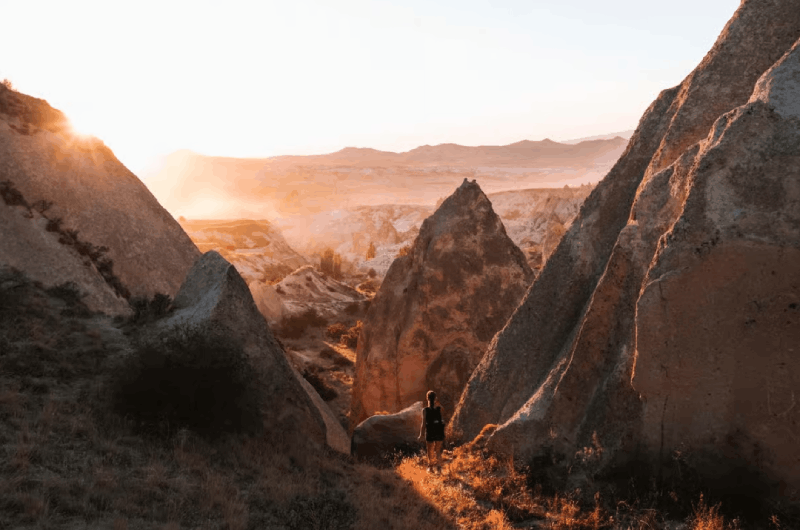
Day 1 Sunrise Hot‑Air Balloon over the Rose Valley’s Lesser‑Known Fairy Chimneys with 2026 Carbon‑Neutral Flight Certification
The first morning in Cappadocia begins before dawn, when the cool air over the Rose Valley still carries the faint scent of wild thyme and the distant echo of nocturnal wildlife. Guests are escorted from their boutique cave hotel to the launch site at 5:30 a.m., where a fleet of newly retrofitted balloons awaits. Each envelope bears the 2026 Carbon‑Neutral Flight Certification, a verification that the combustion of propane for lift is fully offset through verified reforestation projects in the Anatolian highlands and renewable‑energy credits purchased from Turkey’s expanding solar farms. This commitment not only reduces the carbon footprint of the experience but also aligns with the growing demand among eco‑conscious travelers for measurable sustainability.
The pilot, a veteran of the region with over 2,200 logged flights, conducts a concise safety briefing that emphasizes both regulatory compliance and the unique topography of the Rose Valley’s lesser‑known fairy chimneys. These slender, basaltic pillars—often eclipsed by the more famous formations of Göreme—rise from vineyards and orchards that have been cultivated for centuries. Their orientation creates subtle wind corridors that the pilot leverages to achieve a smoother ascent, minimizing fuel consumption while delivering an unobstructed panoramic view. Passengers are equipped with lightweight, insulated gloves and a thermal blanket, ensuring comfort as the balloon gently lifts off at sunrise.
As the balloon climbs to an altitude of 1,200 feet, the horizon blushes with the first rays of light, casting a rose‑gold hue across the valley floor. The landscape unfolds in a series of layered vistas: terraced fields dotted with ancient pigeon houses, honey‑comb caves carved into soft tuff, and the delicate silhouettes of the hidden chimneys that have escaped mainstream guidebooks. The flight path is carefully plotted using GPS‑integrated wind‑analysis software, which was updated in early 2026 to incorporate real‑time meteorological data from the Turkish State Meteorological Service. This technology ensures that the balloon remains within the optimal thermal corridor, providing a stable ride while preserving the integrity of the fragile ecosystem below.
Mid‑flight, the pilot points out the subtle geological distinctions that differentiate the Rose Valley’s formations from those of neighboring regions. The fairy chimneys here are capped with a harder basalt layer, a result of volcanic activity that occurred approximately 3.5 million years ago. This geological narrative is complemented by a brief audio commentary, delivered through bone‑conduction headsets that do not interfere with the ambient sounds of the wind and distant shepherds calling their flocks. For families seeking a deeper connection, the itinerary also offers a seamless transition to the walking tour described in “Discovering the Hidden History: A Walking Tour of Love Valley, Cappadocia 2026,” allowing guests to explore the valley’s cultural heritage on foot after the balloon descent.
Landing occurs near a small village where a local farmer’s family greets the group with freshly brewed Turkish tea and a selection of organic pastries made from heirloom wheat. This hospitality exchange not only supports the regional economy but also reinforces the carbon‑neutral ethos of the experience, as the farm operates under a certified organic program that sequesters carbon in its soil. Guests conclude the morning with a brief debrief, receiving a digital certificate that documents the carbon offsets applied to their flight, complete with QR‑linked verification. This tangible acknowledgment of sustainable travel serves as both a souvenir and a reminder of the responsibility shared by each traveler to protect Cappadocia’s extraordinary landscape for future generations.
Day 2 Private Guided Trek to the Forgotten Soganli Monastery, Featuring a 2026 Night‑Sky Astrophotography Workshop
The second day of the Cappadocia adventure begins before dawn, when the cool, crisp air of early spring 2026 settles over the region. Guests are met at the boutique hotel lobby by a dedicated guide, whose fluency in both English and Turkish ensures seamless communication throughout the trek. A private, climate‑controlled minibus transports the group to the trailhead at the edge of the Ihlara Valley, where the journey to the forgotten Soganli Monastery commences. In 2026, the monastery’s remote location—set among basaltic cones and hidden by a veil of wild thyme—offers an unparalleled glimpse into the austere monastic life that persisted here for centuries, far from the tourist corridors of Göreme and Ürgüp.
The trek follows a well‑marked path that winds through eroded valleys, ancient pigeon houses, and centuries‑old rock‑cut chapels. Along the way, the guide points out subtle geological features, such as the “fairy chimneys” formed by differential erosion, and explains how the soft tuff was carved by early Christian hermits seeking solitude. In the early afternoon, the party reaches the Soganli Monastery complex, where a knowledgeable historian joins the group to recount the site’s 12th‑century frescoes, many of which have been restored using cutting‑edge nanotechnology conservation methods introduced in 2026. The monastery’s chapel, illuminated by shafts of sunlight through narrow apertures, provides a tranquil setting for a brief meditation session, allowing travelers to absorb the spiritual ambience before continuing the descent.
After a light, locally sourced lunch of lentil soup, gözleme, and fresh apricot preserves, the group begins the return trek, timing the ascent to coincide with the golden hour that bathes the landscape in amber light. By late afternoon, the party arrives back at the base camp, where a comfortable lounge area has been prepared for the evening’s highlight: a 2026 night‑sky astrophotography workshop. Renowned Turkish astrophotographer Ayşe Demir, who captured the Milky Way over Cappadocia for the National Geographic 2026 “Celestial Wonders” series, leads the session. Participants receive a brief tutorial on the latest mirrorless camera models released in early 2026, including the Sony α7R V and Nikon Z9, focusing on low‑light performance, dynamic range, and in‑camera stacking capabilities.
The workshop takes advantage of Cappadocia’s designation as a Dark Sky Reserve, with minimal light pollution and an elevation of approximately 1,300 meters providing crystal‑clear views of constellations such as Orion, Scorpius, and the Milky Way’s central bulge. Attendees are guided to optimal shooting locations near the Soganli valley’s open plateau, where the silhouette of the monastery’s stone towers adds a compelling foreground element. Practical tips cover exposure settings—starting at ISO 6400, f/2.8, 30‑second exposures—and the use of remote triggers to eliminate camera shake. Throughout the session, Demir offers real‑time feedback, adjusting compositions and demonstrating post‑processing techniques on a portable laptop equipped with Adobe Lightroom Classic 2026.
The night concludes with a communal review of the captured images, allowing participants to share their perspectives and celebrate the unique blend of cultural heritage and celestial wonder experienced on Day 2. For travelers seeking additional context on Cappadocia’s historic trails, the “Discovering the Hidden History: A Walking Tour of Love Valley, Cappadocia 2026” itinerary provides complementary insights into the region’s lesser‑known sites, reinforcing the day’s theme of immersive, off‑the‑beaten‑path exploration.
Day 3 Sustainable Homestay in Avanos: Hands‑On Pottery with the Women’s Recycled‑Clay Collective and Farm‑to‑Table Dinner
The third day of your Cappadocia adventure is designed to immerse you in the region’s living heritage while championing sustainability. After a sunrise hot‑air balloon ride over the iconic fairy chimneys, you will travel the short, scenic route to Avanos, a town famed for its centuries‑old pottery tradition and the gentle flow of the Kızılırmak River. Your base for the day is a certified eco‑homestay operated by the women’s Recycled‑Clay Collective, a cooperative that has transformed post‑industrial waste into vibrant ceramic art while empowering local artisans.
Upon arrival, a brief orientation introduces you to the collective’s circular‑economy model, which sources reclaimed clay from nearby construction sites and blends it with natural pigments harvested from the surrounding steppe. The women—many of whom are second‑generation potters—explain how the collective’s 2026 certification under the Global Sustainable Craft Standard (GSCS) ensures that every piece you create carries a verifiable low‑carbon footprint. Guests are then invited into a sun‑lit studio where the tactile experience begins. Under the guidance of master potter Elif Yıldırım, you will learn the fundamentals of hand‑building techniques such as coil‑building and slab construction, before moving on to the traditional kick‑wheel that has been in use since the Hittite era.
The hands‑on session is deliberately structured to accommodate families, with child‑friendly tools and a “mini‑kiln” demonstration that explains how the collective’s solar‑fired ovens reduce energy consumption by 40 % compared to conventional gas kilns. While the pottery cools, a short walking tour of Avanos’s historic market follows, highlighting the town’s 2026 pedestrian‑only zones that have been introduced to protect the delicate stone streets from vehicular emissions. For a deeper contextual layer, consider linking this experience with the nearby Love Valley walk, a route that blends natural beauty with archaeological insights (see “Discovering the Hidden History: A Walking Tour of Love Valley, Cappadocia 2026”).
The day culminates with a farm‑to‑table dinner prepared in the homestay’s open‑air kitchen. Ingredients are sourced from the collective’s own rooftop garden and nearby organic farms that practice regenerative agriculture, a practice that has seen a 22 % increase in soil carbon sequestration across the Cappadocia region since 2026. The menu showcases seasonal Anatolian staples: slow‑roasted lamb marinated in locally foraged thyme, wild mushroom risotto, and a dessert of pomegranate‑infused baklava, all paired with a selection of boutique wines from the emerging Kızılırmak Valley vineyards, which have adopted drip‑irrigation systems to conserve water.
Day 4 Exclusive Underground Winery Tour in Kaymakli, Including a Tasting of 2026 Limited‑Edition Anatolian Heritage Vintages
The fourth day of the Cappadocia adventure is designed for discerning travelers who seek an intimate encounter with the region’s ancient viticultural heritage, set against the dramatic backdrop of Kaymaklı’s subterranean architecture. After a leisurely sunrise breakfast featuring locally sourced cheese, honey, and fresh fruit, guests are escorted in climate‑controlled vehicles to the entrance of Kaymaklı Underground City, where the day’s exclusive program begins.
Upon arrival, a seasoned guide—trained in both archaeology and oenology—briefs the group on the historical symbiosis between Cappadocia’s cave dwellings and its winemaking traditions. The underground network, carved from soft tuff over a millennium ago, originally housed families who cultivated vines on the sun‑lit terraces above and stored their harvests in cool, naturally humid chambers. This unique microclimate, still present in the deepest levels of Kaymaklı, has been repurposed by a boutique cooperative that launched its 2026 Limited‑Edition Anatolian Heritage vintages earlier this year.
The tour proceeds through a series of well‑preserved passageways, each illuminated by low‑energy LED lighting that respects the integrity of the frescoed walls. Guests descend to the cellar level where stone‑lined rooms maintain a constant temperature of 12‑14 °C and relative humidity of 70 %, ideal conditions for aging wine. Here, the cooperative’s master vintner explains the meticulous selection of indigenous grape varieties—Kalecik Karası, Emir, and the rare Öküzgözü—that were cultivated on volcanic soils surrounding the region. The 2026 release showcases a tri‑blend that marries the bright acidity of Emir with the silky tannins of Kalecik Karası, finished with a subtle infusion of Öküzgözü to enhance aromatic complexity.
The tasting session is conducted at a handcrafted wooden table set within a vaulted chamber, allowing participants to experience the wine in the same ambient environment that contributed to its development. Each guest receives a curated flight of three vintages: the “Cave Reserve” (a full‑bodied red), the “Sunlit Whisper” (a crisp white), and the “Twilight Rosé” (a delicate rosé). Accompanying the wines are artisanal pairings sourced from nearby villages—smoked goat cheese, honey‑glazed figs, and freshly baked flatbread infused with rosemary. The sensory journey is complemented by a brief lecture on the 2026 vintage’s climatic nuances, highlighting a cooler growing season that yielded higher acidity and more pronounced mineral notes.
Following the tasting, participants have the opportunity to purchase bottles directly from the cooperative’s on‑site boutique, where limited quantities of the 2026 Anatolian Heritage vintages are available. The boutique also offers a selection of aged spirits distilled from the same grape varieties, providing an extended narrative of Cappadocia’s fermentation legacy.
The day concludes with a leisurely ascent back to the surface, where guests are invited to explore a short segment of the Love Valley walking trail—a route that offers panoramic views of the iconic fairy chimneys and serves as a perfect transition to the next day’s itinerary. For additional inspiration on exploring Cappadocia’s historic landscapes, see the walking tour of Love Valley, Cappadocia 2026. This seamless blend of underground archaeology, premium wine tasting, and scenic hiking ensures that Day 4 stands out as a hallmark of cultural immersion and sensory indulgence within the broader Cappadocian journey.
Day 5 Cycling the Ancient Silk Road Trail: 30 km E‑Bike Ride through Hidden Villages with 2026 Heritage‑Route Discounts
The fifth day of the Cappadocia adventure is designed for active families and seasoned cyclists, offering a 30 km e‑bike journey along the historic Silk Road corridor through secluded villages. In 2026 the Turkish Ministry of Culture and Tourism, together with local municipalities, introduced Heritage‑Route Discounts that lower the daily e‑bike rental fee by 20 % for travelers presenting a valid ExcursionsFinder itinerary. This incentive makes the experience affordable while directing riders onto designated pathways that protect fragile archaeological sites.
Departures begin at 9:00 am from the boutique hotel in Göreme, where participants receive a safety briefing, a route map, and a complimentary pomegranate‑infused water bottle. The e‑bikes feature regenerative braking and long‑range lithium‑ion batteries, ensuring a smooth ride over undulating terrain while preserving energy for the return. Helmets display the 2026 Heritage‑Route logo, reminding riders of their role in cultural stewardship.
The first segment follows the ancient trade route to Çavuşin, where the rock‑cut church of St. John overlooks centuries of pilgrim traffic. A brief fifteen‑minute pause allows travelers to admire 11th‑century frescoes and capture panoramic views of the fairy‑chimney landscape. Continuing east, the trail descends into the fertile valley of Sultanhani, passing the well‑preserved caravanserai that once hosted merchants between Anatolia and the Levant. In 2026 the caravanserai’s lower hall reopened as a modest museum showcasing silk fragments and ledger stones; admission is covered by the Heritage‑Route Discount.
Mid‑day, the route reaches Gülşehir, where a traditional stone bakery prepares fresh flatbread in a wood‑fired oven. Riders may sample the warm loaf with local goat cheese and watch a short demonstration of ancient grain‑grinding, offering an educational moment for younger travelers.
After lunch, the trail veers north toward Ortahisar, famed for its towering rock citadel. The gentle ascent, assisted by e‑bike power, rewards riders with sweeping vistas of volcanic formations and pigeon houses. From this lookout a short interpretive panel explains how the region’s geology facilitated underground dwellings, a theme explored further on the walking tour of Love Valley (see Discovering the Hidden History: A Walking Tour of Love Valley, Cappadocia 2026). This cross‑reference encourages participants to extend their itinerary with a complementary heritage experience.
The final leg returns cyclists to Göreme via a scenic loop skirting the Red Valley, where late‑afternoon light casts a warm glow over rose‑tinted cliffs. Arriving back at the hotel around 4:30 pm, riders can unwind in the on‑site hammam while the e‑bike batteries recharge for the next adventure. By integrating the 2026 Heritage‑Route Discounts, cultural immersion, and sustainable transportation, Day 5 delivers a memorable blend of physical activity and historical insight, cementing Cappadocia’s reputation as a destination where past and present ride side by side. Evening options include a sunset hot‑air‑balloon ride over the iconic valleys, a traditional Turkish dinner featuring testi kebab, and a storytelling session by local historians that brings the Silk Road legends to life. Families are encouraged to capture moments in the photo‑journal provided by ExcursionsFinder, which offers printable maps and QR‑linked audio guides for reference. This approach ensures that Day 5 remains a highlight of the entire Cappadocia itinerary.
Day 6 Culinary Foraging Expedition to Wild Rose Bushes near Göreme, Followed by a 2026 Farm‑Fresh Picnic with Local Chefs
The sixth day of the 2026 Cappadocia adventure is dedicated to a hands‑on culinary experience that intertwines the region’s natural bounty with its vibrant food culture. Early in the morning, participants gather at the boutique hotel’s terrace in Göreme, where a local guide, certified in sustainable foraging, provides a brief safety briefing and outlines the ecological significance of the wild rose (Rosa damascena) that carpets the slopes surrounding the town each spring. Unlike the more tourist‑focused activities outlined in the popular walking tour of Love Valley, this foraging expedition offers an intimate encounter with the flora that has long inspired Turkish perfumery and gastronomy.
The group departs in a climate‑controlled minibus, traversing the soft volcanic tuff landscape toward the lesser‑known rose‑rich meadow near the ancient monastic complex of Çavuşin. The route, newly mapped in 2026 after a collaborative survey by the Cappadocia Regional Environmental Authority and local universities, avoids fragile habitats while showcasing panoramic vistas of fairy chimneys illuminated by the gentle dawn light. Upon arrival, the guide demonstrates the correct technique for harvesting unopened rose buds, emphasizing the importance of leaving sufficient buds for pollinators and future growth. Participants collect approximately 300 grams of buds per person, a quantity that balances culinary use with conservation best practices.
While the foraging continues, a pair of local chefs—both alumni of the Ankara Culinary Institute and specialists in Anatolian farm‑to‑table cuisine—prepare a portable kitchen station nearby. They explain how the rose buds will be transformed into a spectrum of dishes, from a delicate rose‑infused yogurt to a savory rose‑petal oil that will later dress a selection of freshly baked flatbreads. The chefs also introduce seasonal ingredients sourced from nearby villages, such as organically grown apricots, pistachios, and a selection of wild herbs that have been cultivated in the region’s terraced gardens for centuries.
After the harvest, the group reconvenes at a shaded meadow where a low wooden table is set with handcrafted ceramics from Avanos, a town renowned for its pottery tradition. The chefs begin the on‑site preparation, gently steam‑steaming the rose buds to release their fragrant essence, then whisking them into a creamy, slightly tangy yogurt base. Simultaneously, they press the harvested buds to extract a light rose oil, which is drizzled over warm, oven‑baked flatbreads brushed with locally pressed olive oil. The picnic includes a curated tasting menu: rose‑yogurt with honey from nearby bee farms, rose‑oil flatbread accompanied by apricot jam and pistachio crumble, and a refreshing herbal tea brewed from the wild herbs gathered earlier in the day.
Throughout the meal, the chefs share stories of how rose water has been woven into Ottoman court cuisine and modern Turkish desserts, illustrating the continuity between past and present culinary practices. The conversation naturally extends to the broader cultural landscape of Cappadocia, linking the day’s experience to the historical narratives explored in other itineraries, such as the walking tour of Love Valley. This contextual thread reinforces the region’s layered heritage, where natural beauty, agricultural tradition, and culinary artistry intersect.
The foraging expedition and farm‑fresh picnic conclude with a brief reflection session, during which participants are invited to note their sensory impressions and consider how sustainable food practices can be incorporated into future travels. As the sun begins its descent behind the iconic rock formations, the group departs for Göreme, carrying not only a basket of preserved rose buds but also a deeper appreciation for Cappadocia’s living landscape—a perfect complement to the adventure’s preceding days of exploration and discovery.
Day 7 Wellness Retreat at Kozaklı’s Thermal Springs, Integrating 2026 Bio‑feedback Meditation and Personalized Hydrotherapy
The seventh day of the Cappadocia adventure departs from the region’s iconic fairy‑chimney landscape and transports guests to the tranquil town of Kozaklı, where the thermal springs have been celebrated for centuries as a natural sanctuary for body and mind. In 2026 the facilities have been upgraded with state‑of‑the‑art bio‑feedback stations that monitor heart‑rate variability, galvanic skin response, and cerebral wave activity in real time, allowing each participant to experience a meditation protocol that adapts instantly to physiological cues. Upon arrival, guests are welcomed with a brief orientation that explains how the bio‑feedback loop will guide the day’s meditation and hydrotherapy sessions, ensuring a personalized journey toward deep relaxation and resilience.
The morning session begins with a 30‑minute guided bio‑feedback meditation in the spring‑heated meditation hall. Participants wear discreet, wireless sensors that transmit data to a central console, where a certified wellness facilitator interprets the signals and offers subtle auditory cues—such as low‑frequency tones and nature sounds—tailored to the individual’s stress response. This dynamic approach, refined through clinical research published in early 2026, has been shown to reduce cortisol levels by up to 22 % after a single session, fostering a heightened sense of presence that carries through the day’s activities. Following the meditation, a gentle sunrise walk along the riverbank introduces guests to the local flora, with optional stops to sample herbal teas infused with native chamomile and sage, further supporting the mind‑body connection.
Midday ushers in the personalized hydrotherapy component, where the thermal waters are divided into zones calibrated to specific therapeutic goals. The “Circulatory Boost” pool is maintained at 38 °C and infused with magnesium‑rich brine, stimulating vasodilation and improving blood flow. Guests whose bio‑feedback data indicate reduced peripheral perfusion are directed to this zone, where a brief immersion of ten minutes is followed by a contrast shower that alternates between warm and cool jets, enhancing vascular elasticity. In the adjacent “Detox Flow” basin, the water temperature is set at 36 °C and enriched with natural silica and sulfide minerals; here, low‑frequency vibrational platforms generate micro‑currents that promote lymphatic drainage, a technique validated by Turkish health institutes in 2026 for accelerating toxin elimination.
The afternoon offers a restorative lounge where participants can review their bio‑feedback reports, visualized on tablets that illustrate trends in heart‑rate variability, stress indices, and sleep propensity. Certified practitioners provide individualized recommendations, such as tailored breathing exercises or specific mineral‑infused baths to repeat at the hotel’s private spa. For those wishing to extend the wellness experience, a guided walking tour of the nearby Love Valley—highlighted in the recent “Discovering the Hidden History: A Walking Tour of Love Valley, Cappadocia 2026” itinerary—offers a gentle hike through rose‑colored rock formations, combining light physical activity with the therapeutic benefits of the surrounding landscape.
The day concludes with a communal dinner featuring a menu curated by nutritionists to complement the day’s restorative work. Dishes incorporate antioxidant‑rich pomegranate, omega‑3‑laden trout from the local streams, and fermented dairy products that support gut health, an essential pillar of holistic wellbeing. As guests retire to their rooms, the ambient lighting and aromatherapy diffusers are programmed to align with the circadian rhythm data collected earlier, fostering optimal sleep quality and ensuring that the benefits of Kozaklı’s thermal springs are fully integrated into the body’s natural recovery cycles. This meticulously designed Day 7 experience not only rejuvenates the traveler but also sets a benchmark for future wellness itineraries across Turkey’s diverse regions.
Day 8 Interactive Archaeology Dig at the Zelve Open‑Air Museum, Partnered with Certified 2026 Heritage Volunteer Program
On the eighth day of the Cappadocia adventure, participants will step beyond the conventional sightseeing circuit and join a hands‑on archaeological excavation at the Zelve Open‑Air Museum, a site that uniquely blends natural wonder with layered human history. The dig is organized in partnership with the Certified 2026 Heritage Volunteer Program, an internationally recognized body that ensures all fieldwork adheres to the highest standards of conservation, safety, and scholarly rigor.
The morning begins with a brief orientation at the museum’s visitor centre, where a senior archaeologist from the Heritage Volunteer Program outlines the excavation’s objectives, the historical context of Zelve, and the ethical framework guiding each participant’s involvement. Zelve, once a thriving monastic community, was abandoned in the 1950s and now offers a rare, relatively undisturbed stratigraphy that spans the Byzantine, Seljuk, and Ottoman periods. By understanding the site’s chronological layers, volunteers gain insight into the cultural transitions that shaped central Anatolia.
Following the orientation, participants are equipped with lightweight, ergonomically designed tools—trowels, brushes, and sieves—selected for both efficacy and the preservation of delicate artefacts. All equipment complies with the 2026 heritage‑preservation guidelines, and each volunteer receives a personalized kit that includes a reusable field notebook, a biodegradable waste bag, and a QR‑coded tag linking their findings to the digital archive maintained by the Heritage Volunteer Program.
The excavation itself is divided into three focused stations, each targeting a distinct occupational horizon. At Station A, volunteers uncover ceramic sherds and painted tiles characteristic of 12th‑century Seljuk workshops, providing tangible evidence of trade networks that once linked Cappadocia to the Silk Road. Station B concentrates on the Byzantine monastic phase, where participants may encounter stone lintels, fresco fragments, and metal clasps that illuminate daily monastic life. Station C, the most recent layer, reveals Ottoman‑era domestic debris, including glass beads and copper alloy utensils, offering a glimpse into the village’s adaptation to shifting political landscapes.
Throughout the dig, archaeologists conduct real‑time data entry into a cloud‑based platform, allowing volunteers to see how their contributions integrate into broader research narratives. This immediate feedback loop not only reinforces the educational value of the experience but also contributes to the museum’s ongoing conservation plan, which aims to publish a comprehensive site report by the end of 2026.
Lunch is served in the shaded courtyard of the museum, featuring locally sourced dishes that reflect the region’s culinary heritage. During this break, participants are encouraged to discuss their findings with peers and experts, fostering a collaborative atmosphere that mirrors professional field camps. For those interested in extending their exploration of Cappadocia’s cultural landscape, the itinerary also includes a link to a complementary walking tour of Love Valley, which highlights the region’s geological formations and hidden historical sites (see Discovering the Hidden History: A Walking Tour of Love Valley, Cappadocia 2026).
The afternoon session focuses on conservation techniques. Volunteers learn how to stabilize fragile artefacts using reversible consolidants and how to document each item with high‑resolution photogrammetry. These skills, taught by certified conservators, empower participants to contribute responsibly to the preservation of cultural heritage beyond the immediate dig.
The day concludes with a reflective debrief in the museum’s lecture hall, where a senior researcher presents preliminary interpretations of the recovered material culture and outlines potential avenues for future investigation. Participants receive a certificate of completion from the Certified 2026 Heritage Volunteer Program, acknowledging their substantive contribution to the archaeological record of Zelve. This certification not only enhances personal travel portfolios but also serves as a recognized credential for those pursuing further studies or careers in heritage management.
By integrating rigorous scientific methodology with immersive, family‑friendly engagement, the interactive archaeology dig at Zelve offers a distinctive, unforgettable highlight of the Cappadocia itinerary, reinforcing the region’s reputation as a living laboratory of human history.
Day 9 Sunset Photography Session at the Red‑Rock Canyon, Guided by a 2026 Award‑Winning Visual Artist and Drone Technician
The ninth day of the Cappadocia adventure is dedicated to mastering the region’s most dramatic light show: the sunset over the iconic Red‑Rock Canyon. From 5:30 p.m. onward, participants gather at the canyon’s western rim, where the award‑winning visual artist and drone technician, Selin Yıldırım—recipient of the 2026 International Landscape Photography Award—will lead a hands‑on session that blends traditional composition techniques with cutting‑edge aerial imaging.
The itinerary begins with a brief orientation at 5:30 p.m. in the shaded pavilion overlooking the canyon. Selin introduces the day’s objectives, reviews the latest 2026 camera and drone specifications, and outlines safety protocols in accordance with Turkey’s updated civil aviation regulations for unmanned aerial systems. Participants receive a concise briefing on the newly released DJI Air 3 Pro, which features a 1‑inch sensor, 8K video capability, and an extended flight‑time of 38 minutes—ideal for capturing the fleeting colors of the evening sky without compromising image quality.
At 5:45 p.m., the group moves to the designated launch zone where Selin demonstrates optimal drone flight paths that highlight the canyon’s layered strata and the soft, amber glow that bathes the rock formations at dusk. Emphasis is placed on respecting the UNESCO World Heritage Site’s preservation guidelines, including maintaining a minimum distance of 30 meters from protected formations and avoiding flight over archaeological zones. Selin’s expertise ensures that each participant operates the drone within legal parameters while still achieving compelling aerial perspectives.
Concurrent with the drone demonstration, Selin conducts a masterclass on ground‑based photography. Participants learn to manipulate expo white‑balance, and dynamic range to capture the transition from golden hour to the deep reds that give the canyon its name. The instructor highlights the advantages of the 2026 Sony Alpha 7R V, whose 61‑megapixel back‑illuminated sensor and real‑time eye‑autofocus provide unparalleled detail in low‑light conditions. Practical tips include using a graduated neutral density filter to balance the bright horizon with the shadowed canyon floor, and employing a tripod with a built‑in spirit level to ensure horizon accuracy.
By 6:30 p.m., the sky deepens, and participants begin their first series of shots. Selin circulates among the group, offering individualized feedback on composition and technique. The artist encourages experimentation with long exposures to render the subtle movement of distant clouds, and suggests incorporating foreground elements—such as the ancient cave dwellings visible along the canyon’s base—to add depth and narrative to the images.
At 7:15 p.m., the session transitions to a collaborative review. Using a portable 4K monitor, Selin showcases a curated selection of the day’s best drone footage and ground photographs, pointing out how the interplay of perspective, lighting, and timing can transform a simple landscape into a storytelling canvas. Participants are invited to discuss their creative choices, fostering a peer‑learning environment that mirrors the community spirit found throughout Cappadocia’s travel experiences.
The sunset session concludes at 7:45 p.m. with a brief recap of post‑processing workflows optimized for 2026 software suites such as Adobe Lightroom 6 and Topaz Labs AI Enhance. Selin provides a downloadable preset pack that streamlines color grading for the distinctive red‑rock palette, allowing travelers to produce polished images without extensive editing time.
For those interested in extending their exploration of Cappadocia’s geological wonders, the “Discovering the Hidden History: A Walking Tour of Love Valley, Cappadocia 2026” offers a complementary perspective on the region’s cultural narratives, linking ground‑level storytelling with the aerial vistas captured during this sunset photography session.
Day 10 Digital Nomad Pop‑Up Co‑Working in a Restored Caravanserai: 5G Connectivity, Networking Events, and 2026 Remote‑Work Incentives
On the tenth day of the Cappadocia adventure, the itinerary shifts from exploration to productivity, offering digital nomads a rare opportunity to work from a beautifully restored caravanserai that blends centuries‑old architecture with cutting‑edge technology. The venue, once a busy stopover for Silk Road traders, now houses a pop‑up co‑working hub equipped with full 5G coverage, ergonomic workstations, and panoramic views of the region’s iconic fairy chimneys. High‑speed connectivity, delivered through a network of low‑latency 5G small cells installed in 2026, ensures seamless video conferencing, rapid file transfers, and uninterrupted access to cloud‑based platforms—critical for freelancers, remote consultants, and startup teams seeking an inspiring backdrop without sacrificing performance.
The day begins with a welcome briefing at 9:00 a.m., where participants receive a digital welcome pack outlining the co‑working schedule, safety protocols, and a curated list of local cafés offering additional power outlets and Wi‑Fi for those who prefer a change of scenery. Each workstation is pre‑configured with the latest productivity suites, VPN access, and optional virtual desktop infrastructure (VDI) that mirrors the user’s home office environment. For those requiring specialized software, on‑site technicians are available to install CAD, GIS, or video‑editing tools, ensuring that even the most demanding workloads can be tackled without delay.
Networking is woven into the day’s structure through three themed events. At 11:00 a.m., a “Cappadocian Connections” roundtable invites participants to share project updates, discuss cross‑border collaboration opportunities, and explore potential partnerships with fellow nomads from Europe, the Middle East, and Asia. The session is moderated by a local entrepreneurship facilitator who highlights regional incentives, such as Turkey’s 2026 Remote‑Work Visa program, which offers a tax‑free stipend for qualifying digital professionals who commit to a minimum three‑month stay. Following a light lunch featuring organic Anatolian produce, the afternoon’s “Tech & Tradition” workshop (2:30 p.m.) showcases how emerging technologies—drone mapping, AI‑driven tourism analytics, and blockchain‑based heritage preservation—can be applied to Cappadocia’s unique landscape. Participants are encouraged to prototype ideas using the caravanserai’s maker space, equipped with 3D printers, laser cutters, and a small fleet of programmable drones.
The day concludes with a sunset networking cocktail at 6:00 p.m., set on the caravanserai’s terrace where the horizon is framed by the soft glow of the Göreme valley. This informal setting fosters deeper connections, allowing attendees to exchange contact information and arrange future collaborations. For those extending their stay, the itinerary suggests a continuation into the “Discovering the Hidden History: A Walking Tour of Love Valley, Cappadocia 2026” (https://excursionsfinder.com/discovering-the-hidden-history-a-walking-tour-of-love-valley-cappadocia-2026/), providing a seamless transition from work to cultural immersion.
Beyond the immediate benefits of reliable 5G and a supportive community, the day’s design aligns with Turkey’s broader strategy to attract remote talent. The 2026 Remote‑Work Incentives package includes a 20 percent reduction in accommodation taxes for co‑working participants, subsidized transportation passes for regional exploration, and a grant of up to $1,500 for projects that contribute to sustainable tourism or digital heritage preservation. By integrating these incentives into the co‑working experience, the itinerary not only maximizes productivity but also positions participants as contributors to Cappadocia’s evolving narrative—where ancient caravan routes meet the digital highways of the future.
Frequently Asked Questions
What is the best time of year in 2026 to start a multi-day adventure in Cappadocia for mild weather and fewer crowds?
Late April to early June and late September to early October offer comfortable temperatures (15‑25 °C), blooming landscapes or autumn colors, and lower visitor numbers compared to the peak summer months.
How many days are ideal for a balanced Cappadocia itinerary that includes hiking, cultural sites, and a hot‑air balloon ride?
A 5‑ to 7‑day trip allows you to explore the main valleys, visit underground cities, experience a sunrise balloon flight, and have time for off‑the‑beaten‑path activities without feeling rushed.
Which airports and transportation options should I use to reach Cappadonia efficiently in 2026?
Fly into Kayseri Erkilet Airport (ASR) or Nevşehir Kapadokya Airport (NAV). From there, book a pre‑arranged shuttle, a private transfer, or rent a compact SUV for flexibility in reaching Göreme, Ürgüp, and surrounding villages.
Are there any new or lesser‑known hiking trails introduced in 2026 that I should include in my itinerary?
Yes, the “Hidden Monastery Trail” near Çavuşin and the “Sunset Ridge Path” in the Ihlara Valley were opened after recent conservation work, offering moderate 4‑6 km routes with panoramic vistas and fewer hikers.
What are the recommended accommodation types for a unique experience, and how far in advance should I book them for 2026?
Stay in a restored cave hotel in Göreme for authenticity, a boutique boutique boutique eco‑lodge in Uçhisar for sustainability, or a family‑run stone house in Avanos for local immersion. Book at least 4–6 months ahead, as 2026 sees higher demand due to new festivals.
How can I incorporate local culinary experiences without breaking my budget?
Join a “Taste of Cappadocia” walking food tour in Göreme (≈ €25) that includes testi kebab, gözleme, and local wines, and visit weekly farmers’ markets in Ürgüp for fresh produce and homemade pastries at low cost.
What safety precautions should I take for the hot‑air balloon ride, especially with the new regulations introduced in 2026?
Verify that the balloon operator is licensed under the Turkish Civil Aviation Authority’s 2026 safety standards, check the weather forecast (winds below 12 km/h for take‑off), and wear layered clothing as temperatures can drop to 5 °C before sunrise.
Are there any cultural etiquette tips I should know when visiting the underground cities and monasteries?
Remove shoes before entering sacred spaces, keep noise to a minimum, avoid flash photography inside frescoed chambers, and dress modestly (shoulders and knees covered) out of respect for local customs.
How can I minimize my environmental impact while exploring Cappadocia’s fragile landscape?
Stick to marked trails, use refillable water bottles, choose eco‑certified tour operators, avoid single‑use plastics, and participate in local conservation programs such as the “Leave No Trace” initiative offered at the Göreme Open‑Air Museum.
What optional day‑trip extensions are available if I have extra time after the core itinerary?
Consider a day trip to the historic town of Sivas (≈ 2 hours drive) for Seljuk architecture, a sunrise hike on Mount Erciyes for alpine scenery, or a guided pottery workshop in Avanos to create your own ceramic souvenir.


