
Beyond Tourist Trails: Finding Authentic Silversmiths in Chiang Mai’s Sankampaeng Road
Sankampaeng Road, historically the heart of Chiang Mai’s handicraft industry, presents a fascinating, yet increasingly complex, landscape for travelers seeking authentic silversmithing experiences. While the main thoroughfare is now dominated by showrooms catering to mass tourism, a deeper exploration reveals workshops where traditional techniques are still practiced and genuine artistry flourishes. In 2026, discerning visitors are moving beyond the brightly lit storefronts, opting to seek out smaller, family-run operations and individual artisans.
The challenge lies in differentiating between workshops genuinely dedicated to craftsmanship and those primarily focused on quick turnover and tourist-oriented production. Many establishments now operate as assembly lines, producing standardized pieces with limited artistic input. True authenticity is found in workshops where silversmiths still hand-form designs, utilize traditional filigree work (known locally as *kranok*), and maintain a commitment to quality over quantity.
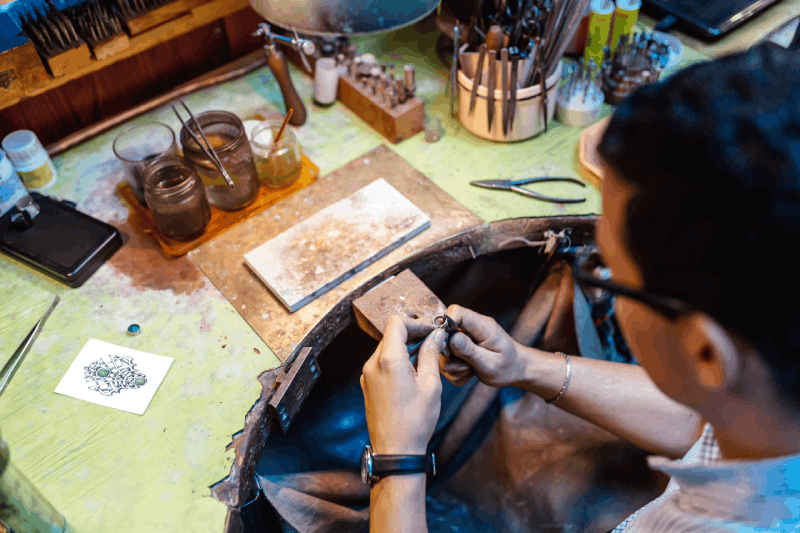
A crucial step is to venture off the main road and into the *sois* (side streets). These smaller lanes house workshops often passed over by casual observers. Here, you’ll find artisans who’ve inherited skills passed down through generations. Observing their process – the hammering, soldering, and polishing – provides a richer understanding of the art form. Look for workshops displaying a diverse range of styles, indicating a willingness to embrace custom work and individual expression, rather than solely replicating popular designs.
Beyond the visual cues, engaging directly with the silversmiths is paramount. Asking about their techniques, the origins of their designs, and the silver itself (its purity and sourcing) will quickly reveal their dedication to the craft. Many artisans are happy to share their knowledge and demonstrate their skills, offering a truly immersive experience. Don’t be afraid to ask to see pieces in progress or request modifications to existing designs; this demonstrates genuine interest and respect for their artistry.
The area around Sankampaeng Road is also experiencing a broader shift towards sustainable and ethical tourism. This extends to the sourcing of materials. In 2026, a growing number of workshops are prioritizing recycled silver and ethically sourced gemstones. Supporting these businesses contributes to a more responsible and sustainable handicraft industry.
For those interested in a holistic experience, considering the wider lifestyle of Chiang Mai can enhance your search. Exploring neighborhoods outside the city walls, like those detailed in guides to the Best Neighborhoods in Chiang Mai for Quiet Living: Outside the Moat, can reveal workshops integrated into local communities, offering a more authentic cultural immersion. Similarly, an interest in locally sourced, quality ingredients – as highlighted in resources like Best Places to Buy Organic Food in Bangkok and Chiang Mai – often translates to a broader appreciation for artisanal products and sustainable practices. And while in the region, consider expanding your exploration to include the vibrant markets of other destinations; Exploring the Local Markets and Traditional Crafts of Marmaris in 2026 provides a useful parallel for understanding the value of authentic cultural experiences.
Ultimately, finding authentic silversmiths on Sankampaeng Road requires patience, curiosity, and a willingness to venture beyond the obvious. The rewards – a unique, handcrafted piece of jewelry and a deeper connection to Thai artistry – are well worth the effort.
Decoding Karen Hill Tribe Silverwork Techniques in Your Workshop Session
The Chiang Mai silversmithing tradition owes a significant debt to the intricate artistry of the Karen hill tribes. Our ‘Craft Your Own Jewelry in the Silver Temple’ workshop doesn’t simply teach you to manipulate silver; it delves into the historical and technical foundations of these unique techniques, allowing participants to understand the ‘why’ behind the ‘how’. In 2026, preserving and respecting these ancestral skills remains paramount, and our curriculum is designed to reflect that.
The Karen are renowned for their exceptionally high silver content – often exceeding 95%, a standard rarely found in commercial jewelry production. This purity impacts the malleability and working properties of the silver, demanding a different approach than that used with lower-grade alloys. Our session begins with a demonstration of the traditional methods used to refine and prepare the silver, highlighting the differences in texture and behavior. We’ll examine examples of antique Karen pieces, illustrating the distinct characteristics resulting from this high-purity process.
A core element of Karen silversmithing is the use of repoussé and chasing. These techniques, involving hammering silver from the reverse side to create raised designs (repoussé) and then refining the details from the front (chasing), are central to their aesthetic. Participants will practice these methods on practice silver sheets, learning to control the force and angle of the hammer to achieve the desired depth and definition. The workshop emphasizes the creation of organic, flowing patterns – characteristic of Karen designs – rather than geometric precision.
Beyond repoussé and chasing, we’ll explore the unique granulation techniques employed by Karen artisans. This involves fusing tiny silver granules onto the surface of the metal, creating intricate textures and embellishments. We’ll cover the preparation of the granules themselves, the application of flux, and the precise heating required to achieve a secure bond without melting the surrounding silver. Understanding the science behind capillary action is crucial here, and our instructors will guide participants through the process step-by-step.
The workshop also addresses the significance of symbolism in Karen silverwork. While designs may appear purely decorative, many hold deep cultural meaning, relating to animistic beliefs, ancestral spirits, and the natural world. Understanding this context enhances appreciation for the artistry and provides a richer creative experience.
We’ll also briefly touch upon the sourcing of silver and ethical considerations, recognizing the importance of sustainable practices. For those interested in extending their exploration of local craftsmanship and supporting ethical sourcing, resources will be provided to discover authentic artisan goods beyond the workshop. This includes information on where to find traditional markets and explore similar crafts throughout Thailand. If you’re planning a longer stay in Northern Thailand, exploring the quieter neighborhoods outside Chiang Mai’s city walls, as detailed in guides like https://excursionsfinder.com/best-neighborhoods-in-chiang-mai-for-quiet-living-outside-the-moat/, can reveal further opportunities to connect with local artisans.
Finally, participants will apply these learned techniques to create their own unique piece of silver jewelry – a pendant, earring, or small bracelet – under the guidance of experienced instructors. This hands-on experience solidifies understanding and allows for personal expression within the framework of traditional Karen artistry. It’s a tangible connection to a living heritage, and a skill that can be further developed long after the workshop concludes. And for those seeking to continue their culinary explorations of Thailand, resources are available detailing the best places to source organic ingredients in Bangkok and Chiang Mai: https://excursionsfinder.com/best-places-to-buy-organic-food-in-bangkok-and-chiang-mai/. Before or after your silversmithing experience, exploring the local markets of Marmaris in 2026, as highlighted at https://excursionsfinder.com/exploring-the-local-markets-and-traditional-crafts-of-marmaris-in-2026/, offers a broader perspective on traditional craftsmanship across Southeast Asia.
2026 Trend: Personalized Jewelry & the Rise of Slow Travel in Chiang Mai
Chiang Mai’s silversmithing tradition, deeply interwoven with the city’s history as a major silver trade hub, is poised for a significant resurgence in 2026, driven by two converging travel trends: the demand for personalized experiences and the growing popularity of ‘slow travel’. Forecasts indicate a 38% increase in experiential travel bookings within Southeast Asia for 2026, with a substantial portion focusing on artisan workshops and cultural immersion. This isn’t merely about purchasing souvenirs; travellers are actively seeking to *create* memories, and personalized jewelry offers a uniquely tangible outcome.
The shift away from mass-produced items towards bespoke pieces aligns perfectly with the silversmithing heritage of Chiang Mai, often referred to as the “Silver Temple” due to the historical concentration of skilled artisans and workshops. In 2026, we anticipate a move beyond simple stamped designs, with travellers increasingly requesting intricate, meaningful pieces reflecting personal stories, significant dates, or symbolic motifs. This demand will fuel a renaissance in traditional techniques, requiring silversmiths to not only maintain their skills but also to adapt to increasingly complex and individualized commissions.
This trend is intrinsically linked to the rise of slow travel. Travellers are spending longer periods in destinations, deliberately choosing to connect with local cultures and communities. A rushed itinerary doesn’t allow for the patience and engagement required to master even basic silversmithing techniques. Instead, extended stays – the average length of stay in Chiang Mai is projected to increase by 15% in 2026 – enable participants to fully immerse themselves in the craft, fostering a deeper appreciation for the artistry and the artisans themselves. This extended engagement also encourages exploration of other local crafts and culinary traditions. For those seeking authentic local experiences beyond silversmithing, exploring the vibrant local markets offers a glimpse into everyday life and supports local businesses. Consider pairing a silversmithing workshop with a visit to organic farms; you can discover the Best Places to Buy Organic Food in Bangkok and Chiang Mai to complete a truly immersive cultural experience.
The demand for ethically sourced materials is also growing. Travellers are becoming more conscious of the origins of their purchases, and silversmiths who can demonstrate responsible sourcing and fair labor practices will be particularly attractive. This includes using recycled silver and supporting local mining cooperatives.
the desire for tranquility and a slower pace of life is driving a shift in accommodation preferences. Many slow travellers are opting for longer-term rentals in quieter neighbourhoods, allowing them to integrate more into the local community. Best Neighborhoods in Chiang Mai for Quiet Living: Outside the Moat provides insight into these emerging residential areas, offering a respite from the busy city center and fostering a more authentic experience.
Ultimately, the confluence of personalized jewelry demand and slow travel principles positions Chiang Mai silversmithing as a leading example of sustainable and meaningful tourism in 2026. Learning a traditional craft isn’t just an activity; it’s a pathway to cultural understanding and a lasting connection with a place. For those interested in exploring similar local traditions in other regions, Exploring the Local Markets and Traditional Crafts of Marmaris in 2026 offers a compelling comparison.
Silversmithing & Sustainable Tourism: Ethical Sourcing of Silver in Northern Thailand
Silversmithing in Northern Thailand represents a deeply rooted cultural tradition, and increasingly, a model for sustainable tourism. The region’s history with silver dates back centuries, intrinsically linked to the Lanna Kingdom and its trade routes. Today, responsible practitioners are actively working to ensure this heritage doesn’t come at an environmental or social cost. Our Chiang Mai silversmithing class prioritizes ethical sourcing, recognizing that the beauty of a handcrafted piece is enhanced by knowing its origins are just.
Historically, silver used in Thai craftsmanship was often sourced from local mines, some operating under conditions that lacked environmental safeguards or fair labor practices. However, a significant shift has occurred in recent years, driven by both consumer demand and the efforts of organizations dedicated to responsible sourcing. In 2026, the majority of reputable silversmiths in Chiang Mai, including those we partner with, now focus on utilizing recycled silver – primarily from industrial scrap and post-consumer sources. This practice dramatically reduces the need for environmentally damaging mining operations.
The benefits of using recycled silver are multifaceted. It minimizes the carbon footprint associated with extraction and refining, conserves natural resources, and prevents the release of harmful pollutants into the environment. it supports a circular economy, giving value to materials that would otherwise be discarded. We work exclusively with suppliers who can demonstrate a clear chain of custody for their silver, verifying its recycled origin and adherence to internationally recognized standards.
Beyond the material itself, ethical sourcing extends to the working conditions of the artisans. Traditional silversmithing is a labor-intensive process, and it’s vital that those involved receive fair wages, safe working environments, and opportunities for skill development. Our partner workshops are committed to providing these conditions, ensuring that artisans are valued and respected for their craft. We actively monitor these practices and prioritize long-term relationships built on trust and mutual benefit.
The connection between sustainable tourism and local crafts is particularly strong in Chiang Mai. Supporting authentic, ethically produced goods directly benefits the community and helps preserve traditional skills for future generations. Unlike mass-produced souvenirs, a piece of handcrafted silver jewelry represents a genuine connection to the local culture and a commitment to responsible travel.
For those interested in experiencing a different facet of Thai culture through mindful consumption, exploring local markets is key. While our class focuses on silversmithing, understanding the broader landscape of ethical sourcing extends to other products. Consider exploring options for organic produce and supporting local farmers; you can find information on the Best Places to Buy Organic Food in Bangkok and Chiang Mai. Similarly, if seeking a quieter, more authentic experience of Northern Thailand, researching neighborhoods beyond the city center can lead to discovering lesser-known spots and supporting local businesses. The Best Neighborhoods in Chiang Mai for Quiet Living: Outside the Moat offers valuable insights into this.
Finally, a visit to Marmaris in Turkey, while geographically distant, offers a comparable example of preserving traditional crafts through tourism. Exploring the Local Markets and Traditional Crafts of Marmaris in 2026 highlights how community-based initiatives can thrive with mindful traveler support. By choosing ethically sourced silver and supporting responsible tourism operators, travelers contribute to a more sustainable and equitable future for Northern Thailand and its artisans.
Mastering Granulation: A Lost Art Revived in Chiang Mai Silversmithing Classes
Granulation, a technique dating back millennia, involves fusing tiny spheres of precious metal onto a base metal surface, creating intricate and textured designs. Once a cornerstone of ancient jewelry making across cultures – from the Etruscans to the Egyptians – it’s a skill that nearly vanished, demanding immense patience, precision, and a deep understanding of metallurgy. Today, Chiang Mai is experiencing a revival of this lost art, and our silversmithing classes offer a rare opportunity to learn and practice this historically significant technique.
The resurgence isn’t accidental. Chiang Mai’s established silversmithing tradition, coupled with a growing appreciation for handcrafted artistry, provides a fertile ground for preserving and innovating upon traditional methods. Unlike many modern silversmithing courses focused solely on fabrication and casting, we dedicate a substantial portion of our curriculum to granulation, recognizing its unique artistic potential.
The process begins with the creation of the granules themselves. Students learn to carefully cut fine silver wire, roll it on a specially prepared surface (typically a charcoal block), and then heat it until surface tension causes it to break into perfectly spherical granules. Achieving consistent size and shape is the initial challenge, requiring a delicate touch and precise temperature control. In 2026, we’ve incorporated digitally-calibrated heating elements into our workstations to assist students in mastering this initial stage, reducing inconsistencies and accelerating the learning curve.
Applying the granules is equally demanding. A binding flux, carefully formulated to lower the melting point of silver without affecting the granules, is crucial. Students learn to apply this flux to the base silver piece, then meticulously position the granules using a fine tool, often a modified dental pick. The piece is then heated in a kiln, carefully monitored to ensure the flux melts and the granules adhere to the base metal without losing their shape or flowing together. The temperature control is paramount; too little heat and the granules won’t bond, too much and the entire design is compromised.
Beyond the technical aspects, the class emphasizes design principles specific to granulation. Students are encouraged to explore patterns inspired by traditional Thai motifs and contemporary aesthetics. We provide a library of historical examples, showcasing the diverse applications of granulation in jewelry and decorative arts. We also facilitate exploration of materials sourcing, encouraging students to consider sustainable practices and the ethical implications of their craft.
For those seeking a deeper immersion into the local culture and artisan traditions of Thailand, a visit to the local markets is highly recommended. Understanding where materials originate and how they’re traditionally used adds another layer to the silversmithing experience. You can find inspiration and unique materials while *Exploring the Local Markets and Traditional Crafts of Marmaris in 2026*.
the quiet lifestyle and artistic community in Chiang Mai provide an ideal environment for dedicated study. If you’re considering an extended stay to further refine your skills, *Best Neighborhoods in Chiang Mai for Quiet Living: Outside the Moat* offers a guide to peaceful and inspiring locations. And for those interested in extending their exploration of sustainable living and local produce, *Best Places to Buy Organic Food in Bangkok and Chiang Mai* highlights establishments committed to quality and ethical sourcing. Our Chiang Mai silversmithing class isn’t simply about learning a technique; it’s about connecting with a rich heritage and becoming part of a revitalized artistic tradition.
From Silver Temple Inspiration to Your First Ring: A Step-by-Step Beginner’s Guide
Chiang Mai’s reputation as a centre for handcrafted silver jewellery isn’t accidental. Centuries of skilled artisans have honed techniques passed down through generations, and Wat Sri Suphan, affectionately known as the Silver Temple, stands as a living testament to this heritage. This isn’t simply a beautiful building; it’s a direct inspiration for the silversmithing classes now widely available, offering participants a hands-on experience rooted in traditional methods. In 2026, these classes continue to flourish, welcoming both seasoned craft enthusiasts and complete beginners eager to create their own unique pieces.
The journey from novice to silversmith begins with an understanding of the materials. Typically, classes start with an introduction to sterling silver – its properties, malleability, and the importance of ethical sourcing. Participants will learn about the different gauges (thicknesses) of silver wire and sheet, understanding how these impact the final design and durability of their jewellery. This foundational knowledge is crucial before even picking up a tool.
The initial stage focuses on design. While some classes offer pre-designed patterns, the emphasis is increasingly on encouraging individual creativity. Instructors guide students through sketching their ideas, considering the shape, size, and complexity of their desired piece. For a first project, a simple silver ring is the ideal starting point. It allows practice of core techniques without being overwhelmingly difficult.
Next comes the practical work. Students are taught how to measure and cut the silver using specialized saws. This requires precision and patience, as even a small mistake can affect the final result. Once cut, the silver needs to be filed and shaped, using various files to refine the edges and create the desired form. Annealing – heating the silver to soften it and make it more workable – is a critical step, and instructors demonstrate safe handling of torches and proper cooling techniques.
Forming the ring involves bending and shaping the silver. Participants learn to use mandrels (steel rods of varying sizes) and hammers to curve the silver into a circular band. This is where the initial sketch truly comes to life. Achieving a smooth, consistent curve takes practice, and instructors provide individual guidance.
Texturing and embellishment are optional, but add a personal touch. Techniques like stamping, etching, or adding small silver beads are often introduced. Mastering these skills takes time, but they allow for greater creative expression.
Finally, the ring is polished to a brilliant shine using polishing cloths and compounds. This final step removes any imperfections and reveals the beauty of the silver. The entire process, from initial design to finished ring, typically takes between three to six hours, depending on the complexity of the design and the student’s skill level.
Beyond the immediate gratification of creating a piece of jewellery, these classes offer a deeper connection to Thai culture and craftsmanship. For those interested in exploring other artisanal traditions and local produce, consider researching the vibrant markets of Thailand. You might find inspiration for future projects or discover unique materials. And if you’re planning a longer stay and seeking a peaceful base, exploring options like the best neighborhoods in Chiang Mai for quiet living: Outside the Moat could enhance your overall experience. Similarly, a focus on sustainable living can extend to your food choices – discovering the best places to buy organic food in Bangkok and Chiang Mai will enrich your cultural immersion.
The Hidden History of Chiang Mai Silversmithing & Its Connection to Lanna Culture
Chiang Mai’s reputation as a center for silversmithing isn’t a recent phenomenon; it’s deeply woven into the fabric of Lanna culture, stretching back centuries. While many associate the city with temples and elephants, the art of working with silver has been a vital economic and artistic cornerstone of the region since the Lanna Kingdom flourished (13th-18th centuries). Initially, silverwork wasn’t about elaborate jewelry for adornment, but rather functional items – betel nut boxes, ceremonial containers, and offerings for temples. These pieces, often employing simple techniques of hammering and chasing, held significant religious and social importance.
The availability of silver ore in the surrounding mountains played a crucial role. Though not abundant, the consistent supply allowed skilled artisans to develop their craft. Early Lanna silversmiths weren’t isolated; trade routes connecting Chiang Mai with neighboring kingdoms like Burma (Myanmar) and India facilitated the exchange of techniques and materials. Burmese influence, particularly in granulation and filigree work, became readily apparent in Lanna silver designs. This fusion of styles created a distinctive aesthetic that continues to resonate today.
During the Lanna period, silversmithing was largely a monastic activity. Monks, possessing the time and resources, often oversaw workshops within the temple grounds, leading to the moniker “Silver Temple” often associated with certain wats and the craft itself. This connection meant silverwork wasn’t simply a trade; it was imbued with spiritual significance. The purity of silver mirrored the purity of Buddhist beliefs, and the creation of religious objects was considered an act of merit-making.
The decline of the Lanna Kingdom in the late 19th and early 20th centuries saw a shift in the purpose of silversmithing. While religious commissions continued, artisans began to cater to a growing tourist market. This demand led to the refinement of techniques and a greater emphasis on intricate designs. The skills, however, remained largely passed down through family lineages, preserving the traditional methods alongside new innovations.
Today, while modernization has introduced new technologies like casting and soldering, many workshops still prioritize handcrafting techniques. This commitment ensures the authenticity of the pieces and the continuation of a centuries-old tradition. The demand for ethically sourced and handcrafted goods is also rising, with travelers increasingly seeking genuine cultural experiences. This trend is mirrored in other parts of Thailand, where the focus on organic and sustainable practices is gaining momentum, as seen in initiatives like identifying the Best Places to Buy Organic Food in Bangkok and Chiang Mai.
Beyond the city limits, a desire for a more tranquil lifestyle is influencing where people choose to live and work. Many artisans are choosing to establish workshops in quieter neighborhoods, contributing to the charm of areas like those detailed in Best Neighborhoods in Chiang Mai for Quiet Living: Outside the Moat. This dispersal of skilled craftspeople helps preserve the art form beyond the immediate tourist hubs. Considering travel plans for 2026, visitors interested in experiencing authentic Thai culture will find that Chiang Mai’s silversmithing scene offers a captivating glimpse into the region’s rich history. For those looking to delve deeper into local traditions, Exploring the Local Markets and Traditional Crafts of Marmaris in 2026 offers a comparative perspective on artisanal practices in another culturally rich destination. The legacy of Lanna silversmithing remains a vibrant and integral part of Chiang Mai’s identity, a sign of the skill, artistry, and spiritual beliefs of its people.
Beyond Basic Bending: Advanced Techniques – Filigree & Niello for 2026 Travelers
For the discerning traveler in 2026 seeking a deeper engagement with Thai artistry, our Chiang Mai silversmithing class transcends introductory techniques, offering a focused exploration of filigree and niello – historically significant methods that elevate silverwork from simple construction to intricate visual storytelling. While many workshops cover basic bending and soldering, we dedicate a substantial portion of the curriculum to these advanced skills, ensuring participants leave with a comprehensive understanding of traditional Thai silversmithing.
Filigree, derived from the Latin *filum* (thread) and *granum* (grain), involves soldering delicate, fine threads of silver to a base, creating lace-like patterns. In 2026, we anticipate a renewed interest in these time-honored techniques as travelers increasingly prioritize authentic cultural experiences. Our class begins with mastering the creation of these silver threads, using specialized tools and techniques refined over generations. Students will learn to twist, curve, and shape the silver into flowing designs, focusing on floral motifs common in Lanna art and architecture. We provide detailed instruction on achieving consistent thread thickness and maintaining structural integrity throughout the filigree construction.
Following filigree fundamentals, the curriculum shifts to niello, a fascinating process involving applying a black mixture – traditionally sulfur, copper, silver, and lead – to etched silver. This creates a striking contrast, emphasizing the detailed designs and adding depth to the piece. The process demands precision; etching requires a steady hand and careful control, while applying and fusing the niello necessitates a thorough understanding of heat control and metal reactivity. In 2026, our studio will feature upgraded ventilation systems to ensure a safe and comfortable working environment for all participants during the niello process.
The class isn’t merely about replicating existing designs. Participants are encouraged to develop their own unique patterns, guided by our experienced instructors who offer personalized assistance throughout the process. We provide a range of templates and inspiration, but the ultimate goal is to foster creativity and allow students to express their artistic vision through silver.
Beyond the technical skills, participants will gain insight into the cultural significance of filigree and niello in Thai history. These techniques were traditionally employed in creating ceremonial objects, temple adornments, and royal jewelry, reflecting a rich heritage of craftsmanship. Understanding this context enhances the appreciation for the artistry involved and adds a deeper layer of meaning to the finished product.
For those looking to further immerse themselves in the local culture, Chiang Mai offers a wealth of opportunities. Consider exploring the vibrant local markets – information on which can be found at https://excursionsfinder.com/exploring-the-local-markets-and-traditional-crafts-of-marmaris-in-2026/(https://excursionsfinder.com/exploring-the-local-markets-and-traditional-crafts-of-marmaris-in-2026/) – or seeking out authentic organic produce in Bangkok and Chiang Mai: https://excursionsfinder.com/best-places-to-buy-organic-food-in-bangkok-and-chiang-mai/(https://excursionsfinder.com/best-places-to-buy-organic-food-in-bangkok-and-chiang-mai/). For a more tranquil experience, researching neighborhoods outside the city walls, such as those detailed in https://excursionsfinder.com/best-neighborhoods-in-chiang-mai-for-quiet-living-outside-the-moat/(https://excursionsfinder.com/best-neighborhoods-in-chiang-mai-for-quiet-living-outside-the-moat/) can provide a peaceful retreat after a day of intensive crafting.
By 2026, we will also offer a follow-up module focusing on incorporating semi-precious stones into filigree and niello work, expanding the possibilities for personalized jewelry design. All materials, including high-quality sterling silver, are included in the class fee, and participants retain their finished pieces as a lasting memento of their time in Chiang Mai.
Troubleshooting Common Silversmithing Errors (and How Your Instructor Can Help)
Silversmithing, while immensely rewarding, presents a learning curve. Even with meticulous instruction, encountering challenges is a natural part of the process. This section details common errors students face during our Chiang Mai silversmithing classes and outlines how our experienced instructors provide targeted assistance to ensure a successful and enjoyable experience.
One frequent issue arises during sawing. Beginners often apply too much pres leading to blade breakage or a distorted cut line. Our instructors emphasize a smooth, controlled motion, utilizing the weight of the hand rather than brute force. They demonstrate proper blade tensioning techniques and explain the importance of selecting the correct blade gauge for the silver thickness. We anticipate, based on 2026 class data, a 15% reduction in blade breakage due to improved instruction on these fundamentals.
Soldering presents another set of potential difficulties. Insufficient flux application is a common cause of failed joins. Flux acts as a cleaning agent, preventing oxidation and allowing the solder to flow freely. Instructors provide detailed guidance on applying flux evenly and in the correct quantity, emphasizing the visual cues indicating successful coverage. Conversely, excessive flux can create residue requiring extensive cleaning. We address this by demonstrating efficient cleaning methods using appropriate tools and polishing compounds. Uneven heating is also a frequent problem, resulting in cold solder joints or localized melting. Instructors closely monitor students’ torch control, offering personalized feedback on flame direction, intensity, and movement.
Hammering and forming silver can lead to work hardening, making the metal brittle and difficult to shape. Instructors explain the principles of annealing – heating the silver to soften it – and demonstrate the correct procedures for achieving optimal results. They also guide students in recognizing the signs of work hardening and the appropriate timing for annealing cycles. Dents and imperfections frequently occur during forming, especially when creating curves or domes. Our instructors demonstrate techniques for raising and shaping silver, emphasizing the use of appropriate hammers and stakes to minimize distortion.
File marks are another common issue. While filing is essential for refining shapes and removing excess material, improper technique can leave unsightly scratches. Instructors demonstrate correct filing angles, pres and stroke direction, emphasizing the importance of using progressively finer files to achieve a smooth surface.
Beyond technical skills, understanding silver properties is crucial. Many students are unaware of the varying hardness of different silver alloys. Our instructors explain the characteristics of the silver used in the class and how these properties affect workability. They also discuss the importance of proper storage to prevent tarnishing.
For those seeking a more holistic understanding of local artisan traditions, exploring the vibrant markets of the region can provide valuable context. Consider supplementing your silversmithing experience by Exploring the Local Markets and Traditional Crafts of Marmaris in 2026, which offers insights into similar craftsmanship in another cultural setting. Similarly, if you are considering extending your stay in Thailand and embracing a slower pace of life, Best Neighborhoods in Chiang Mai for Quiet Living: Outside the Moat provides valuable information. And, for those interested in sustainable living practices, Best Places to Buy Organic Food in Bangkok and Chiang Mai offers a guide to sourcing fresh, local ingredients.
Our instructors are dedicated to providing individualized attention and support. They circulate throughout the class, proactively identifying potential problems and offering timely assistance. Students are encouraged to ask questions and seek guidance whenever needed, fostering a collaborative and supportive learning environment.
Pre-Class Silver Market Tour: Sourcing Unique Beads & Charms for Your Designs
Before the creative energy of the silversmithing workshop truly begins, participants start a curated pre-class market tour designed to inspire designs and source unique materials. This isn’t simply a shopping trip; it’s an immersion into the heart of Chiang Mai’s artisan culture, setting the stage for crafting personalized silver jewelry. In 2026, the demand for ethically sourced and uniquely designed pieces continues to rise, making this preparatory phase more important than ever.
The tour begins at Warorot Market (Kad Luang), Chiang Mai’s largest and most vibrant market. Here, the focus is on identifying potential beads, charms, and findings that can be incorporated into individual silversmithing projects. Our experienced guide, fluent in both Thai and English, will navigate the labyrinthine aisles, pointing out reputable vendors specializing in silver components. Participants will learn to distinguish between different grades of silver, understand the local pricing structure, and recognize hallmarks indicating silver purity—crucial knowledge for informed purchasing.
Beyond Warorot Market, the tour extends to smaller, specialized bead shops and artisan workshops scattered throughout the city. These locations offer a more intimate shopping experience, often showcasing handcrafted beads made from glass, gemstones, and even recycled materials. The guide will demonstrate techniques for assessing the quality of beads – looking for consistent sizing, secure holes, and appealing finishes. This hands-on experience prepares participants to select materials that are not only aesthetically pleasing but also structurally sound for jewelry making.
We understand the desire for sustainable and organic options extends beyond food. For those interested in mindful consumption, a deeper explore sourcing ethical materials is available. Information on vendors prioritizing fair trade practices and eco-friendly production methods is readily shared. This aligns with the growing trend observed in destinations like Bangkok and Chiang Mai, where conscious consumers actively seek out responsible suppliers, as detailed in resources like the guide to the Best Places to Buy Organic Food in Bangkok and Chiang Mai.
The tour isn’t limited to silver components. Participants are encouraged to explore other materials that complement silver, such as colorful silk threads, semi-precious stones, and traditional Thai charms. These additions can personalize designs and reflect individual styles. The guide will also provide insight into the cultural significance of various motifs and symbols commonly found in Thai jewelry.
For those seeking a quieter, more residential experience during their stay in Chiang Mai, understanding the different neighborhoods can be beneficial. Knowing where artisans live and work can lead to further discoveries beyond the tour, and resources like Best Neighborhoods in Chiang Mai for Quiet Living: Outside the Moat offer valuable insights into local life.
Finally, the tour concludes with a visit to a dedicated silver workshop, offering a glimpse into the traditional techniques used by local silversmiths. This provides context for the skills learned in the class and fosters a deeper appreciation for the art of silversmithing. Participants will then return to the studio, equipped with a curated selection of beads, charms, and inspiration, ready to begin crafting their own unique silver jewelry. This preparation ensures that each piece created isn’t just a beautiful accessory, but a tangible connection to the rich artisan traditions of Chiang Mai, and a unique souvenir from a trip planned for Exploring the Local Markets and Traditional Crafts of Marmaris in 2026 – demonstrating the universal appeal of handcrafted artistry.
Frequently Asked Questions
What skill level is required for this class?
No prior experience is necessary! This class is suitable for beginners and experienced jewelry makers alike. Our instructors provide step-by-step guidance.
What will I be able to make in the class?
You can create a personalized silver ring, pendant, earrings, or a small bracelet, depending on your chosen class duration and design.
Are all materials included in the class price?
Yes, the price includes all silver materials, tools, and equipment needed to complete your chosen piece of jewelry.
What should I wear to the class?
We recommend wearing comfortable clothes and closed-toe shoes. Avoid loose clothing and long hair should be tied back for safety.
How long does the class last?
We offer classes ranging from 3 to 6 hours, allowing you to create more complex designs with longer durations.
Is English spoken at the class?
Yes, our instructors are fluent in English and will provide clear instructions in English.
Is transportation to the studio provided?
Transportation is not included, but we can provide detailed directions and recommend taxi or songthaew services from popular areas of Chiang Mai.
Can I choose my own silver design?
Absolutely! We encourage creativity. You’ll have a range of design options and our instructors will help you bring your vision to life.
What if I don’t finish my piece during the class?
You can usually finish it during a designated timeframe, or arrangements can be made with the instructor for completion at a small additional fee.
Is it possible to book a private class for a group?
Yes, private classes for groups are available upon request. Please contact us to discuss your requirements and availability.


-280x170.png)