Introduction: Awakening with the Temple of Dawn
Bangkok, a city that pulses with life at all hours, holds a special secret for those willing to rise before the sun. That secret is Wat Arun Ratchawararam Ratchawaramahawihan – more commonly known as Wat Arun, the Temple of Dawn. This isn’t merely a sightseeing stop; it’s an immersion into Thai history, artistry, and spirituality, best experienced when the city still slumbers and the first rays of light illuminate its striking silhouette.
In 2026, Wat Arun remains a beacon of cultural heritage, drawing visitors from across the globe. But escaping the midday heat and crowds by arriving at sunrise isn’t just about comfort. It’s about witnessing a transformation – a slow, magical reveal of architectural splendor bathed in the soft hues of a new day. This guide will prepare you for that experience, offering practical advice and insights to make your sunrise visit to Wat Arun truly unforgettable.
Why Sunrise? Beyond the aesthetic appeal, a sunrise visit offers a unique perspective. The cooler temperatures are a welcome respite from Bangkok’s humidity. More importantly, the golden light accentuates the intricate details of the temple’s porcelain-encrusted prang, creating photographic opportunities that are simply unmatched. You’ll also find a sense of peaceful reverence, sharing the grounds with primarily monks and early devotees – a far cry from the busy afternoon scene.
Planning Your Visit: Wat Arun is open daily from 8:00 AM to 6:00 PM, but to capture the sunrise, you’ll need to arrive *before* official opening. The temple grounds technically open around 6:00 AM to allow access for those specifically seeking sunrise views. However, access to the central prang itself doesn’t usually begin until 8:00 AM. This is key information for photographers wanting to climb and capture views from the top.
Getting There: Reaching Wat Arun requires a bit of logistical planning, but it’s surprisingly easy.
- By River Taxi (Recommended): The most scenic and convenient option is taking the Chao Phraya Express Boat. Disembark at the Tha Tien Pier (N8). From there, a short, inexpensive ferry crosses the Chao Phraya River directly to Wat Arun. The ferry costs around 5 baht (approximately $0.14 USD as of late 2026) per person.
- By BTS Skytrain & Taxi: Take the BTS Skytrain to Saphan Taksin station. From there, a taxi or tuk-tuk can take you to Tha Tien Pier. Expect to pay around 100-150 baht ($2.80 – $4.20 USD) for the taxi ride.
- By MRT Subway & Taxi: The MRT doesn’t directly connect, so you’ll need to transfer to the BTS at Asok station and follow the BTS instructions above.
What to Wear: Remember, Wat Arun is a sacred site. Dress respectfully. This means:
- Covered Shoulders and Knees: Avoid tank tops, short shorts, and revealing clothing.
- Closed-Toe Shoes: Required for climbing the central prang.
- No Swimwear: This should be obvious, but it’s worth stating.
- Sarongs & Wraps Available: If you arrive inappropriately dressed, sarongs and wraps are available for rent at the entrance for around 50-100 baht ($1.40 – $2.80 USD).
Entrance Fee: As of 2026, the entrance fee to Wat Arun is 100 baht (approximately $2.80 USD) for foreigners. Be prepared to pay in cash.
First Light – What to Expect: Arriving around 5:45 AM – 6:00 AM, you’ll likely find the area still relatively quiet. The air is cool and carries the scent of incense. The eastern sky begins to lighten, painting the Chao Phraya River in shades of pink and orange.
Position yourself along the riverbank for the best initial views. The temple’s prang, adorned with millions of pieces of colorful Chinese porcelain and glass, gradually emerges from the darkness. It’s a truly striking sight.
Essential Gear:
- Camera: A wide-angle lens is ideal for capturing the entire temple complex. A zoom lens is useful for details.
- Tripod (Optional): Helpful for low-light photography. Check if tripods are permitted – regulations can change.
- Water: Staying hydrated is crucial, especially in the Bangkok climate.
- Insect Repellent: Mosquitoes can be present, particularly near the river.
- Small Flashlight: Useful for navigating the dimly lit areas before sunrise.
- Respectful Attire: As detailed above.
Wat Arun isn’t simply a beautiful building; it’s a living, breathing testament to Thai artistry and devotion. By embracing the tranquility of a sunrise visit, you’ll connect with the spirit of this iconic landmark on a deeper level – an experience that will linger long after you’ve left the City of Angels. The following sections of this guide will delve deeper into the history, architecture, and lesser-known spots of Wat Arun, ensuring you make the most of your journey.
A Glimpse into Wat Arun’s History & Significance
Wat Arun Ratchawararam Ratchawaramahawihan – or, as it’s more commonly known, Wat Arun, the Temple of Dawn – isn’t merely a beautiful landmark on Bangkok’s skyline. It’s a potent symbol of Thailand’s history, artistry, and spiritual evolution. Understanding its origins and layered significance deepens the experience of witnessing its splendour, especially during the magical hours of sunrise.
The story begins, surprisingly, not with Buddhism, but with trade. In the 17th century, during the Ayutthaya period, this riverside location housed a customs house. The temple’s initial name, Wat Chao Man, reflected its role as a key point for foreign vessels arriving on the Chao Phraya River. The site’s strategic position facilitated commerce with Persia, India, and China, and it’s these connections that subtly shaped the temple’s future aesthetic.
It wasn’t until 1767, when the Burmese sacked Ayutthaya, that Wat Arun began its ascent as a major religious site. King Taksin, fleeing the destruction, temporarily resided here and renamed the temple Wat Arun Ratchawararam, meaning “Temple of the Dawn”. This name alludes to the Hindu god Aruna, the personification of the dawn, and the temple’s eastward orientation, catching the first rays of sunlight.
However, the Wat Arun we see today is largely the product of the early Rattanakosin period (early 19th century) under the reign of King Rama II and, crucially, King Rama III. Rama III, a passionate collector of art and porcelain, initiated a massive reconstruction, transforming Wat Arun into the striking spectacle it is today.
This reconstruction wasn’t merely architectural; it was a deliberate statement of power and religious devotion. The king, having spent years as a prince in China, was deeply influenced by Chinese art and culture. This is vividly displayed in the temple’s unique ornamentation.
The central prang (tower), reaching a height of 82 meters (269 feet), is the most iconic feature. It’s not a traditional Thai prang, however. Rama III instructed artisans to decorate it with intricately detailed porcelain mosaics, sourced from discarded Chinese junks that frequented Bangkok’s ports. Imagine the sheer scale of the operation – collecting, sorting, and meticulously applying millions of pieces of porcelain and colourful seashells!
- Porcelain Origins: The porcelain isn’t just decorative; it represents a clever reuse of materials, a sign of resourcefulness and a symbol of Bangkok’s thriving trade.
- Symbolic Significance: The prang itself represents Mount Meru, the mythical home of the gods in Hindu-Buddhist cosmology. Climbing it is symbolically ascending towards enlightenment.
- Guardian Figures: Look closely at the base of the prang. You’ll find statues of mythical creatures – *garudas* (mythical bird-like creatures), *nagas* (serpent deities), and *yakshas* (giants) – guarding the sacred space.
The temple’s overall design is a fascinating blend of Khmer and Ayutthayan styles, with strong Chinese influences. The decoration is incredibly detailed, featuring scenes from Buddhist Jataka tales (stories of the Buddha’s past lives), floral motifs, and depictions of celestial beings. This intricate artistry isn’t just aesthetic; it’s a visual narrative, intended to educate and inspire.
In 2026, Wat Arun continues to be an active temple, serving as a place of worship for local Buddhists. While it attracts millions of tourists annually, it remains a deeply revered site. Entrance fees are currently 100 Thai Baht (approximately $2.80 USD as of November 2026). It’s crucial to dress respectfully – shoulders and knees must be covered. Sarongs and shawls are available for rent at the entrance for a small fee (around 20-30 Baht).
Beyond its religious importance, Wat Arun has become a symbol of Thailand itself, appearing on currency and countless postcards. It’s a living testament to the country’s rich history, artistic prowess, and enduring spiritual traditions.
To truly appreciate its grandeur, consider joining a guided tour. Several companies offer tours in multiple languages, providing in-depth historical and architectural insights. Alternatively, download an audio guide to your smartphone for a self-guided exploration. The temple grounds are open daily from 8:00 AM to 6:00 PM, but arriving before 8:00 AM for sunrise offers a unique and peaceful experience, as detailed in the following sections.
Don’t just *see* Wat Arun – *understand* it. Knowing its history and significance will transform your visit from a simple sightseeing trip into a profound cultural immersion. As you stand before its magnificent prang, remember the centuries of history, artistry, and devotion that have shaped this iconic landmark.
Architectural Marvel: Deconstructing the Prang & Decoration
Wat Arun’s magnificence isn’t simply *seen*; it’s understood through its meticulous construction and striking ornamentation. The temple isn’t a single, monolithic structure, but a carefully considered complex, culminating in the iconic central *prang* – a Khmer-style tower that dominates the Bangkok skyline. To truly appreciate a sunrise visit in 2026, understanding the layers of artistry and historical influence woven into Wat Arun is crucial.
The current central *prang*, completed in 1845 during the reign of King Rama III, isn’t the original. It was built upon the ruins of an earlier structure, a sign of the temple’s long and evolving history. This reconstruction saw the *prang* dramatically increased in height, reaching a staggering 82 meters (269 feet), and fundamentally altered in style.
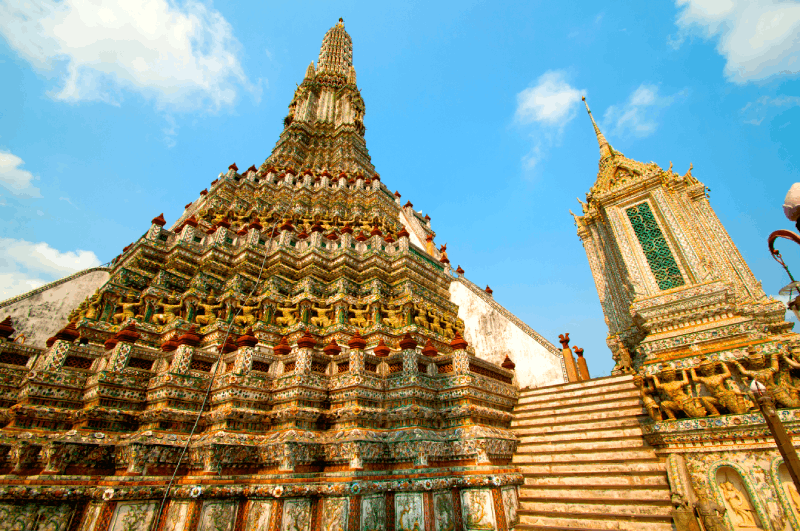
The most striking feature is its ornate decoration, a dazzling display of *benjarong* porcelain mosaic. This isn’t merely aesthetic; it’s deeply symbolic. The porcelain fragments, sourced largely from Chinese junks that traded along the Chao Phraya River – a fascinating historical detail – represent the merging of Thai artistry with international influences. King Rama III, a keen collector of porcelain, actively encouraged this practice, using salvaged pieces to adorn the temple.
Look closely. The porcelain isn’t randomly applied. Motifs depict floral patterns, mythical creatures, and celestial beings, each with a specific meaning. The *benjarong* is set in a stucco base, creating a textured, three-dimensional effect that catches the sunrise light beautifully. The sheer volume of porcelain used is astounding – estimated to be over a million pieces.
The *prang* isn’t a solid structure. It’s designed to be ascended, with steep steps leading to various levels. While the central core is solid, the outer layers contain chambers and niches. This internal structure provided space for religious relics and offerings, and allowed for a complex symbolic representation of Mount Meru, the sacred mountain in Buddhist cosmology.
Beyond the central *prang*, explore the smaller *prangs* surrounding it. These are not mere copies, but variations on the theme, each with its unique ornamentation and purpose. They represent the surrounding continents and sub-mountains of Mount Meru.
The temple’s architectural style is a fascinating blend of Khmer, Thai, and Chinese influences. The Khmer influence is most apparent in the steepness of the *prangs* and the use of sandstone and laterite. Thai artistry is evident in the intricate carvings and the vibrant colors used in the ornamentation. And, as previously mentioned, the porcelain itself is a direct link to Chinese trade and craftsmanship.
The Ordination Hall (Ubosoht), though less towering than the *prang*, is equally impressive. Built in 1845 alongside the central *prang*, it features a steeply pitched roof and elaborate gable decorations. The Ubosoht houses the temple’s principle Buddha image and is a space for important religious ceremonies.
Key Decorative Elements to Observe:
- Naga Staircases: The serpent-shaped staircases, known as *Nagas*, guard the entrances to the *prangs* and other important structures. These mythical creatures are considered protectors and symbolize royalty and power.
- Guardian Spirits (Yakshas): Statues of fierce-looking *Yakshas* stand guard around the temple grounds. These guardians ward off evil spirits and protect the sacred space. Pay attention to their expressions and the weapons they wield.
- Porcelain Motifs: Specifically, look for depictions of floral arrangements (often lotus flowers, symbolizing purity), phoenixes (representing rebirth and good fortune), and mythical animals like dragons and garudas.
- Glass Mosaic: While *benjarong* is the most prominent, sections also incorporate colored glass mosaics, adding another layer of visual complexity.
- Mother-of-Pearl Inlay: Subtle, but exquisite, mother-of-pearl inlays can be found on certain surfaces, particularly within the Ubosoht.
Practical Tips for Appreciating the Details:
- Bring Binoculars: To fully appreciate the intricate details on the *prangs*, especially from a distance, binoculars are highly recommended.
- Photography: The early morning light is perfect for capturing the details of the ornamentation. Use a wide-angle lens to capture the scale of the temple and a zoom lens to focus on the intricate details.
- Dress Respectfully: As with all Thai temples, appropriate attire is required. Shoulders and knees must be covered. While many visitors rent clothing at the entrance (around 200-300 THB in 2026), it’s best to come prepared.
- Entrance Fee: The entrance fee to Wat Arun is currently 100 THB for foreigners as of 2026.
- Guided Tours: Consider joining a guided tour (available in multiple languages for around 500-800 THB) to gain deeper insights into the temple’s history and architecture. Many tours start before sunrise, allowing you to experience the magic of the temple as the sun rises.
- Dedicated Viewing Platforms: In 2026, the temple management has improved accessibility with dedicated viewing platforms located around the complex, offering excellent vantage points for photography and observation.
By taking the time to deconstruct the elements of Wat Arun’s architecture and decoration, your sunrise visit in 2026 will transcend a mere sightseeing trip and become a profound cultural experience. You’ll not only witness beauty, but understand the history, symbolism, and artistry that have shaped this iconic landmark.
What Makes a Sunrise Visit Special?
Wat Arun, the Temple of Dawn, isn’t merely beautiful – it’s transformative. While stunning at any hour, experiencing it as the first rays of the 2026 sun kiss its porcelain-encrusted spires is an entirely different proposition. It’s a shift from *seeing* a landmark to *feeling* its spiritual resonance, witnessing a moment of quietude before the city fully awakens. This isn’t simply about ticking off a “must-do” list; it’s about immersing yourself in a tradition of reverence and artistry.
The magic lies in the confluence of light, silence, and history. For centuries, monks have greeted the dawn at Wat Arun, chanting prayers and offering alms. Being present for this ancient ritual, even as an observer, connects you to the heart of Thai Buddhist practice. The air is cool and still, a stark contrast to the humid heat that will soon envelop Bangkok.
But why is sunrise *specifically* special, and what can you expect? It’s about the quality of the light. The eastern exposure of Wat Arun means the rising sun directly illuminates the temple’s intricate details. The porcelain mosaics, painstakingly applied over decades, blaze with color, reflecting the golden light in a striking display. This isn’t just visual; it’s a sensory experience, a shimmering spectacle that photographs simply cannot fully capture.
Practicalities are key to maximizing this experience. Wat Arun officially opens at 8:00 AM in 2026, but access to the grounds for sunrise viewing is generally permitted from around 6:00 AM onwards. This allows photographers and early risers to position themselves for the optimal light. However, be aware that the interior of the Prang (central tower) doesn’t open until 8:00 AM.
To reach Wat Arun for sunrise, you’ll need to consider transportation. The most scenic – and most memorable – method is by river taxi.
- Cross-river ferry: From Tha Tien Pier (near Wat Pho), a dedicated ferry runs frequently to Wat Arun. The fare is a mere 5 baht (approximately $0.14 USD) as of late 2026. This is the most budget-friendly option.
- Longtail boat: Private longtail boats are available from various piers along the Chao Phraya River. These offer more flexibility and can be chartered for around 800-1200 baht (approximately $22-$33 USD) for a 1-2 hour trip, potentially including stops at other riverside attractions.
- Tourist boat: Several tourist boat companies offer sunrise tours specifically designed for Wat Arun. These usually include hotel pickup and drop-off, and cost around 1500-2500 baht (approximately $41-$68 USD) depending on the inclusions.
Arriving by boat is particularly magical at sunrise. Gliding across the Chao Phraya River, with the silhouette of Wat Arun growing larger, is a truly unforgettable sight. The river itself is often calm and reflective, creating a mirror image of the temple.
Don’t expect complete solitude. While less crowded than later in the day, Wat Arun does attract a growing number of sunrise visitors, particularly photographers. The best spots for unobstructed views – around the base of the Prang and along the riverfront – will fill up quickly. Arriving closer to 6:00 AM significantly increases your chances of securing a prime location.
Beyond the photography opportunities, take time for quiet contemplation. Find a peaceful spot, perhaps near one of the smaller chedis (stupas), and simply observe. Listen to the sounds of the river, the distant city, and the occasional bird song. It’s a chance to disconnect from the digital world and reconnect with yourself.
The atmosphere changes dramatically as the sun climbs higher. The crowds begin to swell, and the heat intensifies. By 8:00 AM, Wat Arun is buzzing with activity. While still beautiful, the serene ambiance of sunrise has dissipated.
Consider combining your sunrise visit with a subsequent exploration of the temple complex. The entrance fee for Wat Arun is 100 baht (approximately $2.75 USD) for foreigners as of 2026. This allows you access to the main buildings, including the Prang (once it opens), the Ubosot (ordination hall), and the Gallery of Porcelain.
Finally, remember to dress respectfully. Wat Arun is a sacred site, so shoulders and knees must be covered. Lightweight, breathable clothing is recommended, especially given the rising temperatures. Bringing a small bottle of water is also advisable. A sunrise visit to Wat Arun is more than just a sightseeing trip; it’s an experience that will stay with you long after you leave Bangkok. It’s a moment of peace, beauty, and spiritual connection in a vibrant city.
First Impressions: Arriving at Wat Arun
The Chao Phraya River breathes life into Bangkok, and no approach to Wat Arun is complete without experiencing it from the water. Forget taxis or tuk-tuks for this leg of your journey – the true magic begins as you glide towards the temple, the first glimmers of sunrise painting the porcelain-encrusted spires in hues of rose and gold. Arriving by river is not just a convenient option, it’s an integral part of the Wat Arun experience.
In 2026, several options cater to this approach. The orange-flagged Chao Phraya Express Boat remains the most affordable, costing around 15-20 baht for a ride from Sathorn Pier (Central Pier) to Tha Tien Pier, the closest drop-off point. These boats run frequently, starting around 6:00 AM, ensuring you can catch one in time for a truly early sunrise visit. Alternatively, a private longtail boat offers a more personalized (and photogenic!) experience. Expect to pay around 800-1200 baht for a one-hour round trip, including time to explore and return to your desired pier. Negotiate the price *before* boarding, and be clear about your desired return time.
As you disembark at Tha Tien Pier, the scale of Wat Arun begins to reveal itself. It’s a short, but busy walk to the ferry crossing specifically for Wat Arun. The ferry itself costs just 4 baht per person – a truly remarkable price for such a scenic journey. Don’t be surprised by the crowds, even at dawn. This is a popular destination, and the early bird truly gets the best light *and* shares the space with fellow enthusiasts.
The pier on the Wat Arun side deposits you directly into a vibrant courtyard, immediately immersing you in the temple grounds. Before even entering the main complex, take a moment to absorb the atmosphere. Street food vendors are already setting up, offering traditional Thai breakfast options like *jok* (rice porridge) and *pa tong go* (Chinese fried dough sticks). The aroma of grilling meats and sweet coconut pancakes mingles with the scent of incense wafting from the temple.
However, remember Wat Arun is a place of worship. Dress respectfully: shoulders and knees *must* be covered. While vendors sell wraps near the entrance for around 150-200 baht, it’s far better to come prepared. Lightweight scarves and long pants or skirts are ideal.
The entrance fee to Wat Arun in 2026 is 100 baht per person. This allows access to all areas of the complex, including the central prang. Keep your ticket handy, as officials occasionally check them.
Before heading inside, note the practicalities.
- Restrooms: Clean and well-maintained restrooms are available near the entrance, for a small fee (around 5-10 baht).
- Water: Bring your own water bottle, especially during the hotter months. While vendors sell drinks inside, they are significantly more expensive.
- Footwear: You will need to remove your shoes before entering certain buildings, particularly the Ubosoht (Ordination Hall). Be prepared to carry them or utilize the provided shoe racks.
- Photography: Photography is permitted throughout the complex, but be mindful of monks and other worshippers. Avoid flash photography inside the buildings.
- Accessibility: While efforts have been made to improve accessibility, Wat Arun still presents challenges for those with mobility issues. The central prang involves steep steps, and the grounds are uneven in places.
The first glimpse of the prang, up close, is striking. The sheer artistry and intricate detail are almost overwhelming. The surface shimmers with millions of pieces of colorful Chinese porcelain and shell fragments, painstakingly embedded into the stucco. Look closely, and you’ll see depictions of mythical creatures, floral motifs, and celestial beings. It’s a sign of the skill of the artisans who crafted this masterpiece over centuries.
Don’t rush. Take a slow walk around the base of the prang, observing the different levels and the intricate patterns. Notice the *makara* (mythical sea serpent) figures adorning the corners, and the delicate floral garlands carved into the stone. The entire structure feels alive, pulsating with history and spiritual energy.
As the sun continues to rise, the light transforms the temple, casting long shadows and highlighting the textures of the porcelain. This is the moment you’ve been waiting for – a truly unforgettable sight. Wat Arun isn’t just a temple; it’s an experience, a journey, and a feast for the senses. Prepare to be captivated.
Navigating the Complex – A Layout Overview
Wat Arun, a sprawling testament to artistry and devotion, can initially feel overwhelming. However, understanding its layout unlocks a far richer experience, allowing you to truly appreciate the intricate details and spiritual atmosphere. This section serves as your detailed guide to maneuvering the temple grounds, ensuring you don’t miss a single lesser-known spot during your 2026 visit.
The complex isn’t laid out in a rigid grid. Instead, it’s organically arranged around the central prang, radiating outwards in a series of courtyards, halls, and smaller structures. Think of it as a series of ascending tiers, each offering a different perspective and purpose. The main entrance faces the west, towards the Chao Phraya River, but accessing the temple requires a short (and inexpensive!) ferry ride – more on that in the ‘First Impressions’ section.
Upon disembarking, you’ll enter the outer courtyard, a relatively open space dominated by smaller pavilions and the foundations of structures undergoing ongoing restoration. In 2026, a significant portion of the western side of this courtyard is still dedicated to the careful reconstruction of historical elements damaged by previous floods and weather. Don’t dismiss this area; it provides valuable insight into the meticulous preservation work being undertaken.
Moving eastward, you’ll encounter the Guardian Spirit Houses (more on those in their dedicated section). These vibrant shrines, adorned with offerings, stand sentinel, protecting the temple from negative energies. It’s customary to offer a small amount of incense (available from vendors just inside the entrance for around 20 baht) as a sign of respect.
The next layer brings you to the main courtyard, the heart of Wat Arun. This is where the truly iconic structures reside. Directly in front of you, towering above everything else, is the central prang. To its left stands the Ordination Hall (Ubosoht), and to its right, the Gallery of Porcelain. This central area is often busy with visitors, especially during peak hours.
Let’s break down each key area in more detail:
- The Central Prang (Phra Prang Wat Arun): The most recognizable feature of Wat Arun, this colossal structure is the focal point of the temple. We’ll dedicate an entire section to climbing it and enjoying the panoramic views, but be aware that access is limited to certain times and requires appropriate attire (shoulders and knees covered). Currently, access to the very top is restricted to preserve the delicate mosaic work, but the mid-level platforms offer equally stunning vistas.
- The Ordination Hall (Ubosoht): This rectangular hall is the most sacred space within Wat Arun, used for the ordination of monks. Inside, you’ll find a beautiful Reclining Buddha statue – a serene and powerful image. Photography is permitted, but maintain respectful silence.
- The Gallery of Porcelain (Vihara Luang): This unique structure is decorated with thousands of pieces of colourful Chinese porcelain and pottery shards. Originally, these were salvaged ballast from trading ships that frequented the Chao Phraya River. It’s a fascinating example of repurposing materials and a sign of the temple’s historical connection to trade. Entrance to the gallery costs 50 baht as of 2026.
- The Two Mondops (Western & Eastern): These octagonal structures flanking the central prang once housed important Buddhist scriptures and relics. While access inside is typically restricted, their ornate facades and intricate detailing are well worth admiring.
- The Boat Landing Pavilion (Sala Luk Doo): Located directly on the riverbank, this pavilion offers respite from the heat and stunning views. It’s a great spot to take photos and soak in the atmosphere.
Navigating the pathways can be a little tricky. The surfaces are a mix of smooth tile, worn stone, and uneven steps. Wear comfortable, closed-toe shoes for optimal safety and mobility. The temple grounds are relatively compact, but allow at least 2-3 hours to explore everything thoroughly.
Important Practicalities:
- Entrance Fee: As of 2026, the entrance fee for foreigners is 100 baht. Thai citizens enter free of charge.
- Dress Code: Strict adherence to the dress code is enforced. Shoulders and knees *must* be covered. Sarongs and wraps are available for rent at the entrance (approximately 50 baht).
- Opening Hours: Wat Arun is generally open from 8:00 AM to 6:00 PM daily. However, these hours can be subject to change, particularly during special ceremonies or events. Check the official Wat Arun website (https://www.watarun.org/(https://www.watarun.org/)) for the latest information.
- Restrooms: Restrooms are available within the complex, located near the entrance and the Ordination Hall. They are reasonably clean and well-maintained.
- Souvenir Shops: Several small souvenir shops are located near the entrance, selling traditional Thai crafts, clothing, and religious items. Be prepared to bargain!
Before you begin your exploration, grab a map from the information booth near the entrance. This will help you orient yourself and identify the various structures. Don’t be afraid to ask the temple staff for assistance – they are generally friendly and helpful.
By understanding the layout and planning your route, you can maximize your time at Wat Arun and fully spend time in its beauty, history, and spiritual significance. This isn’t just a temple visit; it’s a journey through Thai art, culture, and faith.
The Central Prang: Climbing & Views
Dominating the Bangkok skyline, the central *prang* of Wat Arun isn’t merely a visual spectacle – it’s an experience. This towering structure, completed in 1845, offers visitors a unique opportunity to ascend its steep steps and be rewarded with panoramic vistas of the Chao Phraya River and the sprawling city. While restoration work continues to enhance the temple’s longevity, access to the prang remains a highlight of any visit, particularly during the golden hours of sunrise.
The climb isn’t for the faint of heart. The steps are incredibly steep, and the narrow passageways demand caution. However, the sense of accomplishment and the striking views make the effort undeniably worthwhile. Currently, in 2026, the entry fee to climb the central prang is included in the general Wat Arun admission price of 100 Thai Baht. This is excellent value considering the experience.
Before you begin, understand the structure itself. The prang is built in the Khmer style, symbolizing Mount Meru, the sacred home of the gods in Buddhist cosmology. The exterior is lavishly decorated with intricate mosaics of colorful porcelain and Chinese ceramics. As you ascend, take the time to appreciate the craftsmanship up close. Look for depictions of mythical creatures, floral motifs, and scenes from the Ramakien epic.
The ascent is divided into sections. You’ll initially climb a relatively gentle slope, offering a taste of what’s to come. Then, the incline intensifies dramatically. Handrails are present, but grip firmly and wear appropriate footwear – closed-toe shoes are strongly recommended. Flip-flops and sandals are not ideal and significantly increase the risk of slipping.
Each level offers small alcoves and landings. These provide brief respites and opportunities to catch your breath and admire the detailing. You’ll notice the careful placement of each porcelain shard, creating stunning patterns and imagery. Pay attention to the subtle changes in decoration as you climb higher; each level often features a distinct theme.
The final ascent is the most challenging. The steps become narrower and steeper, requiring a degree of agility and balance. However, reaching the top is a truly rewarding experience. The platform at the summit is relatively small, so expect some crowding, especially during peak hours. Be patient and courteous to fellow visitors.
The views from the top are simply spectacular. To the east, you’ll witness the sunrise painting the Chao Phraya River in hues of gold and orange. The Royal Grand Palace and Wat Pho are visible in the distance. Turning westward, you can see the modern skyline of Bangkok stretching as far as the eye can see.
Here’s what you need to know for a successful climb in 2026:
- Opening Times: The prang is generally open for climbing from 8:00 AM to 6:00 PM, aligning with the overall temple hours. However, it can be temporarily closed for maintenance or during special ceremonies. Check the official Wat Arun website (https://www.watarun.org/(https://www.watarun.org/)) for the most up-to-date information before your visit.
- Dress Code: Remember that Wat Arun is a sacred site. Shoulders and knees must be covered. Lightweight, breathable clothing is recommended, especially during the hotter months. If you are wearing shorts or sleeveless tops, you can rent wraps at the entrance for a small fee (approximately 50 Baht).
- Crowd Control: The prang is a popular attraction. To manage crowds, particularly during sunrise, temple staff may implement a timed entry system. Arriving shortly after the temple opens (8:00 AM) is your best bet to avoid long queues and enjoy a more peaceful experience.
- Photography: Photography is permitted, but be mindful of other visitors. Avoid using flash, as it can damage the delicate porcelain mosaics. Drones are strictly prohibited within the temple grounds.
- Accessibility: Unfortunately, the central prang is not accessible to individuals with mobility impairments. The steep steps and narrow passageways pose significant challenges.
- Hydration: Bring water, especially if visiting during the hot season. There are vendors selling drinks outside the temple, but prices are higher.
- Respectful Behaviour: Maintain a respectful demeanour throughout your visit. Speak softly, avoid loud noises, and refrain from touching the artwork.
Beyond the visual splendour, climbing the central prang offers a unique perspective on the temple’s history and spiritual significance. It’s a physical and metaphorical ascent, connecting you to the centuries of devotion and artistic expression that have shaped this iconic landmark. Don’t just *see* Wat Arun – *experience* it from the top. The memory will last a lifetime.
The Ordination Hall (Ubosoht) & Reclining Buddha
Stepping away from the dramatic ascent of the central *Prang*, and before losing yourself in the intricate beauty of the porcelain gallery, a visit to the *Ubosoht* – the Ordination Hall – provides a crucial understanding of Wat Arun’s function as a vital center for Buddhist practice. This is where monks receive higher ordination, a pivotal moment in their spiritual journey. While not boasting the sheer scale of some of Bangkok’s other temple complexes, the *Ubosoht* at Wat Arun holds a unique, intimate power.
The building, completed in 1845 during the reign of King Rama III, showcases a blend of traditional Thai and Chinese architectural influences. It’s slightly recessed from the main courtyard, creating a sense of quiet reverence. Notice the steeply pitched, multi-tiered roof, adorned with intricate *chofah* (gable ornaments) depicting the *naga* serpent. These mythical creatures, symbols of protection and prosperity, are ever-present throughout Wat Arun, and here they emphasize the sacred nature of the space.
Unlike many other prominent temples, Wat Arun’s *Ubosoht* doesn’t house a massive, sprawling reclining Buddha. Instead, it shelters a remarkably serene and smaller Reclining Buddha statue, sculpted from layered stucco and gilded in gold. This statue, measuring approximately 8 meters long, depicts the Buddha entering *parinirvana* – the final nirvana, achieved at the time of death.
Don’t rush past this statue. Take a moment to truly observe the subtle details. The Buddha’s expression is one of profound peace, his body relaxed and subtly curved. The delicate carving of his toes and fingers, the gentle folds of his robes, all contribute to a sense of quiet dignity. Photography is permitted, but please maintain respectful silence and avoid intrusive flash photography.
The *Ubosoht*’s interior, while not lavishly decorated in the same way as the *Prang*, is nonetheless significant. The walls are painted with depictions of Buddhist cosmology and scenes from the *Jataka* tales – stories of the Buddha’s past lives. These murals, though undergoing ongoing conservation work in 2026, offer a fascinating glimpse into Buddhist beliefs and narratives. Look closely for the vibrant colors and intricate details, even in the areas where restoration is visible.
Beyond the Reclining Buddha, the *Ubosoht* houses several other important Buddhist artifacts. These include:
- Eight Bodhisattva Statues: These figures represent individuals on the path to enlightenment and are positioned around the Reclining Buddha.
- Ancient Pali Canon Fragments: While not on public display, the *Ubosoht* serves as a repository for fragments of the sacred Pali Canon, the standard collection of scriptures in Theravada Buddhism.
- Donation Boxes: Small donation boxes are placed throughout the hall. Contributing a small amount is considered a gesture of respect and helps support the temple’s ongoing maintenance.
Access to the *Ubosoht* requires appropriate attire. Shoulders and knees must be covered. If you are wearing shorts or sleeveless tops, you can rent shawls and wraps at the entrance to the complex, typically for around 50-100 THB. These are available near the ticket booths, operating from 8:00 AM to 5:00 PM daily.
Practical Tips for Visiting the *Ubosoht* in 2026:
- Timing: The *Ubosoht* is generally open during the same hours as the rest of the temple complex (8:00 AM – 6:00 PM). However, it may be closed during special ceremonies or religious observances. Check the official Wat Arun website (https://www.watarun.org(https://www.watarun.org) – *verify link is current*) for the latest schedule.
- Crowds: The *Ubosoht* is often less crowded than the *Prang*, especially during peak hours. Visiting shortly after sunrise or later in the afternoon can offer a more peaceful experience.
- Respectful Behavior: Remember that this is a sacred space. Speak softly, avoid loud conversations, and refrain from touching the statues or artifacts.
- Photography: Photography is allowed, but be mindful of other visitors and avoid using flash.
- Donations: Contributing to the temple’s upkeep is encouraged, but not mandatory. Even a small donation can make a difference.
- Guided Tours: Consider joining a guided tour to gain deeper insights into the history, symbolism, and significance of the *Ubosoht* and its contents. Several tour operators offer tours of Wat Arun, starting from approximately 800 THB per person.
Before you move on, take a moment to reflect on the purpose of this hall. It’s not just a beautiful building; it’s a living, breathing center for Buddhist practice, a place where individuals start a journey of spiritual transformation. The quiet serenity of the *Ubosoht*, combined with the peaceful presence of the Reclining Buddha, provides a powerful counterpoint to the vibrant energy of the rest of Wat Arun. It’s a space for contemplation, reverence, and a deeper understanding of the Buddhist faith. From here, you are well-prepared to appreciate the artistry and symbolism of the Gallery of Porcelain & Chinese Vessels, understanding that every element of Wat Arun contributes to a cohesive and profound spiritual landscape.
The Gallery of Porcelain & Chinese Vessels
Wat Arun’s dazzling exterior is only surpassed by the intricate beauty within. While the soaring *prang* immediately captures the eye, a closer examination reveals a deliberate and fascinating artistic choice: the extensive use of Chinese porcelain and colourful ceramic shards in the temple’s decoration. This isn’t merely aesthetic flourish; it’s a sign of Bangkok’s historical ties with China and a unique example of repurposing materials in religious architecture.
The gallery, or rather, the pervasive application of these fragments, isn’t confined to a single room. It’s woven into the very fabric of Wat Arun, most prominently adorning the main *prang* and the surrounding structures. This wasn’t always the intention, however. Originally, the temple was decorated with imported Chinese porcelain in the 19th century.
However, during the major restoration undertaken between 2017 and 2026, a revolutionary approach was adopted. Rather than replacing damaged porcelain with new pieces – a costly and impractical endeavour – the restoration team, under the guidance of the Fine Arts Department, cleverly incorporated broken and discarded porcelain fragments into the existing mosaic patterns. This innovative technique, praised internationally, not only preserved the temple’s historical character but also demonstrated a remarkable commitment to sustainability.
Look closely. You’ll notice the fragments aren’t simply slapped on. They’ve been meticulously arranged, creating vibrant, textured surfaces. The colours range from the delicate celadon greens and soft blues to the bolder cobalt and rust reds. This creates a striking interplay of light and shadow, particularly striking during the golden hours of sunrise.
The source of this porcelain is fascinating. Much of it originated from Chinese junks that traded along the Chao Phraya River. Damaged cargo, considered waste by the traders, was donated to the temple, becoming a vital building material. This practice transformed discarded materials into sacred art, symbolizing the cyclical nature of life and the potential for beauty even in imperfection.
The most impressive displays are found on the *prang* itself. Scaffolding is occasionally present for ongoing maintenance (expected routine checks throughout 2026), but even with workers present, the sheer scale and detail of the porcelain work is striking. Focus on the areas around the decorative *nagas* (serpent deities) and the floral motifs. You’ll see how the fragments have been used to create subtle shading and highlight intricate designs.
Beyond the *prang*, explore the smaller pavilions and platforms. The Ubosot (Ordination Hall), while housing the Reclining Buddha, also features considerable porcelain embellishment. Pay attention to the base of the building and the surrounding walls. The gallery extends to the boat landing area, too, providing a colourful welcome and a reminder of the temple’s riverside location.
Practical Tips for Appreciating the Porcelain:
- Bring a good camera: The textures and colours are best captured with a camera capable of handling dynamic range. A macro lens will allow you to appreciate the individual fragments up close.
- Visit during golden hour (sunrise or sunset): The low angle of the sun illuminates the porcelain, bringing out its brilliance and highlighting the intricate details.
- Look for patterns: Try to identify recurring motifs and the ways in which the fragments have been used to create them.
- Consider the historical context: Remember that these pieces weren’t originally intended as decoration. They were once part of valuable trade goods, and their repurposing is a sign of Thai ingenuity.
- Respect the sacred space: Maintain a respectful demeanor and avoid touching the porcelain.
Understanding the Cost & Preservation Efforts:
The 2017-2026 restoration project cost approximately 80 million Thai Baht (approximately $2.2 million USD as of 2026). Funding came from a combination of government grants, private donations, and revenue generated from temple visitors. The Fine Arts Department continues to monitor the condition of the porcelain and conduct ongoing maintenance to ensure its preservation for future generations.
Current Access & Restrictions (as of June 2026):
- Entry Fee: 100 Thai Baht per person (approximately $2.80 USD).
- Opening Hours: Daily, 7:30 AM to 6:30 PM.
- Dress Code: Shoulders and knees must be covered. Rental clothing is available at the entrance for 50 Thai Baht.
- Photography: Permitted, but flash photography is discouraged.
- Restricted Areas: Certain areas may be temporarily closed for maintenance. Check with temple staff for current restrictions.
The gallery of porcelain at Wat Arun is more than just a visual spectacle. It’s a story etched in ceramic, a sign of history, faith, and the enduring power of artistic innovation. By taking the time to truly observe and appreciate these fragments, you’ll gain a deeper understanding of the temple’s significance and the rich cultural heritage of Thailand. Don’t simply *see* Wat Arun; *experience* the art within.
Guardian Spirits & Mythical Creatures
Wat Arun isn’t simply a beautiful structure; it’s a vibrant mix woven with ancient beliefs and populated by a fascinating bestiary of mythical beings. These aren’t merely decorative elements. They are integral to the temple’s protective power and symbolic significance, embodying the hopes, fears, and spiritual worldview of those who built and continue to venerate it. Understanding these figures unlocks a deeper appreciation for the artistry and devotion poured into every detail.
The most immediately striking examples are the guardian spirits, known as *yakshas* and *nagas*, that adorn the temple grounds. These figures aren’t the fearsome demons often portrayed in Western mythology. Instead, they are powerful, benevolent protectors, tasked with warding off evil spirits and ensuring the safety of those who worship within.
Look closely at the staircases leading to the central *prang*. Each step is guarded by a *yaksha* figure, often depicted as muscular warriors holding clubs or spears. These aren’t identical; each possesses unique features and expressions, suggesting individual personalities and roles. Their attire, often elaborate and adorned with jewels, hints at their high status in the celestial realm. In 2026, restoration work on some of these *yakshas* is ongoing, revealing even more intricate details previously obscured by time and weathering.
The *nagas*, serpentine dragons, are equally prevalent. They symbolize water, fertility, and protection. You’ll find them coiling around pillars, forming the backs of mythical creatures, and even decorating the *viharn* (prayer hall). The seven-headed *naga* is particularly significant, representing the protective powers of the Buddha. Notice the delicate scales painstakingly crafted from colored porcelain shards – a sign of the artisans’ skill.
But the mythical menagerie extends beyond *yakshas* and *nagas*. The temple’s ornamentation includes *garudas*, mythical bird-like creatures that serve as the vehicle of Vishnu. They represent strength, loyalty, and divine power, and are often positioned facing outwards, guarding the temple from external threats.
The figures aren’t simply standalone statues. They’re interwoven into complex narrative scenes from the Ramakien, the Thai adaptation of the Hindu epic Ramayana. The western gallery, particularly, showcases elaborate panels depicting battles between gods and demons. These aren’t passive illustrations; they’re dynamic, almost theatrical representations designed to inspire awe and reverence.
- Identifying Key Figures: Don’t be intimidated by the sheer number of figures. Focus on a few key elements:
- Yakshas: Muscular, warrior-like, often holding weapons.
- Nagas: Serpentine bodies, often with multiple heads.
- Garudas: Bird-like features, often depicted in flight.
- Monkeys (from the Ramakien): Playful, mischievous, and often involved in pivotal events.
The porcelain mosaics themselves are often shaped to *become* mythical creatures. The painstaking process of collecting and arranging the broken Chinese porcelain vessels wasn’t just about aesthetics. It was about transforming discarded materials into symbols of rebirth and renewal. The vibrant colors and intricate patterns further enhance the sense of otherworldly beauty.
To truly understand the significance of these figures, consider joining a guided tour. Several companies offer English-language tours of Wat Arun, and in 2026, the official temple website (https://www.watarun.org(https://www.watarun.org) – *check for updated URL*) lists approved guides. A 90-minute tour typically costs around 800-1200 baht per person and provides invaluable context and interpretation.
Don’t just *look* at the statues; *observe* them. Pay attention to their gestures, their expressions, and the objects they hold. What stories are they telling? What messages are they conveying?
Beyond the visible figures, the very architecture of Wat Arun is imbued with symbolism. The *prang* itself is believed to represent Mount Meru, the mythical home of the gods in Hindu and Buddhist cosmology. The surrounding structures represent different levels of this sacred mountain, creating a microcosm of the universe.
Finally, remember that Wat Arun is a living temple. Locals continue to offer prayers and make offerings to the guardian spirits and deities. Between 8:00 AM and 5:00 PM, you may witness these rituals, adding another layer of authenticity and spirituality to your visit. Be respectful of these practices and maintain a quiet, reverent demeanor.
By taking the time to understand the guardian spirits and mythical creatures that inhabit Wat Arun, you’ll move beyond simply admiring its beauty and begin to truly appreciate its profound spiritual and cultural significance. This isn’t just a temple; it’s a portal to another world, a sign of the enduring power of faith and imagination.
Frequently Asked Questions (FAQ)
What’s the best time to visit Wat Arun for sunrise, and how early should I get there?
The ideal time is between 6:00 AM and 7:00 AM, depending on the season, to catch the first rays hitting the temple. Arrive at least 30-45 minutes before sunrise to secure a good viewing spot and avoid the biggest crowds, as it gets busy quickly. Check sunrise times online for the specific date of your visit.
How much does it cost to enter Wat Arun?
The entrance fee to Wat Arun is 100 Thai Baht per person, which is approximately $3-4 USD. There may be additional small fees for access to certain areas within the temple complex, like climbing the central prang.
Can I book Wat Arun tickets in advance, and is it necessary?
While you can’t pre-book specific time slots, you can sometimes purchase tickets online through platforms like Klook or GetYourGuide, which can save you time queuing. Booking isn’t *strictly* necessary, but it’s recommended during peak season (November-February) or on public holidays.
What’s the dress code for visiting Wat Arun? Is there a dress code enforcement?
Wat Arun is a sacred site, so respectful attire is required: shoulders and knees *must* be covered. They do enforce this, and you can rent wraps at the entrance if needed, but it’s more respectful (and cheaper) to come prepared with appropriate clothing.
How do I get to Wat Arun? What are the best transportation options?
The most scenic way is by boat! Take the Chao Phraya Express Boat (Orange Flag) to Tha Tien Pier, then a short, inexpensive cross-river ferry to Wat Arun. Alternatively, you can take a taxi or tuk-tuk, but traffic can be heavy.
Is it possible to climb the central prang (tower) at Wat Arun?
Yes, you can climb the central prang, but it’s quite steep and the steps are narrow. It offers fantastic views, but be cautious and wear sturdy shoes; it’s currently undergoing some renovation so access may be limited or unavailable at times.
What should I bring with me for a sunrise visit to Wat Arun?
Bring water to stay hydrated, sunscreen, sunglasses, and a hat, as it can get hot even early in the morning. A camera is essential for capturing the stunning sunrise views, and consider a portable charger for your phone.
Are there any cafes or restaurants near Wat Arun for breakfast after my visit?
Yes, there are several cafes and restaurants around Tha Tien Pier and along the riverfront. Arun Residence is a popular choice with river views, and you’ll find many street food options nearby offering traditional Thai breakfast.
Is Wat Arun crowded even at sunrise? How can I avoid the biggest crowds?
Yes, Wat Arun is a popular attraction, so it will be crowded even at sunrise, especially during peak season. Arriving as early as possible, and visiting on a weekday rather than a weekend, will help minimize the crowds.
Is there a fee for photography at Wat Arun?
There’s no specific fee for photography for personal use. However, professional photography or filming may require prior permission and a fee – contact the temple administration for details.
What are the restroom facilities like at Wat Arun?
Restroom facilities are available within the temple complex, but they are basic and may not be impeccably clean. It’s advisable to carry hand sanitizer and tissues.
How long does a typical visit to Wat Arun last?
Most visitors spend around 1-2 hours exploring Wat Arun, depending on their level of interest. If you plan to climb the prang and take lots of photos, allow closer to 2-3 hours.
Is there a guided tour available at Wat Arun?
You can hire a guide at the entrance, or join a larger group tour. Alternatively, you can download an audio guide to your phone or use a guidebook for a self-guided tour.
What if it’s cloudy or raining on the day I planned to visit for sunrise?
While a cloudy or rainy day won’t ruin the experience entirely, it will affect the sunrise views. You can still visit and appreciate the temple’s architecture, but the golden glow might be less dramatic; consider rescheduling if the weather is particularly bad.
Are there any other temples nearby that I can visit on the same day as Wat Arun?
Yes! Wat Pho (Reclining Buddha) and the Grand Palace are just across the river and easily accessible by boat or taxi. These temples are also best visited early in the morning to avoid the heat and crowds.
Is it safe to visit Wat Arun? Are there any common scams to be aware of?
Wat Arun is generally a safe place to visit. Be aware of common tourist scams, such as inflated tuk-tuk prices or people offering “free” tours that later demand payment. Keep your belongings secure and be mindful of pickpockets in crowded areas.
Can I use a drone to take aerial photos or videos of Wat Arun?
Drone use is generally prohibited around temples and historical sites in Bangkok, including Wat Arun. Check with local authorities for specific regulations.
Is there shade available at Wat Arun?
Limited shade is available, especially around the prang and main areas. Wear a hat, apply sunscreen, and stay hydrated to protect yourself from the sun.
What’s the best way to get good photos of Wat Arun from across the river?
Across the river at Tha Tien Pier or from nearby riverside restaurants offer excellent photo opportunities. Using a zoom lens can help capture details of the temple’s intricate decorations.
Is Wat Arun accessible for people with mobility issues?
Unfortunately, Wat Arun is not very accessible for people with mobility issues. There are many stairs and uneven surfaces throughout the complex, making it difficult to navigate with wheelchairs or walkers.